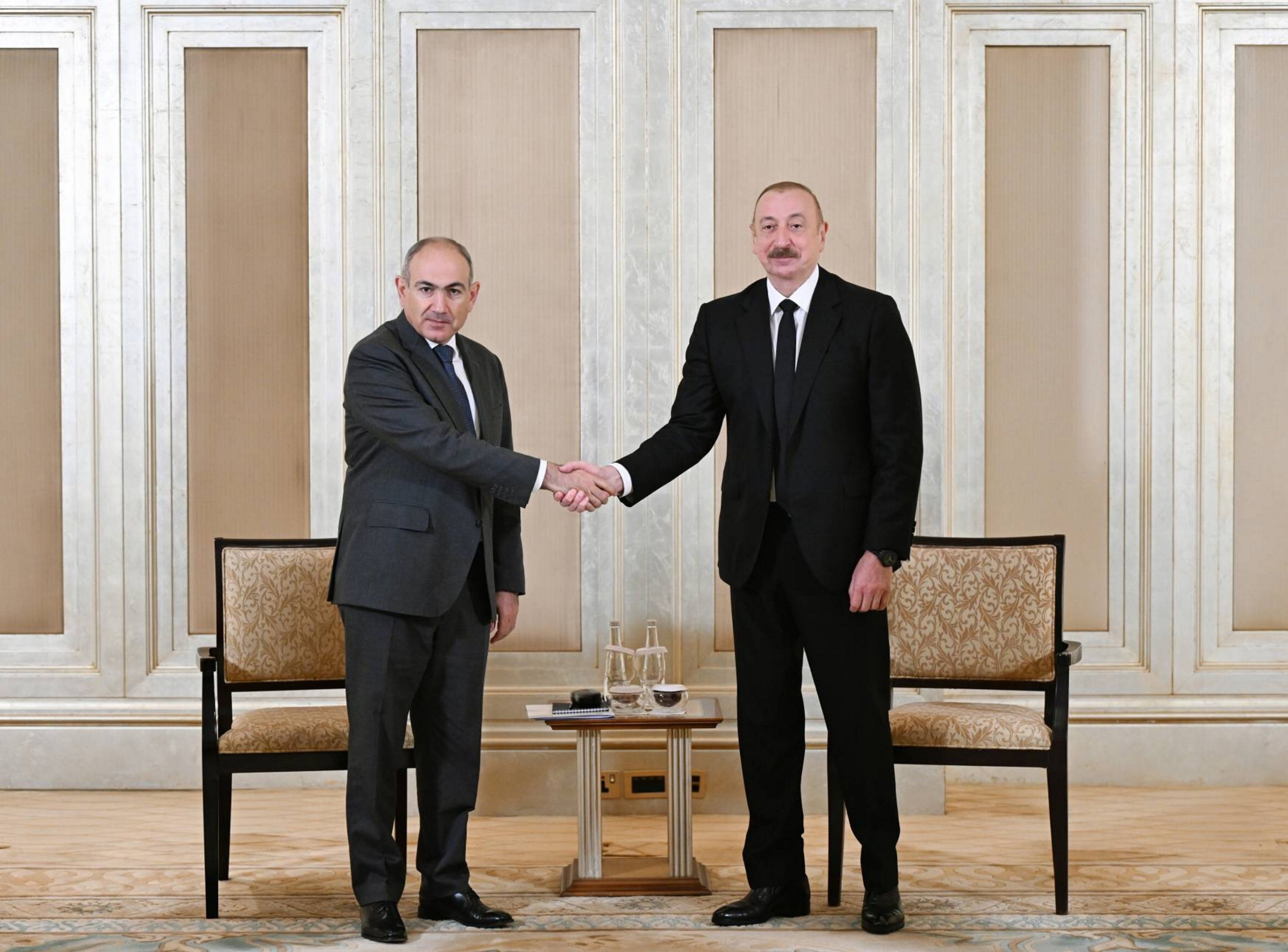
On July 10, a meeting took place in Abu Dhabi, the capital of the United Arab Emirates (UAE), between the negotiating teams of Azerbaijan and Armenia, led by Azerbaijani President Ilham Aliyev and Armenian Prime Minister Nikol Pashinyan. According to a statement made prior to the meeting, the representatives of both countries met to discuss issues related to the normalization process between Azerbaijan and Armenia.
Abu Dhabi was proposed as the meeting location by Azerbaijan, as it is seen as a neutral venue with no geopolitical interests in the Caucasus. Both sides believe that direct bilateral meetings, without third-party mediation, are more conducive to resolving their outstanding issues. Consequently, the parties have agreed to continue addressing their remaining differences through direct talks. In fact, prior to the meeting, Azerbaijani presidential aide Hikmet Hajiyev stated that there is ongoing communication between Azerbaijan and Armenia at various levels.
The fact that the meeting lasted for five hours, both between the delegations and in the one-on-one discussions between the leaders, was seen as a positive sign of its outcome. Moreover, two important developments suggest that the talks, and the overall process of normalizing relations between Azerbaijan and Armenia, are moving in a positive direction.
The first notable development was the coordinated release of a positive statement by the foreign ministries of both countries following the meeting. Notably, a similar statement had previously been issued after Armenia expressed its support for Azerbaijan's hosting of COP-29.
According to the joint summary released by the foreign ministries of Azerbaijan and Armenia regarding the meeting, bilateral negotiations represent the most efficient format to address all issues concerning the normalization process, and on this basis, it was agreed to continue such result-oriented dialogue; the leaders, taking stock of the progress made with respect to border delimitation process, instructed the respective state commissions to continue practical work in this regard; the sides also agreed to continue bilateral negotiations and confidence-building measures between the two countries; taking stock of the progress achieved in the border delimitation process, the leaders instructed their respective state commissions to continue practical work on the matter.
Two points stand out from the statement. First, the decision to continue the normalization process through direct, bilateral negotiations is highly significant. This approach reflects a growing recognition that third-party mediation can sometimes hinder rather than help progress. On this basis, the leaders agreed to continue their result-oriented dialogue through direct talks. Historically, mediation efforts – such as those led by the OSCE Minsk Group since the 1990s – failed to resolve the long-standing Karabakh conflict. Ultimately, in 2020, Azerbaijan regained control of its territory through military means, exercising its right to self-defense.
The second critical point highlighted in the joint statement was the emphasis on confidence-building measures between the parties. While Azerbaijan and Armenia have been in conflict for many years, deep-seated animosity has developed between their communities. In this context, merely signing a peace agreement on paper may not be sufficient to achieve lasting peace.
Historical experience reinforces this concern. During the Soviet era, although peace formally existed between the two republics, tensions persisted beneath the surface. In 1987, attacks against Azerbaijanis in Armenia began, ultimately leading to the expulsion of approximately 300,000 Azerbaijanis from their homes. This was followed by Armenia’s occupation of Azerbaijani territories in the early 1990s. The root of the conflict lies in irredentist nationalism that has existed within Armenia since the Soviet period. As a step toward genuine reconciliation and sustainable peace, Azerbaijan advocates for the removal of territorial claims embedded in Armenia’s 1990 Declaration of Independence – claims directed against both Azerbaijan and Türkiye.
To address this, Azerbaijan supports the idea of holding a referendum in Armenia to amend its constitution and formally renounce any territorial claims. In Azerbaijan’s view, only a clear and democratic commitment by the Armenian population to abandon revisionist ambitions can lay the foundation for a durable peace. Without such a shift in mindset, the potential for future conflict will remain. This broader political context may be one of the reasons why the July 10 meeting was considered successful.
Prime Minister Nikol Pashinyan’s government appears committed to advancing peace by taking significant steps, such as preparing to amend Armenia’s constitution and formally dissolve the Minsk Group. On the other hand, it seems the Armenian leadership is also working to prepare Armenian society for peace.
For years, Armenia has experienced internal divisions between revisionist forces and those advocating for normalized relations with Azerbaijan and Türkiye. Some analysts have even warned of the potential for the revisionists to regain influence. However, recent actions taken by the Armenian government suggest a shift in momentum.
Figures who have publicly opposed the peace process, such as the cleric Bagrat Galstanyan and members of the radical nationalist Dashnaktsutyun (Tashnaks), have reportedly faced arrests. There have also been discussions about formally banning these groups, which have long resisted normalization efforts. Still, while these are encouraging signs, lasting change can only be confirmed if the normalization process is brought to a successful conclusion.
Although there is a positive agenda between the parties, some issues still remain unclear. For example, the Ministry of Foreign Affairs of Armenia denies claims that Armenia has approved the Zangezur Corridor and instead argues that the "Crossroads of Peace" initiative is the most suitable project for them. This remains one of the most significant obstacles to normalization between the parties. However, there are still many issues that need to be resolved between the two sides, and their gradual resolution increases the likelihood of achieving peace.
As a result, no text was signed between the parties in Abu Dhabi, and it is not expected to be signed in the coming months. However, the atmosphere in relations remains positive, and both sides are taking the right steps toward peace. The most important of these is the long-standing stability between the two sides and to eliminate the interference of third parties and revisionists in Armenia's domestic politics in the normalization process and to implement legal regulations that hinder the peace agreement by the Armenian government. Therefore, after the parties agreed on the peace agreement text in March, the Abu Dhabi meeting was also a positive step forward in the normalization process without mediators.