The United Kingdom, the architect of the Zionist occupation of Palestine, has undergone a radical change in its Hamas policy. After declaring Hamas' military wing, the Izzeddin al-Qassam Brigades, a terrorist organization in 2001, the British government went a step further and extended the designation to the group's political wing on Nov. 19 last year.
The decision paved the way for Hamas’ members and supporters to be imprisoned for up to 14 years. The question is, how should the motivations and possible repercussions of the decision be perceived?
The influential Jewish lobbies in the U.K., which have been welcomed by Israel, are an undeniable part of the recent Hamas decision. Similarly, it can be argued that the United Arab Emirates (UAE) supports the development. As a matter of fact, in 2014, the UAE instrumentalized special interest and lobby groups in the U.K. to encourage such a decision. British Home Secretary Priti Patel, who played a critical role in the decision, has cultivated strong links with the pro-Israel lobbies according to experts like David Cronin and politicians like senior Hamas political bureau member Mousa Mohammed Abu Marzrook. Patel discussed with former Israeli Prime Minister Benjamin Netanyahu the issue of transferring British foreign aid funds to the occupying army. She held approximately 14 unofficial and secret meetings with Israeli officials without the knowledge of the British prime minister or government over the course of her holiday in the country. Eventually, Patel was forced to resign as international development secretary in 2017 after these talks were leaked to the press.
By adding Hamas to the list of terrorist organizations, Patel could implement the pro-Israel policy in 2021, something she could not have done before. It can also be stated that Israel's influence of the Jewish lobby, which is active in the Conservative Party, is behind this step. British Prime Minister Boris Johnson's administration's close ties with lobbying groups have allowed Israeli lobbies to transform the current deadlock into an opportunity to intervene in British politics. Therefore, the Zionist lobbies in the U.K., whose economic and political power has increased, are trying to corner Hamas, which resists Israel's expansionist policies that were designed to have the group declared a terrorist organization. In addition, London, which became isolated post-Brexit, has slipped into the marginal political line the United States follows with this move. However, London's decision may deepen the rivalry and disagreements between the Labour Party, which supports the Palestinian cause, and the pro-Israel Conservative Party. Therefore, the decision may have an impact on the U.K.'s domestic political dynamics.
Hamas' designation as a terrorist organization has been justified on the grounds it protects the Jewish community in the United Kingdom and fights anti-Semitism. Considering that Hamas does not operate in the U.K., the decision can be read more as a message to those advocating for the Palestinian cause. This decision comes at a time when serious anti-Israel sentiments are flourishing in the U.K. because of the government’s policies against the Palestinians. However, Hamas’ armed struggle is limited to Israel and does not extend to the U.K. In this sense, Hamas, which only carries out political activities in countries in its closer vicinity, such as Algeria, Qatar, Turkey and Iran, did not organize armed or political action in the U.K.
The peaceful activism of many charities in the U.K. that support the Palestinian cause and operate in the Gaza Strip could be suppressed due to this decision. Therefore, in the post-Brexit process, it can be said that the U.K. has taken a step in an authoritarian direction due to a lack of voting in the House of Commons. Hamas secured a significant victory in Palestine's 2006 election by winning 74 seats in the 132-seat parliament and serves as the political representative of many people in Gaza and the West Bank. However, different Palestinian groups, including the Palestinian Authority, which recognizes Israel and conflicts with Hamas, issued a joint statement in which they condemned the decision to declare Hamas a terrorist organization.
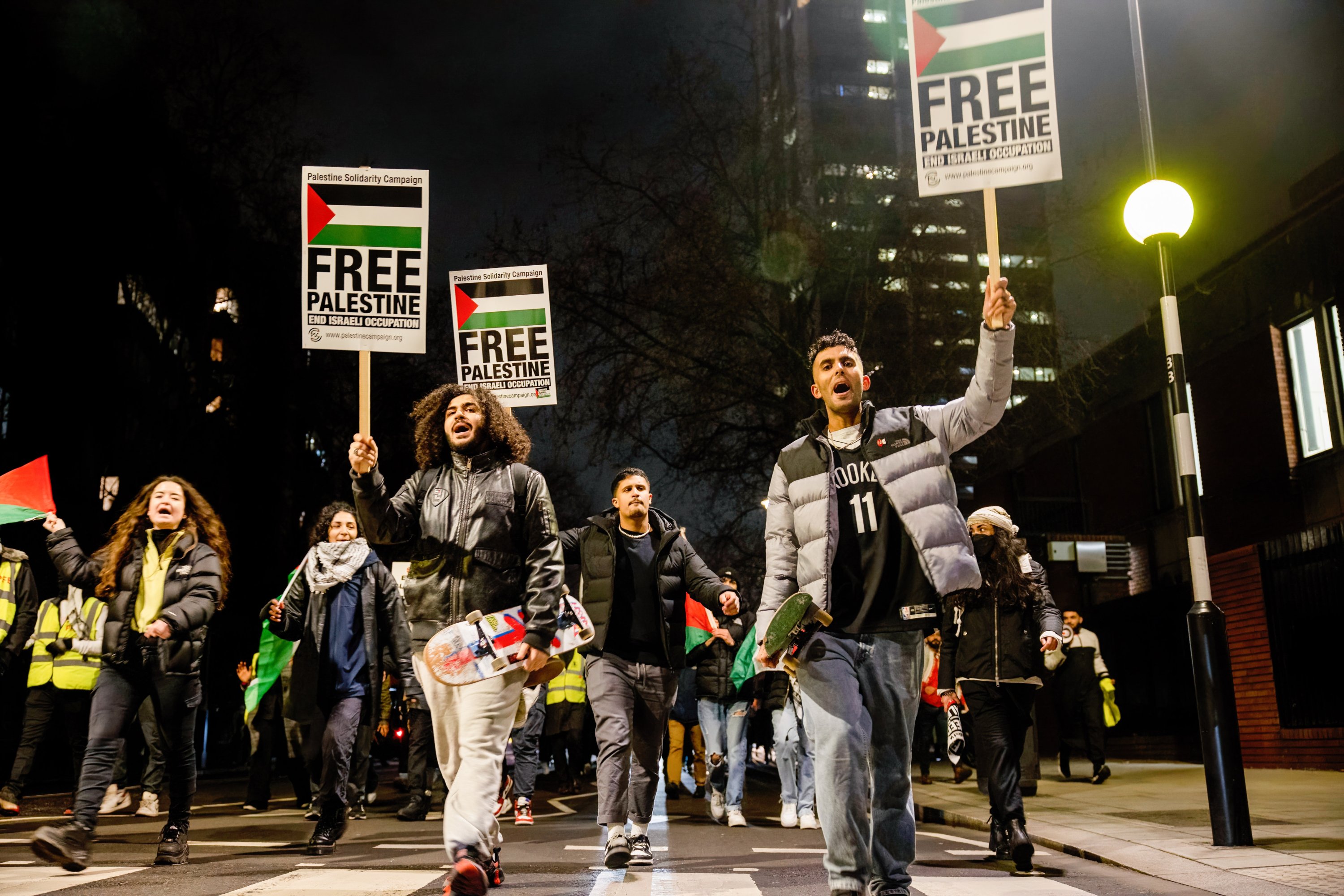
This situation may provide a legitimate basis for Israel’s occupation policies, pushing some Western actors who criticize Israel in the context of its human rights violation to stand against Hamas and the Palestinians as a whole. With this move, Britain wants to exclude Hamas from the Palestinian issue, which could undermine the military struggle against Israel's occupation. Similarly, the decision can be seen as proof of Israel's oppressive policies against Palestinian activism, not only in Palestine but also across Europe. With such a decision, the pro-Israel lobby is mounting political pressure on the growing activism of the Western youth against Zionism.
It is important to note that former U.K. Prime Minister Tony Blair, who hosted Hamas' senior officials in 2006, once stated that European countries should keep the channel of diplomacy open despite the pressure. His regret over boycotting and pressuring Hamas show that Blair, symbolically, is not in favor of designating Hamas’ political wing as a terrorist organization. According to those who think like Blair, the designation harms the Palestinians and the Arab-Israeli peace process, not only Hamas. Therefore, another major implication from this decision when it comes to Palestine is the damage it will cause to regional stability and possibly the entire framework of Israeli-Palestinian peace. In other words, the U.K.’s declaration may intensify the conflict between Israel and the Palestinians. Declaring Hamas as a terrorist organization means hindering the peace process. It is unlikely that Hamas, which has been resisting European Union and U.S. sanctions for nearly two decades, will be weakened in Gaza with this decision. But it is likely that Israel will be emboldened and that Hamas will be struck with weapons, rather than diplomacy.
According to Marzook, this decision can only weaken British diplomatic and charitable activities in the besieged Palestinian territory. As a matter of fact, this decision shows that the unofficial diplomatic contacts that Britain established with Hamas, through think tanks, retired soldiers and members of parliament, may come to an end. For example, Oliver McTernan, head of British think tank Forward Thinking, mediated the release of Israeli Gilad Shalit, who was captured in 2006 and released in 2011 by Hamas. Similarly, Blair played an active role in the Israel-Hamas cease-fire after the 2014 war. Britain abandoned this policy and now supports Israel thus increasing its pressure against Hamas. In other words, the far-right, epitomized by Patel’s interior ministry, is shaping British politics, with Israel’s phobia of Hamas having now spread to the streets of London.