The recent statement by U.S. Secretary of State Marco Rubio about Washington suspending its participation in negotiations on the Russia-Ukraine war has once again brought attention back to U.S.-Ukraine relations. In less than a year and a half of U.S. President Donald Trump’s second term, relations between Washington and Kyiv have changed noticeably. Even before returning to the White House, Trump had taken a pragmatic position on Ukraine, one that differed from the approach of his predecessor, Joe Biden. His line was based on ending unconditional aid to Kyiv, shifting the financial burden onto Europe, and opening direct dialogue with the Kremlin to free up U.S. resources for containing China.
Both Moscow and Kyiv tried to establish a working relationship with Trump well in advance. The Kremlin banked on economic deals and personal flattery. Kyiv, in contrast, argued that Ukraine is not a burden but a valuable partner with unique combat experience, modern technology and significant economic potential. On a personal level, Trump has long viewed Moscow as the stronger player. Yet the White House could not completely ignore Ukraine because of the pressure coming from the U.S. Congress, the American public and European allies.
So far, Ukraine has not yielded to American pressure, while by June 2026, the Russian army has still failed to seize the whole of Donbas. The situation has reached a dead end. Pressuring Kyiv alone proved insufficient, while Washington chose not to increase pressure on Moscow. The White House fears that doing so could push Russia even further into China’s arms. Against the backdrop of the crisis around Iran, instability in Latin America and the approaching U.S. midterm elections, the Trump administration decided to pause and temporarily step back from the active negotiation process. So where do U.S.-Ukraine relations stand today? To answer that question, we need to look at how Kyiv’s policy has changed in recent months.
After the first months of heavy pressure from the White House in 2025, from claims that Ukraine was “not truly independent” to Trump’s now-famous Oval Office remark that Ukrainian President Volodymyr Zelenskyy had “no cards,” Kyiv began to adjust its foreign policy course. The main lesson for Ukrainian diplomacy was brutally pragmatic. Moral arguments and the image of Ukraine as a victim were no longer enough in dealing with the Trump administration. Ukraine had to prove that it was an independent and useful player. So Kyiv shifted to the language of mutual benefit, stressing its battlefield experience, military technologies, growing defense production and deep understanding of next-generation warfare.
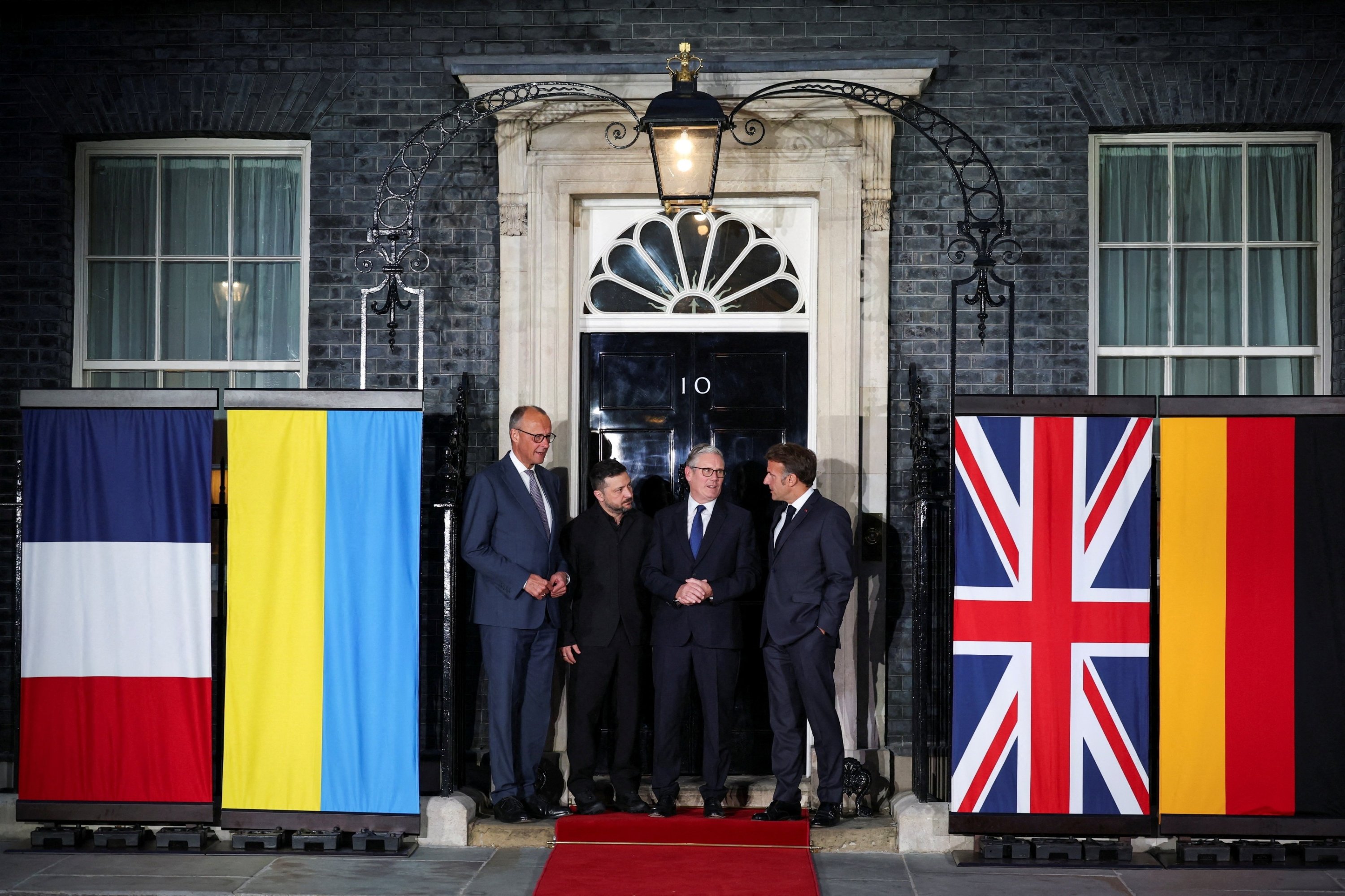
At first, European partners tried to ease the tension between Trump and Zelenskyy. London played a particularly important role here. British diplomacy, along with the personal involvement of King Charles, helped lower the temperature of the rhetoric. At the same time, Trump’s threats to cut support for NATO only brought Europeans closer together. For them, helping Ukraine was increasingly becoming not just a matter of solidarity, but a matter of their own security.
At the same time, Kyiv began diversifying its foreign policy. Ukraine ramped up diplomacy with the Gulf states, leaned heavily on Türkiye as a key regional mediator and expanded its footprint in Africa. A big factor was Ukraine's expertise in countering Iranian drones, which is exactly what opened doors in Gulf capitals. These regions wouldn't bother doing business with a country that truly had no cards to play. Ukraine had managed to find some powerful new leverage.
Ukraine's first big advantage is its unique combat experience. After years of fighting off massive combined attacks, the country has learned to adapt extremely quickly and use air defenses and electronic warfare very effectively against drones, missiles and modern strike systems. The second advantage is that Ukraine has become a real-life testing ground for weapons. New technologies aren't just tried out in labs anymore. They're tested in actual combat. At the same time, Kyiv isn't only providing the territory; it's actively building its own defense industry and infrastructure. The third advantage is Ukraine's role as Europe's shield. While Ukraine holds back Russia, European countries are getting critically important time to rearm and prepare for a completely new type of war.
At the same time, Ukrainian diplomacy is looking beyond the White House to connect with the more permanent fixtures of American influence. They are targeting the U.S. Congress, the Pentagon, defense contractors, tech giants and think tanks. The strategic goal here is to shift supporting Ukraine away from the personal whims of a single administration and weave it directly into the long-term interests of the U.S. military-industrial and tech sectors.
Still, Kyiv’s strategic shift does not mean a break with Washington or a decline in the importance of the American track. In the current geopolitical climate, that kind of isolation would be a fatal mistake for Ukraine. No matter how actively Kyiv diversifies its ties with Europe, the Middle East and other regions, its alliance with the U.S. remains fundamental.
This partnership stays critical for three main reasons. First, you can't get a lasting end to the war without security guarantees and direct involvement from the U.S. Second, a huge chunk of Ukrainian weaponry and military tech relies heavily on American components, licenses and export controls. Without Washington signing off, fully maintaining and upgrading them becomes very difficult. Third, having American capital and political backing acts as a vital stamp of approval for international businesses and investors.
That is exactly why Kyiv's current strategy isn't about walking away from the U.S. Instead, it is a shift toward a more mature, pragmatic and mutually beneficial partnership. Ukraine wants to move past the role of a petitioner. Its goal now is to position itself as a country holding unique defense capabilities and combat experience, things that offer long-term value to America.
In the post-Soviet media space, the American approach to allies is often reduced to a harsh formula: help the strong, push the weak. Washington does not say this out loud, of course, but real policy often follows exactly that logic. Trump’s return became a serious test of Kyiv’s political agency. His blunt line that Ukraine had “no cards” did not end up sounding like a verdict. It worked more like a challenge.
Ukraine answered through action. It began to reveal its cards one by one: its ability to hold Russia back, its role as a shield for Europe, its battlefield innovation, its new defense alliances, and its growing value for the American military-industrial complex. Kyiv chose neither a break nor an emotional confrontation. Instead, it took a more complex and mature path: keeping its strategic connection with the U.S. while sharply reducing its dependence on the immediate political will of one president and one administration. This is the main result of the current stage.
Ukraine still badly needs the U.S., but the old asymmetrical model of “petitioner and patron” is gradually giving way to a more pragmatic and mutually beneficial partnership. In this new arrangement, Kyiv is no longer just a recipient of aid. It is also a holder of unique military and technological assets.