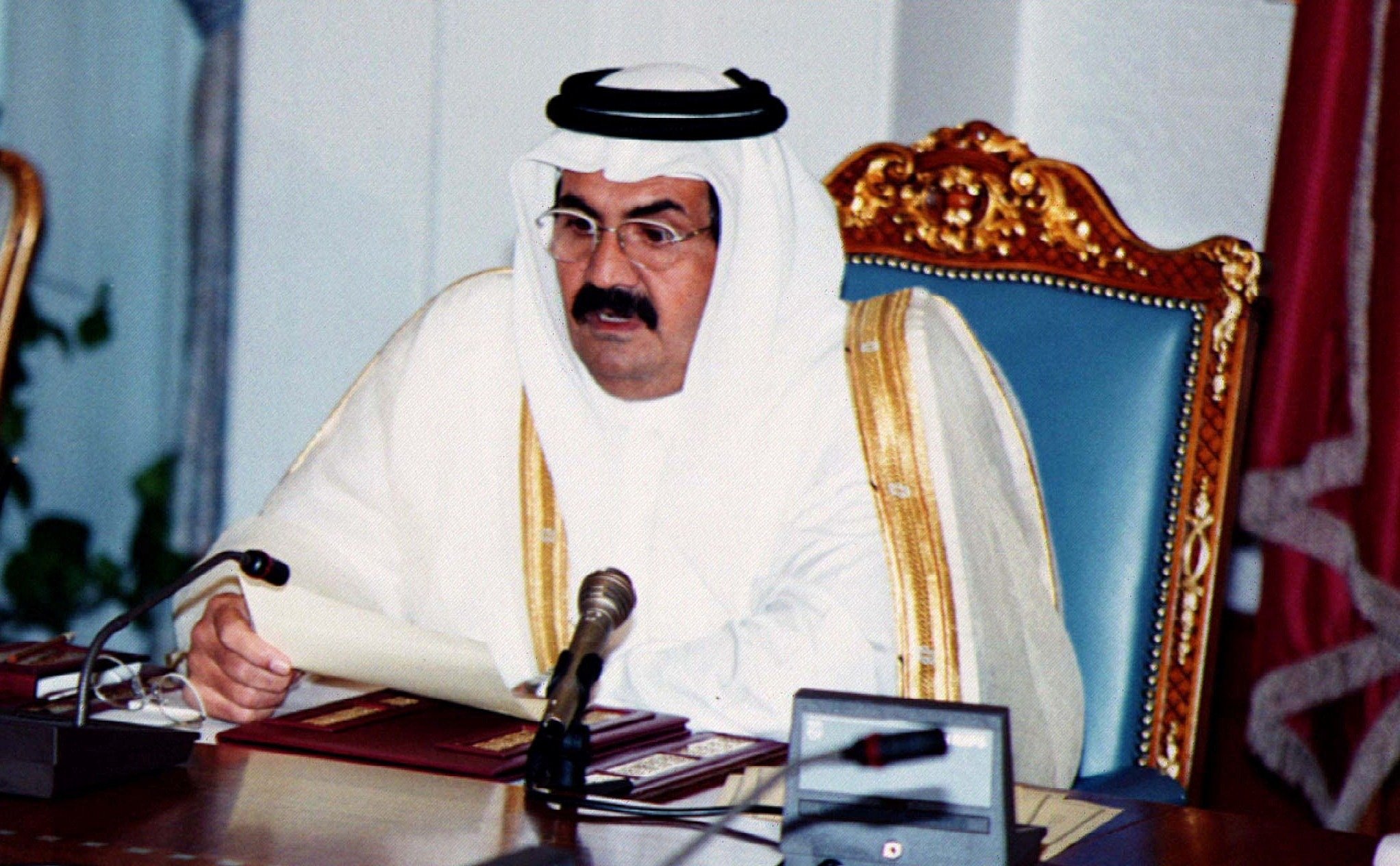
On July 12, Qatar and the world mourned the passing of Sheikh Hamad bin Khalifa Al Thani, the father Emir, at the age of 74, closing a defining chapter in modern Qatari history. Sheikh Hamad, who ruled from 1995 to 2013, was not merely a ruler but the visionary architect who transformed a small Gulf nation into a global force in energy, diplomacy, mediation, media and international influence.
More than that, he was a leader of rare courage and humanity. He could have focused solely on his country's extraordinary wealth and welfare, and he did, but he also chose a path of wisdom and principle that made him a pivotal figure in regional and international affairs. His decision to voluntarily step down from power in 2013 while still at the height of his strength remains one of the most remarkable acts of statesmanship in modern Arab history. As he once told the nation: “The future lies ahead of you, the children of this homeland, as you usher into a new era where young leadership hoists the banner.”
Sheikh Hamad's legacy in Qatar is monumental. When he assumed power on June 27, 1995, he inherited a small, relatively obscure desert state. By the time he abdicated 18 years later, he had transformed it into one of the world's wealthiest nations per capita. During his reign, Qatar's Gross Domestic Product (GDP) grew more than twenty-fourfold, while GDP per capita increased nearly sixfold.
The foundation of this transformation was his strategic vision for Qatar's vast natural gas reserves. Under his leadership, the country developed its liquefied natural gas (LNG) infrastructure, becoming the world's largest exporter of LNG by 2006, with annual production capacity reaching 77 million tonnes.
His tenure also saw the establishment of the Qatar Foundation for Education, Science and Community Development in 1995, the launch of the Al Jazeera satellite news network in 1996, which revolutionized Arabic-language broadcasting and became one of the world's most influential media outlets, the promulgation of Qatar's first permanent constitution in 2004, and the introduction of municipal elections in which women were granted the right to vote and stand as candidates. And most importantly and remarkably, he oversaw Qatar's successful bid to host the 2022 FIFA World Cup, the first tournament ever held in the Middle East.
His early rule was, however, not without challenges. Less than a year after taking power, Sheikh Hamad confronted a coup attempt on Feb. 14, 1996, orchestrated by members of the ruling family. Qatari intelligence uncovered the attempt before it could be executed, reportedly with the backing of neighboring countries, as revealed by an investigation by Al Jazeera a few years ago. The swift and decisive foiling of the plot cemented Sheikh Hamad's authority and paved the way for the ambitious reforms he achieved. In every sense, he was the architect of modern Qatar.
Sheikh Hamad understood that Qatar's small size could be its greatest asset in diplomacy. He positioned Qatar as an indispensable mediator in some of the world's most intractable conflicts. As one analysis noted, Qatar's leadership recognized that mediation could serve as a tool for enhancing its international standing and influence. He established a tradition of quiet, patient diplomacy and a genuine neutrality that his successor, Sheikh Tamim, has continued and built upon.
His mediatory roles were wide-ranging and impactful. Qatar, during his time, played a significant role in mediating the Darfur conflict in Sudan, engaging in negotiations to end the fighting in that devastated region. In Lebanon, it helped mediate factional conflicts that had torn the country apart. In Yemen, it extended its mediatory influence in a complex and multi-layered civil war. In Palestine, it worked tirelessly to mediate the deep and painful division between Hamas and Fatah. In all these efforts, Sheikh Hamad laid the groundwork for Qatar's contemporary role as the world's most active and trusted small-state mediator. It was a legacy that his successor, Sheikh Tamim, has built upon, and he too achieved breakthroughs in long-protracted conflicts.
Sheikh Hamad's commitment to the Palestinian cause was unwavering and historic. In 1999, Sheikh Hamad became the first Gulf leader to visit the Palestinian territories since 1967, and in 2012, he became the first head of state to visit Gaza since it was under the Israeli blockade in 2007 – a landmark visit that broke the Israeli political and economic siege imposed on Gaza. He headed a large delegation and inaugurated reconstruction projects worth over $450 million and called for Palestinian unity, urging Hamas and Fatah to reconcile.
In 2014, he convened an emergency summit for Gaza, demonstrating his belief that the Palestinian people deserved not just words but concrete action. His support extended beyond politics: Qatar, under his leadership, became a lifeline for the people of Gaza through humanitarian initiatives, aid, and reconstruction efforts. Here it is worth mentioning two of his enduring legacies in Gaza – the Sheikh Hamad City, which offered housing to thousands of low-income families and the rehabilitation hospital, which continues to provide free healthcare services under the current tragic situation the Palestinian people in Gaza continue to endure. He was not a leader who spoke from a distance; he literally walked into Gaza.
Sheikh Hamad could have been remembered simply as a great modernizer, a leader who made his country rich and influential. That alone would have been a remarkable legacy. But he chose to be more. He chose to use Qatar's wealth and influence for causes beyond its borders. He chose to stand with the oppressed, to mediate between enemies, and to build bridges of cooperation.
His decision to step down voluntarily in 2013, at the age of 61, while still in full command of his power, was perhaps his greatest lesson in leadership. It was a peaceful, voluntary transfer of power, rare in a region where such change usually takes place in case of death or overthrow. He understood that true leadership is not about clinging to power but about preparing the next generation to carry the banner forward.
Sheikh Hamad bin Khalifa Al Thani passed away as he lived: with dignity, leaving behind a nation he built, a region he helped shape, and a world that will remember him not just for his wealth, but for his wisdom. He could have chosen a narrow path focused solely on Qatar's welfare. Instead, he chose a path of humanity, and in doing so, he made the way clearer for his successors and ensured that his legacy will endure for generations to come.