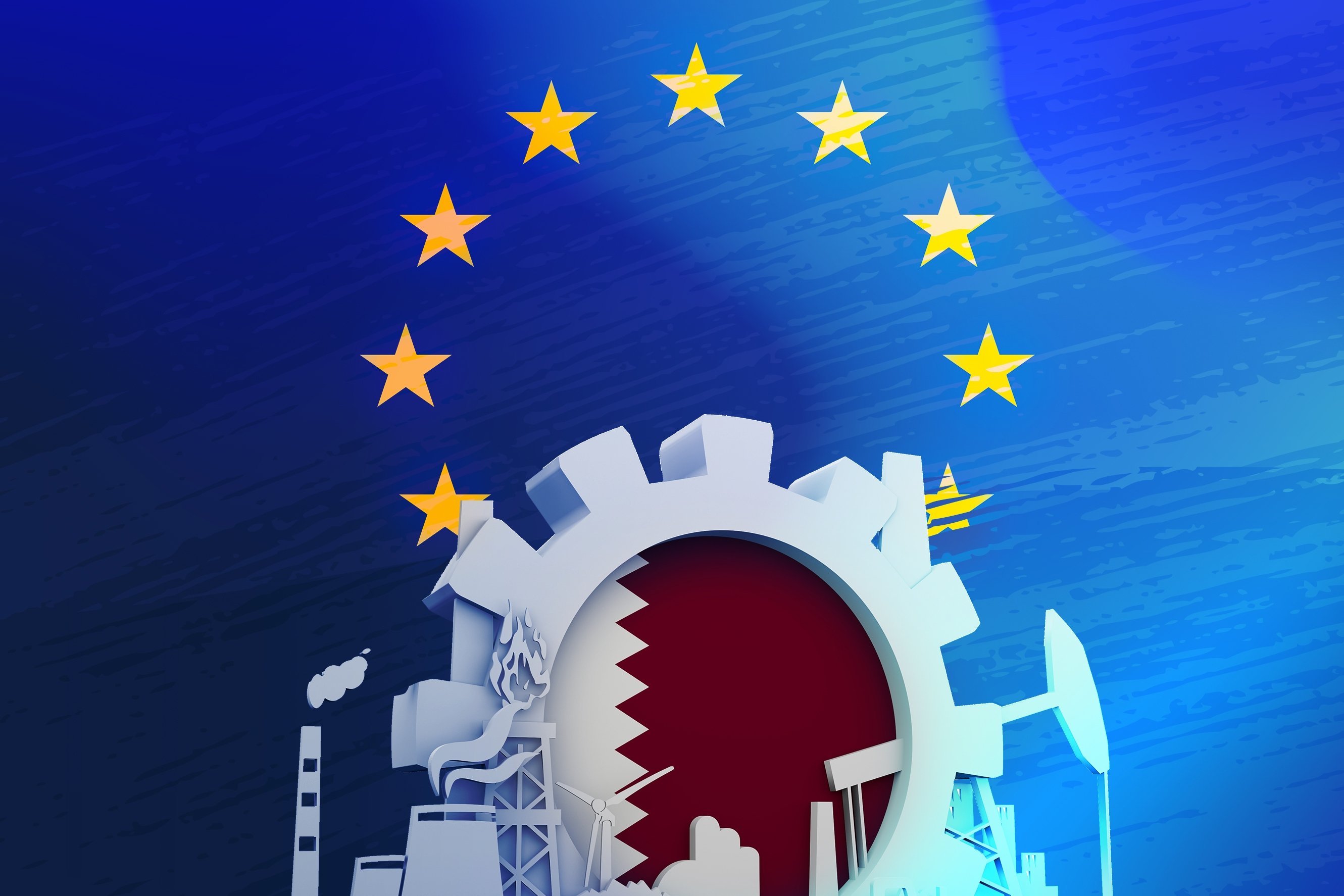
When it comes to the European energy sector and its security, the influence of Qatar’s role is more than apparent. As the European Union has focused on decreasing its dependency on Russian oil and gas supplies through different cooperations such as with Azerbaijan and Turkey, Qatar has become one of the new suppliers meeting Europe's energy demands. It is important to note that since 2019, Qatar has remained the leading supplier of oil and gas to countries worldwide, exceeding Australia and the United States. Not only is Qatar a major supplier of fossil fuels, it is also a critical investor in Europe. The country aims to further develop its economy and move beyond being solely a provider of energy to become a multidimensional economic partner for Europe with its significant focus on providing educational partnerships and building soft power. An independent, economically stable and diplomatically improved Qatar playing a critical role in this new chapter in Europe's energy supply could translate into a strong ally in the Gulf region.
Qatar’s significance for the EU’s energy security has to be explained in detail by focusing on the objectives of the bloc and its own definitions of security within this context. As the Treaty of Lisbon signed in 2009 has enabled the EU to become a stronger authority when making decisions on energy security, the bloc’s objectives play a big role in understanding Qatar’s contributions. The EU's energy policy depends on sustainability, affordability and security of supply. Although the first objective requires a more internal effort, which would require nations to change their domestic policies based on EU guidelines and transform their industries within planned time frames, alternative suppliers like Qatar and Azerbaijan come to the fore when considering affordability and security of supply, as opposed to Russia.
Therefore, diversification, which emerges as an objective under the main goals of EU energy security, is an essential part of understanding Europe’s motives and developing strengthened diplomatic relations outside its region. Another area that the EU’s diversification efforts prioritize is the assurance of safe levels of energy security and exertion of efforts to liberate the EU from dependence on Russian energy supplies. The fact that some reforms in the last two decades have caused damage to the energy market and led to higher prices could possibly invite the EU to make concessions to its essential free trade principle.
To achieve secure energy trade, the EU also takes into consideration the political stability in the transit countries, thus, seeks to arrange its strategies accordingly and adaptively. In pursuing energy security that is in line with EU norms, avoiding effects caused by price fluctuations as much as possible is another guidance point that the EU takes reference from.
The recent escalations over Ukraine have raised concerns about possible gas flow disruptions from Russia to the EU. Some 40% of Europe’s natural gas is supplied by Russia; therefore, the EU should have contingency plans ready to compensate for what it might lose due to supply shocks. This situation underlines that the EU should seek alternative supplies. As it has before, the Kremlin did not hesitate to weaponize its supplies to significantly impact the EU economy. European Commission President Ursula von der Leyen stated that the EU would be on the safe side in the event of a partial disruption or further decrease of gas deliveries by Gazprom as modeled by some research.
In addition, so far, the EU has spoken with a number of countries about increasing gas and liquefied gas deliveries either through contract swaps or additional shipments. Those counties include Qatar, Egypt, Azerbaijan, the U.S., South Korea and Nigeria. As shown by recent talks between the U.S. and Qatar, the latter seems to be a suitable candidate for the compensation of supplies to Europe. However, back in 2018, the state-owned company that was renamed "Qatar Energy" became a highly disputed topic in the context of EU antitrust laws as the European Commission was concentrated on figuring out whether the liquefied natural gas (LNG) supply deals between Qatar and European utility companies constrained their ability to divert shipments within the region.
With the investigation that purported to scrutinize 20-year gas contracts having started three years ago, it is unlikely that Qatar Petroleum will face further EU antitrust action. The EU’s decision to halt the probe into Qatar's gas contracts came amid concerns that a supply disruption may occur in the event of a conflict. Despite the fact that Qatar is one of the world’s three biggest gas exporters, the long-term contracts it has with big customers from Japan, China and South Korea signal that the country may not meet the expectations of EU officials in terms of replacing all the gas supplied by Russia.
Qatar very recently emphasized that for major suppliers to provide gas to the EU, the bloc would be required to limit the resale of gas outside the EU. Therefore, Doha expects the EU to divert any LNG surpluses within the bloc since, according to some sources, failing to implement this measure would prolong the EU’s energy shortage.
Regardless of the current political tensions in certain regions, the overall partnership between Qatar and the EU was built on durable foundations that are expected to be maintained and enhanced over time. Unlike Russia, Qatar does not want to appear as if it is weaponizing its gas supplies but, rather, that it is not violating its contractual obligations concerning energy supplies to countries in political turmoil with one another. These signs demonstrate that Qatar will reliably continue to play an important role in the EU’s energy security in the future.