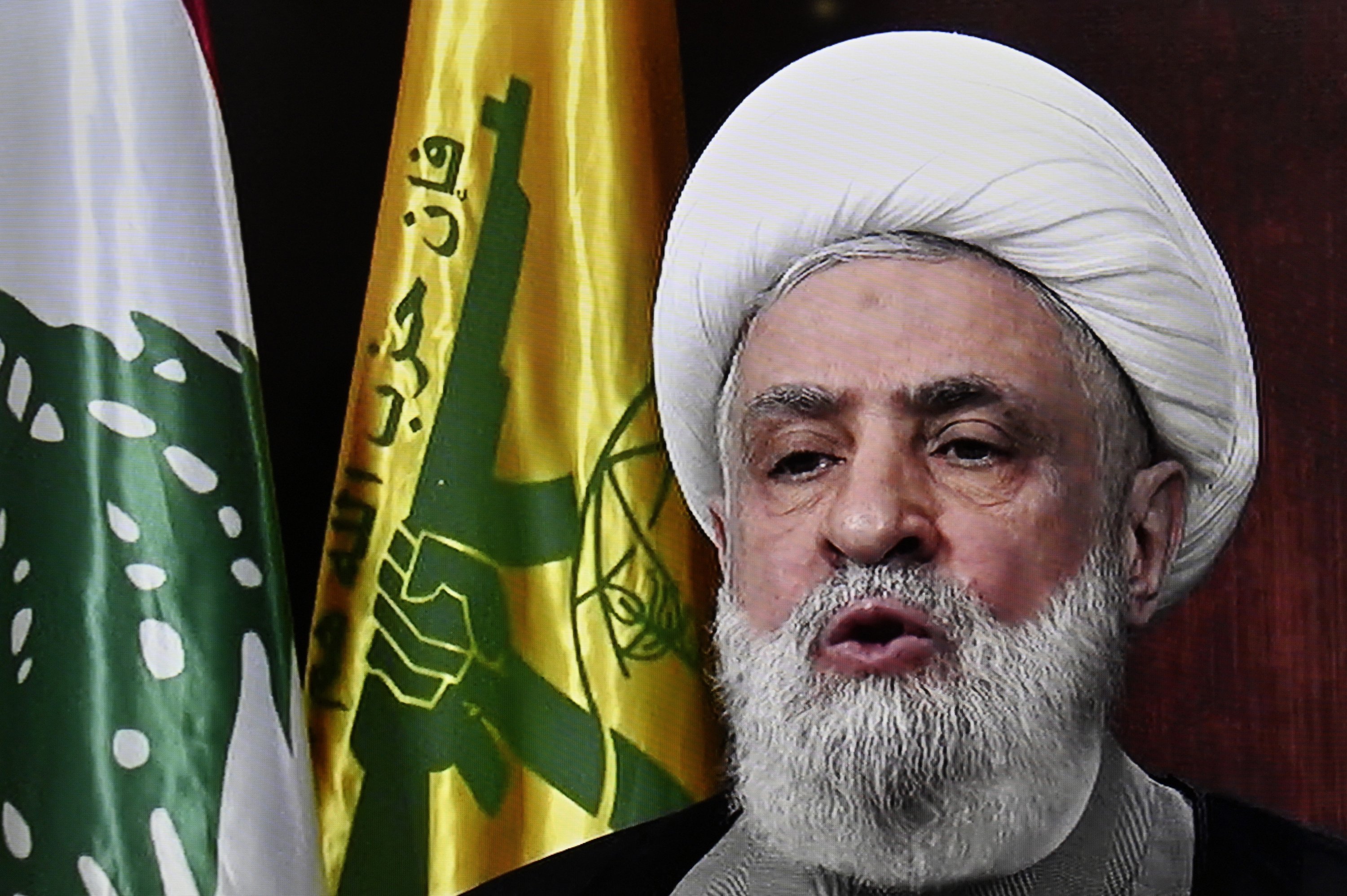
The Lebanese government’s recent decision to task the army with preparing a plan to disarm Hezbollah has reignited one of the country’s most contentious debates. Although officially framed as a step toward strengthening state sovereignty, it is widely seen as the result of U.S. diplomatic pressure and thus a direct challenge to Hezbollah’s legitimacy as a resistance actor, raising the question of whether the Lebanese government even can implement such a plan. This controversy cannot be understood in isolation, as it is rooted in Lebanon’s unique political history and the enduring legacies of its sectarian system, which has long shaped the balance between state authority, armed groups and foreign influence.
Lebanon, a strategically located country in the Middle East, was built on deep socio-political contradictions as a project shaped by its colonial legacy. The Lebanese political system, which took shape under the French Mandate, was designed around the country’s religious and sectarian diversity. It was institutionalized through the model of consociational democracy, which granted each sectarian group quota rights based on the demographic structure as determined by the official 1932 census. This political arrangement, which paved the way for severe crises in the country, most notably the Lebanese Civil War, has undergone revisions at different times, but the sectarian system has persisted. It continues to shape politics, both officially and de facto, from parliamentary arithmetic to the distribution of bureaucratic seats. This system, which is the root cause of Lebanon’s political and economic crises, not only blocks the proper functioning of the political order but also erodes the Lebanese state’s authority over different groups, pushing the country into the category of a “weak state.”
According to the constitutional arrangement, the president must be a Maronite Christian, the prime minister a Sunni Muslim and the speaker of parliament a Shia Muslim. The 128-seat Parliament, divided equally between Christian and Muslim lawmakers and successive Cabinets often remain paralyzed by the mutual blocking policies of the two main coalitions known as the March 8 Alliance and the March 14 Alliance. The rivalry between Hezbollah-led March 8 and the Future Movement-led March 14 has shaped the last two decades of Lebanese politics, and with the involvement of foreign actors, the sectarian system has been a key factor in the deadlock that has marked the country’s troubled course.
One of the most important reflections of this sectarian political order has been on the question of “sovereignty.” The Lebanese state’s failure to establish full authority over all groups, combined with the weakness of the Lebanese army, has allowed various groups to build alternative structures in areas ranging from armed struggle to the provision of social services. While Hezbollah is the first example that comes to mind, in fact, nearly all political groups in Lebanon, albeit to varying degrees, follow similar patterns. For instance, it is common to see armed guards outside the headquarters of political parties while walking in the streets of Beirut, or to find each sectarian group offering services to its own community. Similarly, the ties between Lebanese groups and external actors are undeniable and the country’s internal balance of power or key political ruptures are often the direct result of rivalries between these outside powers.
When this erosion of state sovereignty is combined with the persistent Israeli threat along Lebanon’s southern border, the situation becomes even more complicated. Lebanon endured 18 years of Israeli occupation and it was not the Lebanese army but Hezbollah, a non-state actor, that ultimately forced Israel’s withdrawal. Against this backdrop, the recent debate over the “disarmament of all groups in Lebanon” directly targets Hezbollah. It has emerged not as part of a normal domestic agenda but under U.S. pressure in the aftermath of the latest war with Israel, pushing Lebanon into a more difficult phase.
To understand the origins of this debate, it is necessary to look back. After the 15-year civil war, the Taif Agreement stipulated the disarmament of all militias, but Hezbollah was granted an exception due to the Israeli occupation. This exception has been the subject of legal debate for two primary reasons. First, some interpret the term “militia” in the agreement as referring only to the groups that actually fought in the Lebanese Civil War. By that view, Hezbollah was not a direct party to the civil war, aside from clashes with the Amal Movement, and instead fought directly against Israel. Therefore, the clause on militias did not cover Hezbollah’s armed wing.
The second, and more important, reason lies in the agreement’s clause on “taking all the steps necessary to liberate all Lebanese territories from the Israeli occupation.” The absence of a capable Lebanese army created a broad consensus that Hezbollah had a de facto right to bear arms to fulfill this mission. Even after Israel’s withdrawal in 2000, its continued threat to Lebanon provided justification for Hezbollah to keep its weapons. In the 2006 war, Hezbollah fought Israel directly, while the Lebanese army remained largely passive. However, Hezbollah’s growing military strength also fueled domestic debates about sovereignty and led to external pressure, especially from the U.S. As a result, Western countries led by the U.S. and France sought to create a legal framework for Hezbollah’s disarmament through U.N. Security Council Resolutions 1559, 1680, and 1701. Yet, these resolutions never translated into reality on the ground, due to both Israel’s occupationist aims and Lebanon’s internal balance of power. Thus, while the disarmament issue has resurfaced many times, it has never been implemented.
Following the war between Hezbollah and Israel in the context of the Al-Aqsa Flood, Hezbollah went through a period of relative weakening, especially after the assassinations of senior leaders, including Secretary-General Hassan Nasrallah. This process reinvigorated U.S. calls for its disarmament. The cease-fire of Nov. 27, 2024, shifted Lebanon’s political balance and paved the way for the appointment of Joseph Aoun as president and Nawaf Salam as prime minister, both of whom are aligned with the U.S., Saudi Arabia and the Western bloc. This created the basis for a new political engineering project led by the U.S. On Aug. 5, the Lebanese government tasked the army with preparing a plan to disarm all armed groups, especially Hezbollah, by the end of 2025. On the surface, this might look like a step toward building state sovereignty. But when read in the current context, it carries significant risks both domestically and externally.
Crucially, the decision was not the result of internal consensus but of U.S. diplomatic pressure. This shows that the priority is not Lebanon’s sovereignty but Washington’s goal of neutralizing Hezbollah, which it sees as a threat to its Middle East design. Backed by Hezbollah’s domestic rivals, the plan is perceived by Hezbollah, an influential party with a large social base, as a major existential threat. It is clear that Hezbollah will respond harshly to such a plan, and the risk of dragging Lebanon into a new civil war looms large. Until now, Hezbollah has acted as a rational actor, avoiding internal conflict and showing flexibility on some issues. However, it is fully aware that losing its weapons would deal a critical blow to its struggle against enemies such as Israel and the U.S. Therefore, it will use every means to prevent this outcome. Just as Hezbollah today negotiates over reducing its presence south of the Litani River, it could bargain over part of its arsenal, but when the demand concerns all of its weapons, it will stand firm.
Meanwhile, Israel still occupies five strategic hills in Lebanese territory despite the cease-fire, and the Lebanese army has done nothing to stop it. This strengthens Hezbollah’s argument that its weapons are legitimate tools of resistance. Instead of setting the complete end of Israeli occupation as a precondition for Hezbollah’s disarmament, the Lebanese government has created a reverse logic, claiming Israel will end its occupation once Hezbollah is disarmed. In light of experience, this lacks credibility and fuels criticism that the government is serving U.S. goals rather than pursuing Lebanon’s real priorities. The persistence of Israeli occupation while the government insists on disarmament raises further doubts about the country’s long-term direction.
In short, the current debate about the “disarmament of all groups,” discussed in Lebanon for years but now becoming a concrete agenda item for the first time, is essentially about turning Hezbollah’s relative weakness into an opportunity. This agenda is also clearly tied to potential new offensives against Iran and the broader “axis of resistance.” Therefore, the disarmament debate must be understood as being shaped by a broader context, extending far beyond a simple issue of sovereignty. This perspective is vital for understanding both Lebanon’s future and that of the wider region. Of course, a Lebanon where sovereignty is built, foreign interference ends, and the power of non-state actors declines sounds appealing and necessary. But in a country where normal conditions do not apply, Israeli occupation continues and regional rivalries turn it into an arena for geopolitical struggles, such goals appear overly naïve for now. For a truly independent Lebanon, the first step is to reform the country's political system. In addition, building a capable army able to resist Israeli attacks and occupations is essential for the survival of an independent Lebanese state.