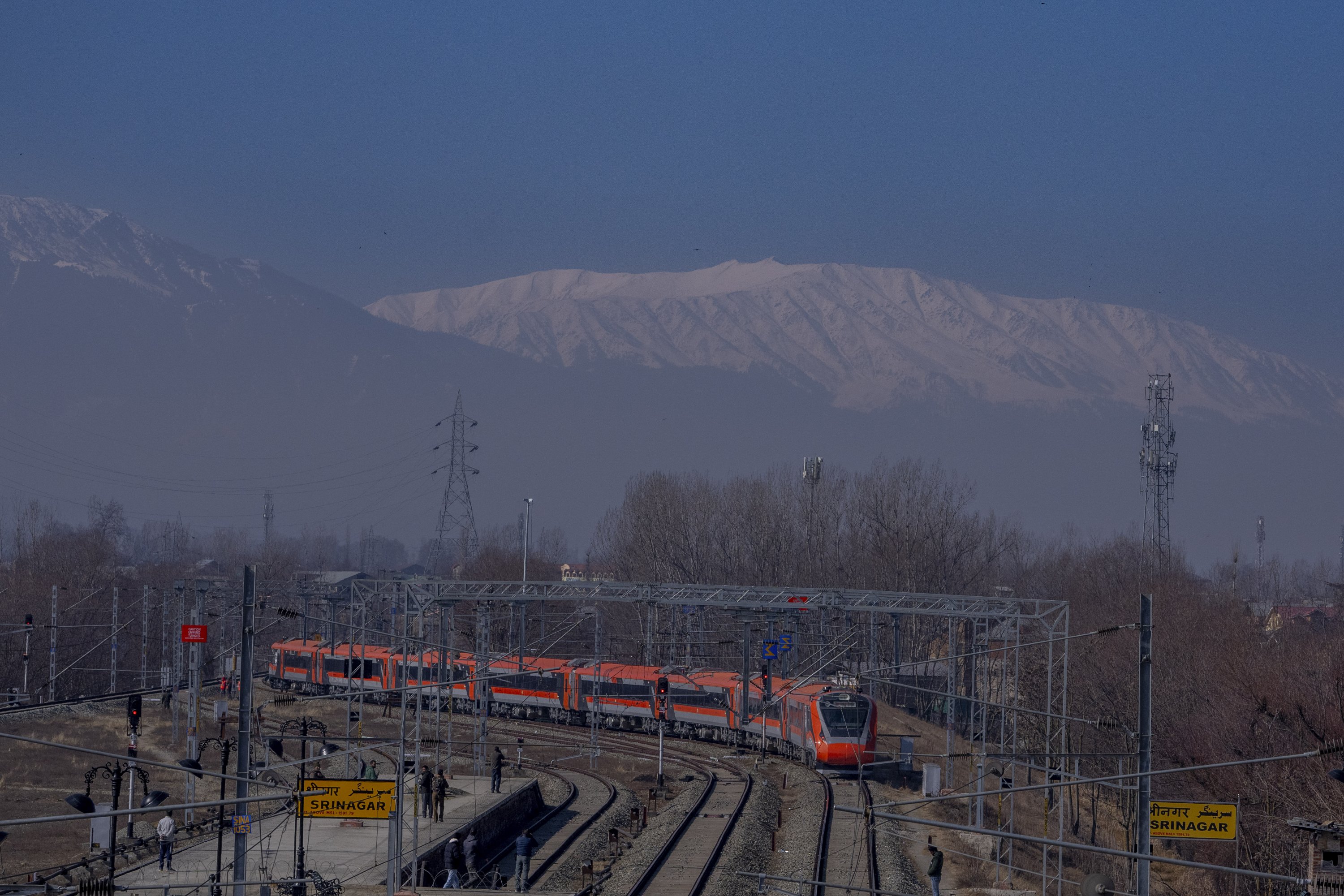
Last month, Indian Prime Minister Narendra Modi inaugurated the first all-weather railway track that connects Kashmir Valley to the mainland of India. The Udhampur-Srinagar-Baramulla Railway Line (USBRL), which stretches 272 kilometers (169 miles), is lauded in New Delhi as an engineering and national-integration triumph. And it is, in fact, more than infrastructure. The infrastructure consists of several tunnels and bridges, notably the Chenab Rail Bridge, touted as the world’s highest railway arch bridge, is 35 meters (114 feet) taller than the Eiffel Tower and took Indian Railways more the 20 years to build. It is not only the marvel of engineering but a well-planned strategic message in steel: the proclamation of power, capacity and domination.
For years, India has been objecting to the development projects by Pakistan and China in Pakistan-administered Kashmir (Azad Jammu and Kashmir and Gilgit-Baltistan) under the China-Pakistan Economic Corridor (CPEC) as it alleges that such constructions go against the concept of sovereignty since that land is a disputed region. But with this railway, stretching deep into the Himalayan heartland of Indian-administered Kashmir, New Delhi appears to be doing precisely what it condemns. The contradiction is sharp and deliberate.
It is worth mentioning that international law doesn’t explicitly prohibit such development in disputed territories, unless the development projects disturb the local demography. Yet, India has time and again opposed such efforts by others on a political basis. However, by building a dual-use rail corridor (civil and military) in the other part of the same territory under its administration, India is reinforcing a pattern of selective adherence to norms.
Moreover, what ultimately makes this rail track even more meaningful is not only the territory it passes through but also the purpose it serves. With an evident dual-use role, the railway enhances India's logistical and military preparedness in the areas adjacent to Pakistan and China. It provides the troop, supply and equipment flow throughout the year, important in a region where snowfall in winter routinely closes road access. Prior to this, the military was dependent upon either costly air lifts or the only national highway, which was often obstructed during winter. The construction of a railway is as much a strategic project as an internal undertaking, considering the recent conflict with Pakistan in May, face-offs with China in Doklam and Galwan Valley, and the rising infrastructure of China in Tibet and Aksai Chin.
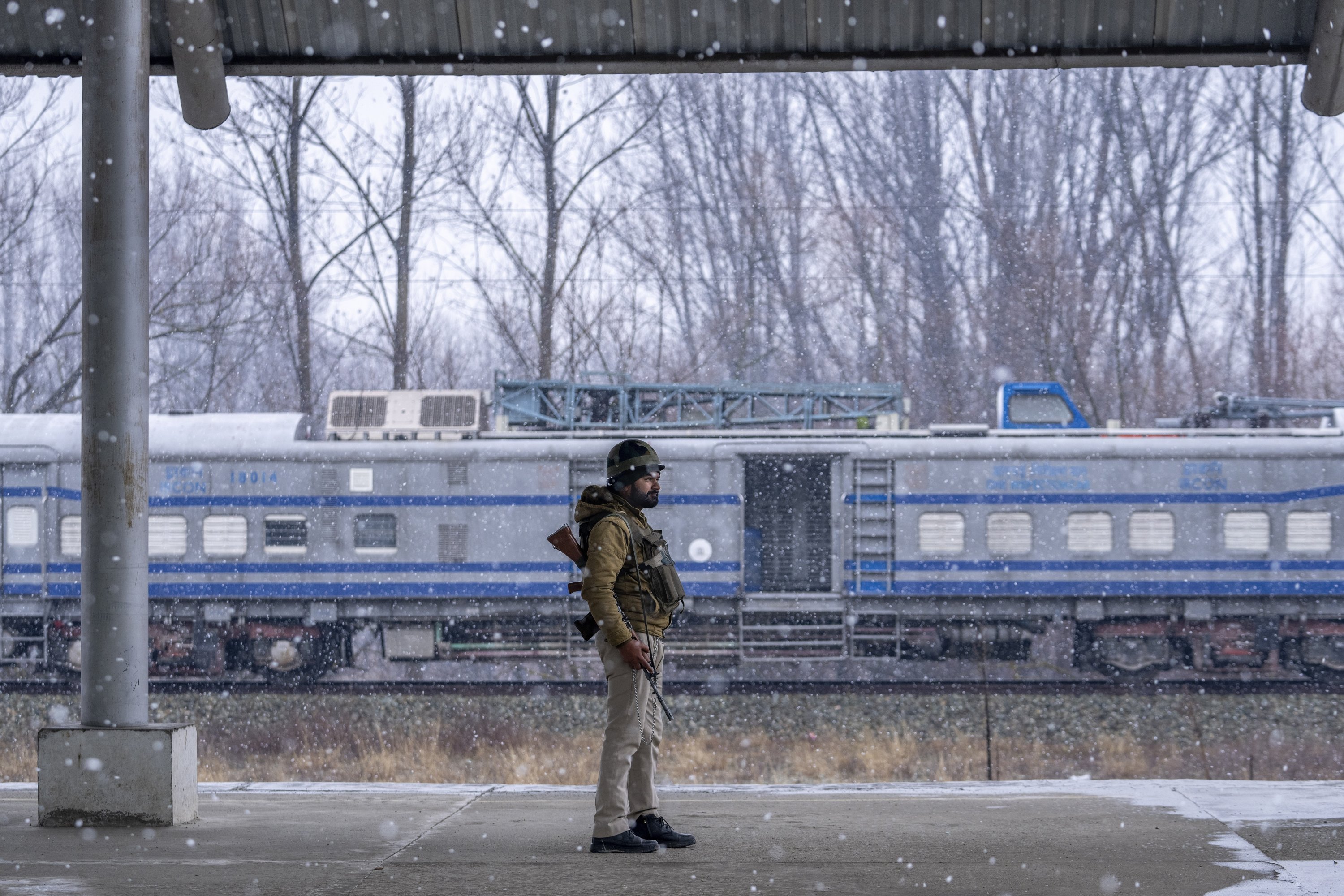
To local Kashmiris, the railway leads to mixed feelings. On the one hand, this is one of the rare possibilities to improve connectivity, economic opportunities, tourism, and service access. Trades and transport are envisaged in businesses in the valley. Ease of movement may be observed by students, patients and laborers. In an area that has historically been isolated both geographically and politically, the new railway does have opportunities for earning.
But considering the ground realities, there is apprehension. The project is not only seen as development by many Kashmiris, but also domination, a strengthening of the new order that started after August 2019, when Article 370 was revoked, and the region lost its little autonomy. The railway, in their case, is the result of a wider effort to rationalize an extremely contentious political reality. It is interpreted as an effort by New Delhi to cement the so-called constitutional changes against their will through the use of steel tracks. They believe that infrastructure is being applied to erase identity.
In addition, the militarism of the enterprise contributes to the fear. The inhabitants of Kashmir, who have suffered for years under the force of militarization and strife, are fully conscious of the fact that this railway is not about passengers but about posturing. The railway can transport goods and tourists, but it comes with deployed troops, and faster and increased surveillance as well. Here, the dual-use story is not only an abstract strategic benefit or some interesting case on strategy; it is, in fact, part of lived reality with potential consequences to daily freedoms.
In geopolitical terms, the railway fulfills a strategic puzzle, which is a stronger force projection over Pakistan and China, indicating to the rest of the world that Jammu and Kashmir in the Indian mindset is no longer merely a territorial dispute; it is now fully and permanently a part of it. However, that narrative is more complicated by the indigenous population across different regions of the disputed territory. To a large part of the population in the Kashmir Valley, the lack of inclusion means that integration is not unity but rather imposition.
In conclusion, infrastructure in South Asia is hardly neutral. It bears the burden of the past, the expectations of a few and the fears of others. India may celebrate this metaphoric conjoining, but it should keep in mind that the most real bridges are the ones that join not only land and cities but also people and trust.