In the third year of the Russia-Ukraine war, a new peace negotiation table has been reestablished under Türkiye’s mediation. However, despite diplomatic efforts, a complete consensus has yet to be achieved, both at the table and on the battlefield. Following Russian President Vladimir Putin’s Victory Day address, the peace process, which had stalled in 2022, resumed in Istanbul on May 15 with Türkiye as the mediator. Nevertheless, today’s geopolitical landscape and strategic conditions differ significantly from those of 2022. Russia seeks to preserve its territorial gains, while Ukraine remains committed to defending its sovereignty and territorial integrity.
At a time when artificial intelligence permeates nearly every aspect of modern life, it is unsurprising that it now shapes warfare as well. The Russia-Ukraine conflict has moved beyond the bounds of conventional warfare and evolved into a new generation of conflict. After three years of sustained combat, this transformation is unmistakable. This shift demonstrates that traditional military tools, such as tanks, artillery and fighter jets, are being increasingly replaced by smaller, more innovative and more agile systems. The war now stands at a crossroads where AI-based strategies and conventional military doctrines are being tested.
The integration of AI into every aspect of life today has inevitably brought about a radical transformation on the battlefield, which is radically changing classical tactical understanding. One of the most striking examples of this transformation is seen in the 2020 Second Karabakh War, where Turkish-made Bayraktar TB2 UAVs effectively destroyed targets using AI-supported image processing systems. Similarly, Türkiye's effective use of AI-based UAV and UCAV systems in counterterrorism operations and security applications in border regions is another concrete reflection of this transformation.
It should also be emphasized that AI is not merely a matter of firepower; it is also a strategic turning point that redefines tactical superiority on the battlefield. The acceleration of decision-making processes, target prioritization, threat analysis and autonomous operational capabilities are now reshaping the nature of warfare through the use of AI.
Since the start of the Russia-Ukraine war, Russia has largely continued to pursue a classic, physical, force-based approach to warfare. Of course, Russia has also developed some tactics based on technological flexibility and integrated some military elements with AI. However, the general trend is that Russia evaluates military superiority in quantitative (number-based) terms in its approach to war. One concrete example of this approach is the addition of approximately 10,000 soldiers from North Korea to Russia's ranks. This reinforcement demonstrates that Russia continues to pursue a power strategy based on the physical presence of troops on the battlefield.
However, the current situation clearly shows that major powers are now competing not only in terms of military strength but also in terms of technological capacity and superiority. In this regard, Ukraine's asymmetric warfare, conducted with high-tech defense systems obtained from the West, has evolved beyond proxy warfare and become a strategy to establish technological superiority. This situation has created a transformation that challenges classical power balance theories.
On the other hand, Russia is still a significant power with nuclear deterrence capabilities; this fact should not be overlooked. However, in light of recent developments, the effectiveness of strategic bombers such as the Tu-95 and Tu-22M3 has also been questioned. These platforms, which take off from fixed bases, are easily targeted with the development of AI and drone systems.
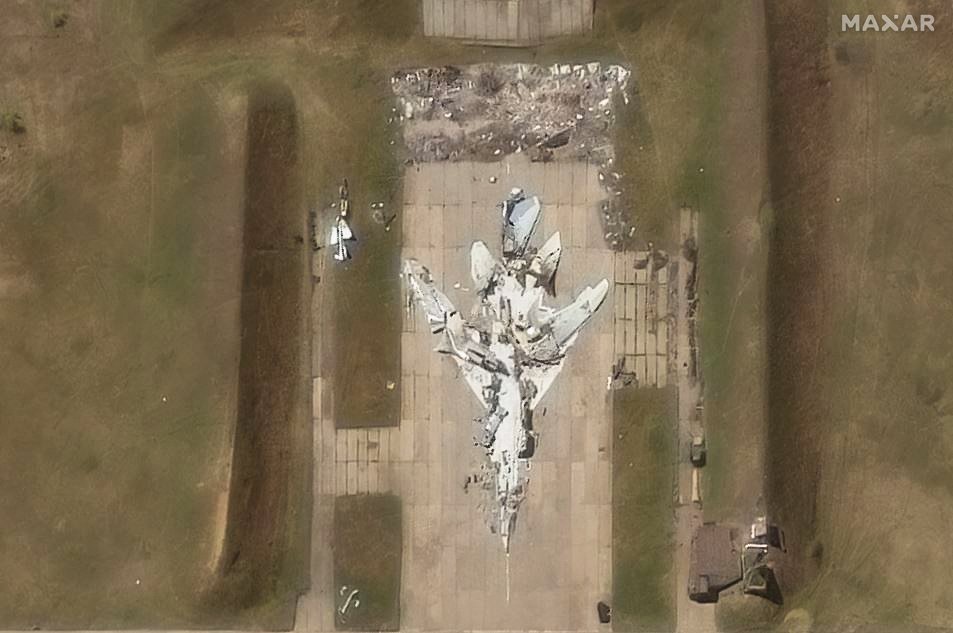
Ukraine's "Operation Spiderweb", carried out with FPV drones, should be seen as a turning point in the Russia-Ukraine war and brings to mind the Pearl Harbor attack by demonstrating the weakness of traditional military power. In this operation, Ukraine smuggled the drones into Russian territory in dismantled form, had them assembled by local sabotage teams and, most critically, bypassed Russian intelligence systems, allowing five different air bases to be targeted simultaneously.
With this operation, Ukraine carried out the longest-range attack on Russian territory with 117 UAVs, having carefully analyzed the intelligence gaps. It is estimated that Russia suffered losses of approximately $7 billion. Thus, the effectiveness of armies with massive defense budgets and strategic bombing capabilities is now being questioned. This situation does not entirely invalidate the current technological power; however, Russia's significant losses against low-cost, high-intelligence systems represent a strategic turning point worth noting.
These developments also present a new area of discussion regarding international relations theory: It is no longer sufficient to possess military capacity or troop numbers. What matters now is how intelligently, flexibly and algorithmically one can utilize that power. A significant asymmetry is beginning to emerge between AI and traditional power on the battlefield, which is starting to narrow the manoeuvring space for conventional great powers. In short, with this strategy, which had been in development for over 18 months, Ukraine effectively implemented a “low-cost, high-intelligence” approach, introducing a new operational model that has fundamentally altered the nature of warfare.