The shadow of regional conflict between Iran and Israel has intensified since the conflict on Gaza began in October. There was a growing fear that it would spiral into a broader regional conflict involving Iran, its allies, and Western countries such as the United States. This fear escalated after Iran’s attack on April 13, which was retaliation for an Israeli airstrike on April 1. The airstrike killed seven Iranian officers, including a top general, at the country’s embassy in Damascus. Over the past six months, there has been violence across the wider Middle East, characterized by punitive attacks between Israel and Iran-backed forces. These attacks have followed a consistent pattern, each marking a gradual escalation of tensions.
Iran’s attack has undoubtedly raised the stakes, marking the first attack by a foreign state on Israel since 1991. However, their attack was limited in nature, and the majority of the rockets took hours to travel from Iran and were successfully shot down. Moreover, Iranian officials repeatedly emphasized that regional states were given a 72-hour warning before the attack. The warning given by Iranian officials to regional states before the attack suggests that Iran did not intend to cause substantial damage. However, there was serious concern about what would come next because Israel considers itself the primary military power in the Middle East and deterrence is crucial to maintain that image, especially after the damage inflicted by Hamas during its attacks on Israel on Oct. 7, 2023.
Israel seeks to reaffirm its deterrence and aims to have the final say, while Iran is determined not to appear weak or fail to respond to escalating Israeli attacks. Moreover, the failure of world powers to resolve the Israeli-Palestinian conflict, the most persistent issue in the region, will continue to fuel instability as long as this conflict remains unresolved and the illegal occupation of Palestinian territory persists, the region will remain on edge, awaiting the next spark that could ignite a war. According to the U.N. Office of the Coordination of Humanitarian Affairs (OCHA), as reported by the Ministry of Health in Gaza, at least 34,488 Palestinians were killed and 77,643 were injured in Gaza between Oct. 7, 2023 and April 29, 2024.
In the 1950s, Israel and Iran were once allies under Iran’s last monarch, Shah Mohammad Reza Pahlavi. However, their relationship drastically changed after the 1979 Islamic revolution in Iran. The new Iranian leadership adopted an anti-Israel stance, condemning the Jewish state as an imperialist force in the Middle East. Iran has supported groups that regularly fight Israel, notably Hamas, which the U.S. and European Union consider a terrorist group, and the Hezbollah militia in Lebanon. They have engaged in covert attacks, often through proxy forces, without escalating to direct warfare.
However, with the ongoing clashes between Israel and Iran, the situation has entered a risky new phase. Especially the military actions conducted by Israel and Iran in April 2024 marked a critical moment in the ongoing cycle of escalation in Middle Eastern conflicts. The situation had the potential to escalate into a full-scale nuclear conflict in the region. Nevertheless, in response to the strikes on April 19, Iran’s foreign minister stated that the drones Israel launched against Isfahan were “mini-drones” and caused no significant damage or casualties. Additionally, a senior Iranian official stated that Iran currently has no immediate plans for retaliations against Israel.
Countries worldwide, including the U.S., condemned Iran’s attack on Israel in the strongest terms. Secretary of State Antony Blinken stated that they do not seek escalation and would continue to support Israel's defense. However, after Israel’s attack on Iran, Secretary of State Antony Blinken, following the conclusion of G-7 talks in Italy, said that the U.S. had not been involved in any offensive operation, the G-7 countries have called for collaboration and urged a cease-fire in Gaza, the release of hostages held by Hamas, humanitarian aid for civilians, and restraint from military action.
Above and beyond, European Commission President Ursula Von der Leyen emphasized the importance of maintaining stability in the region. Likewise, calls for de-escalation were made by China, Russia and other Arab states in the region. Türkiye has also engaged in diplomatic efforts to ease tensions between Iran and the West amid the recent escalation. Foreign Minister Hakan Fidan and Chief of Intelligence Ibrahim Kalin have held discussions with their U.S. and Iranian counterparts to prevent further escalation between Iran and Israel because it could divert attention from the ongoing situation in Gaza and actively pursuing diplomacy with Iran, the U.S., regional states, and Europe. Moreover, Iraq’s Prime Minister Prime Minister Mohammed S. Al Sudani visited the U.S. and met with President Joe Biden during this crisis to prevent further escalation because some of the missiles that were launched toward Israel flew over Iraqi airspace. Additionally, Qatar urged restraint and de-escalation, encouraging concerted regional and international efforts to alleviate tensions and seek peaceful relations.
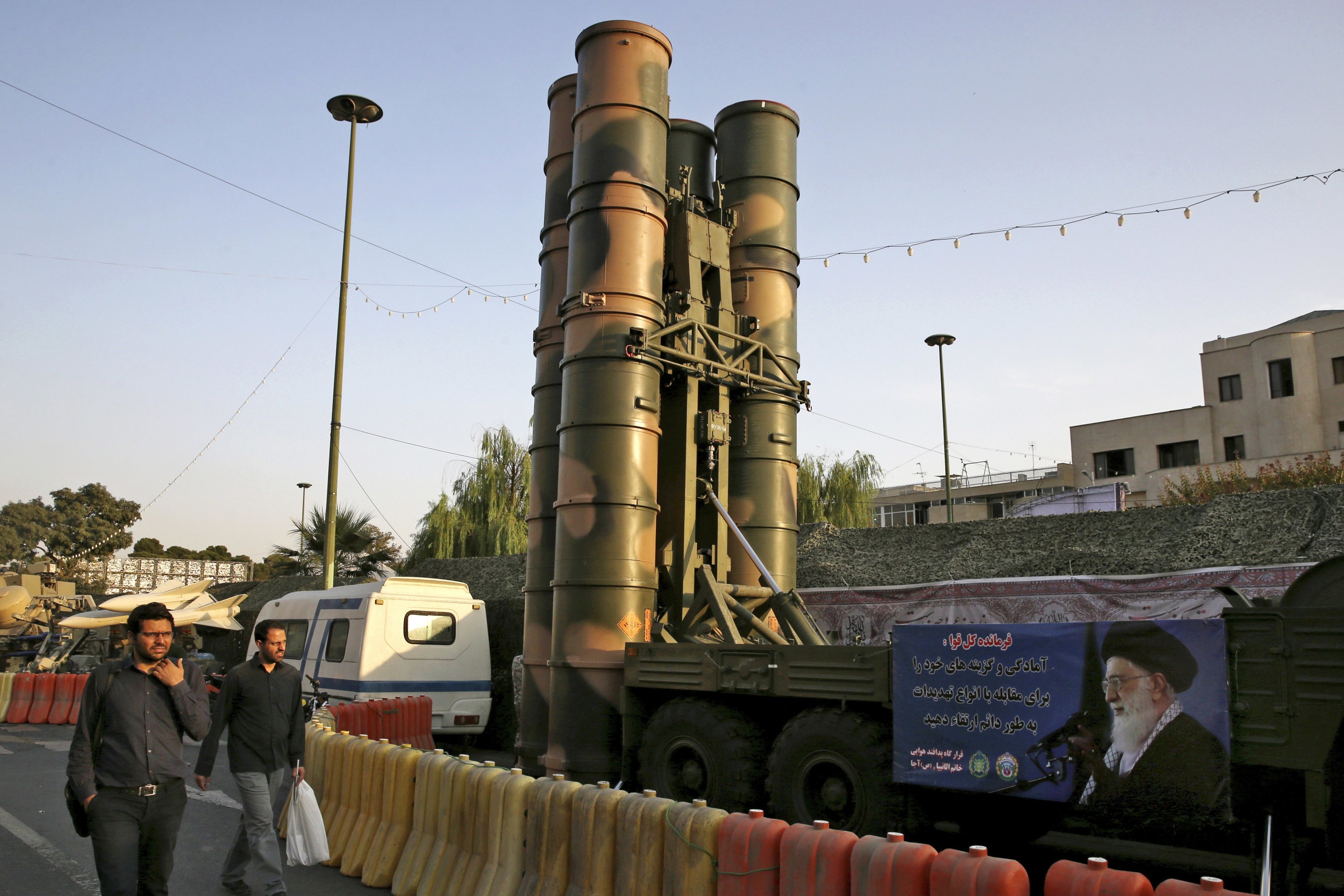
Despite the world’s demand for resolution and a peaceful solution to the ongoing conflicts in the Middle East, questions loom regarding the strategy of both countries moving forward, especially after a senior Iranian official stated that Iran has no immediate plans for retaliation against Israel. Israel possesses superior military capabilities and a track record of effectively neutralizing threats. However, it lacks a perceptible or workable diplomatic proposal to resolve tensions during heightened hostilities, as was the case with Gaza, further complicating the diplomatic situation. On the other hand, Iran has steadily expanded its missile arsenal. Since 1982, it has cultivated an extensive network of allies in Lebanon, Syria, Iraq and Yemen.
The current situation is terrible, marked by heightened tensions between Iran and Israel, a deadlock in Gaza negotiations, an impasse on hostages, worsening famine, and a glaring absence of feasible solutions to the Gaza crisis and de-escalating Israel and Iran tensions. The crucial factor is that whatever happens in retaliatory operations, neither side can claim a decisive victory, whether in conventional or unconventional terms. Mediation efforts and dialogue between Iran and Israel should be the top priorities of international diplomacy to address these challenges.
To address these challenges, international diplomacy must prioritize mediation efforts to restart Gaza negotiations, facilitate humanitarian aid delivery to alleviate the famine and engage in dialogue between Israel and Iran to prevent further escalation. Additionally, fostering trust-building measures and promoting regional cooperation can pave the way for sustainable peace in the Middle East.