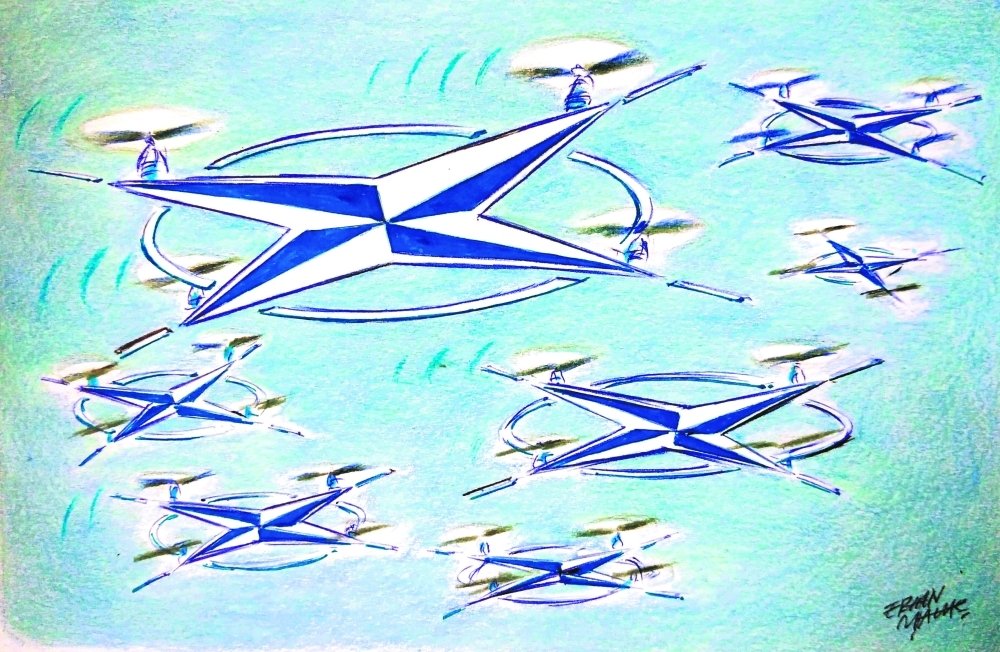
In September 2025, the war in Ukraine crossed a new threshold as Russian drones deliberately penetrated NATO airspace. The most serious incident unfolded during the night of Sept. 9-10, when more than 19 drones launched from Belarus entered Polish skies. Polish F-16s and Dutch F-35s intercepted several, while others crashed into rural areas, damaging homes and vehicles but sparing lives. Around the same time, Romania reported at least one drone briefly breaching its airspace near the Black Sea. Taken together, these events marked the first instance since Russia’s 2022 invasion that NATO aircraft had engaged and destroyed Russian drones inside Alliance territory.
International media quickly characterized the episode as a provocation. Yet this framing, while politically convenient, misses the operational essence of what transpired. The incursions were not symbolic gestures or accidental spillovers. Radar images and flight paths showed a different story. The drones flew in straight, planned routes, not the unpredictable movements usually seen when aircraft are hit by electronic jamming. Unlike the zig-zagging patterns often noticed when Russian drones are disrupted over Kharkiv or Lviv, these drones were programmed from the start to head directly into NATO airspace.
The intent was clear. Moscow did not need to test NATO’s political cohesion; this had already been measured during the early phases of the war in Ukraine. The objective was tactical and operational: to probe NATO’s Concept of Employment (CONEMP) and Concept of Operations (CONOP) under live conditions. Russia transformed the Alliance’s air defense response into a data-collection exercise, a live-fire stress test designed to illuminate NATO’s strengths, weaknesses and decision-making patterns.
What Russia learned was far from minor. It could see how quickly NATO’s fighter jets took off on alert, how the overall response was organized, and how well Airborne Warning & Control System (AWACS) aircraft managed radar data and shared it through secure links. It also gained information on how aerial refueling supported longer missions and how Patriot missile systems were used, whether they actually fired or only provided radar coverage. Most importantly, Moscow could compare NATO’s performance with that of the Ukrainian Air Force, giving it a sense of how effective Western defenses were compared to Ukraine’s under similar conditions.
In short, Russia extracted a detailed operational snapshot of NATO’s defensive architecture, its timing, interoperability and procedural rigor. These insights were arguably of greater strategic value than the physical outcome of the interceptions themselves.
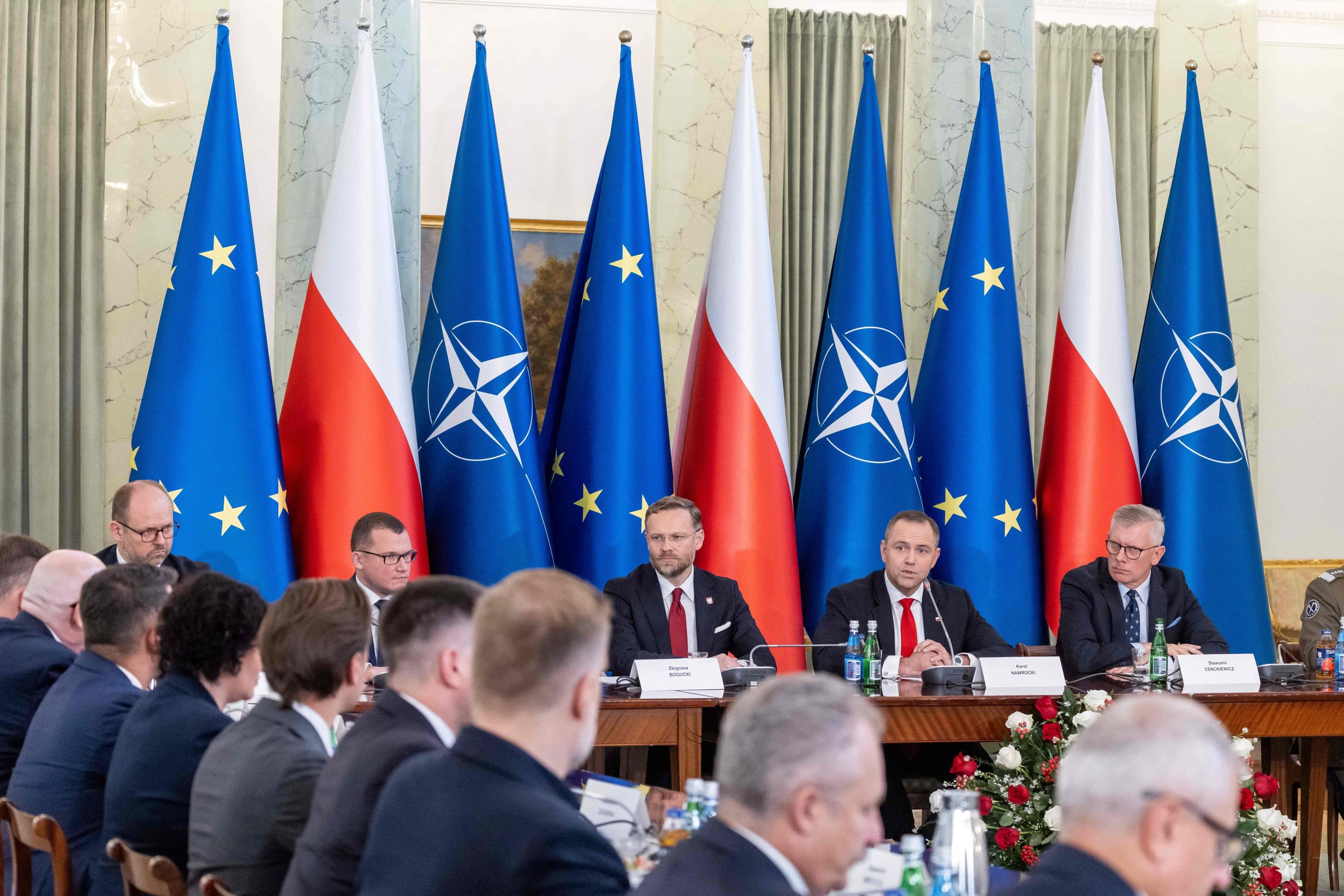
The incidents also revealed troubling vulnerabilities. Nineteen drones entered Polish airspace, yet NATO forces intercepted only three. By contrast, Ukraine, facing larger and more complex swarms on a daily basis, maintains an interception rate of 80 to 90%. This discrepancy underscores the growing asymmetry between Russia’s low-cost drone warfare and NATO’s expensive, often cumbersome defenses.
The imbalance is stark. Russian Geran-type drones can be produced for roughly $10,000 each, while NATO frequently resorts to multimillion-dollar interceptors to neutralize them. The cost-exchange ratio is unsustainable. Worse, such exchanges highlight a doctrinal lag: NATO’s procurement traditions remain tied to small batches of high-value platforms, ill-suited for a conflict environment dominated by mass, attritable systems.
The problem extends beyond Poland. Russian unmanned aerial vehicles (UAVs) have allegedly violated the airspace of Romania, Denmark and Estonia. In Estonia, NATO was compelled to scramble fighters after three Russian MiG-31s loitered for 12 minutes. Each of these incursions demonstrates how Moscow systematically probes Europe’s air defenses, exposing gaps in readiness and forcing expensive, reactionary measures.
Ukraine’s approach, by contrast, illustrates what adaptation looks like. Kyiv has embraced large-scale production, fielding thousands of intercepting drones monthly. It has integrated offensive and defensive platforms into a layered system, complemented by electronic warfare countermeasures. Ukraine’s cost-effective, iterative model has proven resilient against Russia’s massed strikes. Replicating such a system in Europe, however, poses significant challenges. Some analysts estimate that member states may need to dedicate up to 10% of their defense budgets to maintain comparable standby capabilities, a politically difficult proposition in the absence of a formal state of war with Russia.
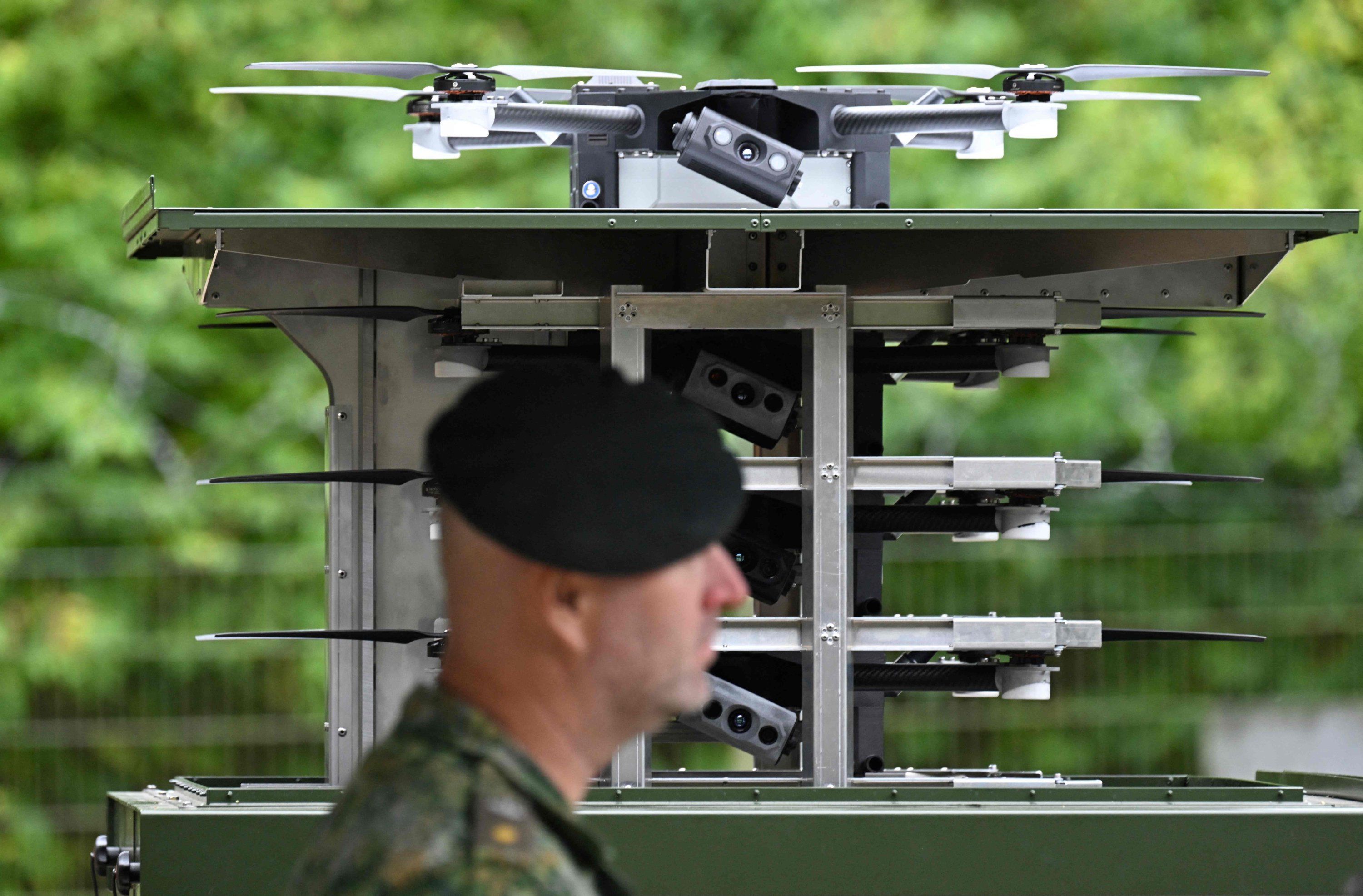
The September incidents, however, served as a catalyst for change. Poland invoked Article 4 of the NATO Treaty, initiating emergency consultations, and the Alliance launched Operation Eastern Watch, reinforcing its eastern flank with additional aircraft, air defense systems, and rapid reaction forces. Yet the more consequential response has been political: the emergence of the so-called Drone Wall.
Championed by European Commission President Ursula von der Leyen and NATO Secretary General Mark Rutte, and politically advanced by Danish Prime Minister Mette Frederiksen, the drone wall is envisioned as a continentwide network integrating detection, jamming, and interception systems. Ten EU defense ministers have already signed onto the initiative.
The project is not without its detractors. French President Emmanuel Macron and Italian Prime Minister Giorgia Meloni have urged caution, warning of escalation risks and budgetary burdens. Funding, technical standardization, and equitable burden-sharing remain unresolved. Nonetheless, momentum is unmistakably building. What began as an emergency measure is rapidly evolving into a new pillar of Europe’s security doctrine, aimed at countering Russia’s hybrid warfare toolkit.
The Polish case was not an accident of diversion, as had often been claimed in previous incidents over Romania or the Baltics. Radar evidence makes clear: these drones were a deliberately configured strike package designed to collect operational intelligence. Set against the backdrop of the Zapad-2025 exercise, which is heavily drone-centric, the September incursions should be viewed as a rehearsal, a validation of Russia’s preparations for high-intensity, drone-driven warfare along NATO’s eastern frontier.
For Europe, the lesson is stark. These incursions are both a warning and a catalyst. They expose NATO’s vulnerability to cost-effective drone warfare and the fragility of defending with prestige systems against attritable threats. Yet, they have also galvanized cooperation, accelerating the move toward a layered, continentwide defense architecture. The irony is inescapable: in seeking to probe NATO’s weaknesses, Russia may have triggered the very adaptation that could close them.
The challenge now is whether Europe can sustain this momentum. If the Alliance continues to expend million-dollar missiles against $10,000 drones, it will remain strategically disadvantaged. But if it embraces scalable production, electronic countermeasures, and integrated continental defense, the drone incursions of September 2025 may be remembered not as NATO’s humiliation, but as the turning point that forced Europe to recalibrate for the wars of the future.