The war launched by Israel and the U.S. against Iran has challenged the assumptions and practices underpinning the existing regional order in the Gulf. The impact of the conflict extends beyond trade disruptions, as demonstrated by the closure of the Strait of Hormuz, and has exposed vulnerabilities across military, political, economic and social domains. From the failure of a decades-old security architecture built primarily on external guarantees rather than indigenous capabilities, to the urgent need to repair damaged energy infrastructure and restore supply security, the post-war environment presents both risks and opportunities for regional actors. These opportunities, however, will be shaped by states’ remaining capabilities, resilience and vulnerabilities.
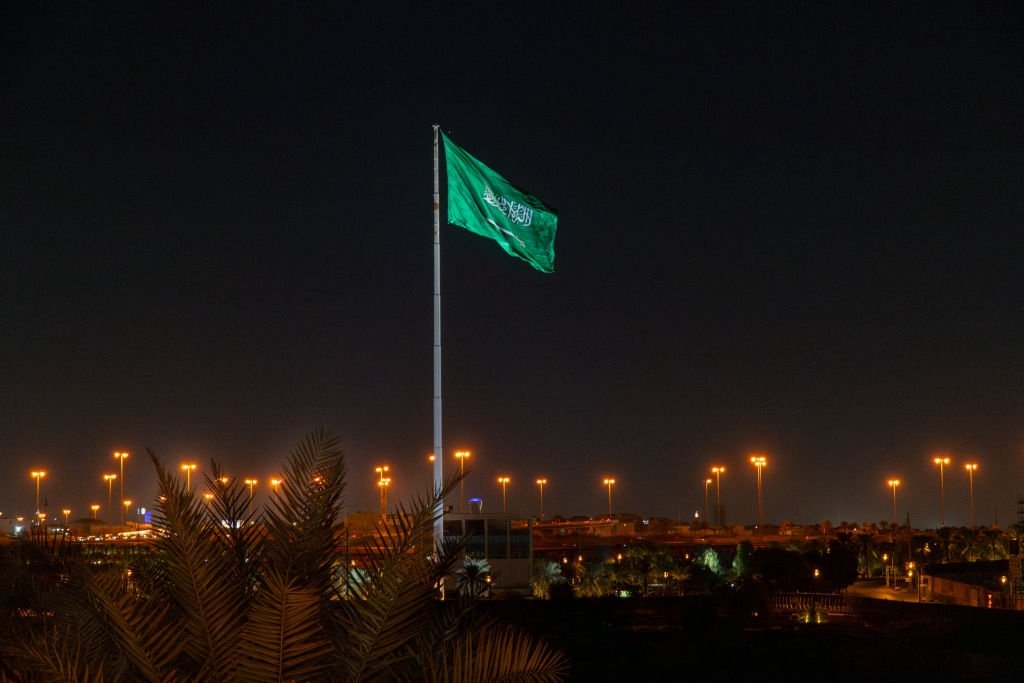
Among Gulf states, Saudi Arabia appears positioned to assume a more central role in the emerging regional order. Having suffered fewer direct strikes from Iran and maintaining relatively stronger deterrence capabilities compared with its neighbors, the kingdom enters the post-war period with greater strategic room to maneuver and potentially expand its regional influence.
The first major advantage that enables Saudi Arabia to expand its diplomatic and political influence in the region is the preservation of its deterrence posture. Compared with other Gulf states, the kingdom suffered significantly fewer direct attacks from Iran during the conflict. While several regional actors faced extensive strikes, in some cases exceeding the level of attacks directed at Israel, Iranian actions against Saudi Arabia remained comparatively limited.
Even when a Saudi Aramco facility, a critical pillar of the kingdom’s hydrocarbon economy, was targeted on March 2, Iran avoided officially claiming responsibility and instead maintained a lower-level discourse, portraying the incident as a possible false-flag operation conducted by Israel. Meanwhile, Saudi Arabia continued to prioritize diplomatic engagement over a more confrontational response, maintaining a balancing approach toward regional rivalries. As a result, unlike the extensive mobilization of Iran-aligned militias in Iraq and elsewhere, Houthi involvement against Saudi Arabia remained limited for an extended period.
The preservation of deterrence, combined with the kingdom’s ability to maintain energy exports through alternative routes, including pipelines connecting the Gulf to the Red Sea, provides Saudi Arabia with greater strategic flexibility in the post-war environment. This creates an opportunity for Riyadh to expand its regional role through partnerships and security cooperation with neighboring states. The kingdom’s early support for Kuwait and Bahrain following the conflict may represent early indicators of a more proactive Saudi leadership role in the emerging regional order.
Alongside diplomatic advantages, Saudi Arabia has also accelerated efforts to strengthen its domestic military capabilities. These investments extend beyond defensive systems, such as anti-tank missiles, drones, and unmanned platforms, toward more advanced areas of warfare and defense technology. The kingdom’s growing interest in next-generation capabilities, including potential cooperation around advanced aircraft such as Türkiye’s fifth-generation fighter program, reflects a broader ambition to reduce reliance on external security providers and develop a more autonomous defense posture.
Saudi Arabia’s economic position before the war was more complicated than its previous period of rapid expansion suggested. After nearly three years of relatively low oil prices, the kingdom began reassessing the scale and prioritization of some Vision 2030 projects. Several high-profile initiatives faced delays or restructuring, including major real estate developments such as NEOM’s The Line, as resources were redirected toward more immediate strategic priorities. Riyadh also sought to strengthen investor confidence by restructuring key institutions, including appointing new leadership at the investment ministry to attract greater foreign direct investment.
However, the post-war environment has altered some of these calculations. Rising oil prices, despite reduced production capacity, have strengthened Saudi Arabia’s fiscal position compared with other Gulf states. This advantage is reinforced by the kingdom’s ability to maintain energy exports through alternative infrastructure, particularly its pipelines connecting the Gulf to the Red Sea, reducing its vulnerability to disruptions in the Strait of Hormuz.
Beyond energy and financial resources, recovery capacity also depends on human capital and labor resilience. Regional dependence is not limited to food supplies or security guarantees; it also extends to foreign workers, skilled labor, and expatriate communities that sustain Gulf economies. Due to its larger domestic population compared with other Gulf states, Saudi Arabia is relatively less dependent on foreign labor. In contrast, other Gulf economies remain heavily reliant on expatriate workers and will need not only to repair physical infrastructure after the conflict but also to restore confidence among foreign professionals and workers.
This dimension could become increasingly significant in the post-war period. States seeking rapid reconstruction and economic recovery will need to demonstrate political stability, social openness, and reliability as destinations for international labor. In this context, Saudi Arabia’s demographic size, economic capacity, and relatively stable image among expatriate communities could provide an additional advantage in shaping the emerging regional order.
Despite these opportunities, Saudi Arabia’s ability to translate its advantages into regional leadership faces several challenges. The most significant among them is the growing divergence between Riyadh and Abu Dhabi. Differences between the two countries have emerged over approaches toward Israel and Iran, as well as competing interests in theaters such as Yemen, Somalia and Sudan. While both states remain important partners within the Gulf framework, their strategic priorities have increasingly moved in different directions.
This intra-Gulf competition could constrain Saudi Arabia’s ability to consolidate a leading regional role. The UAE’s diplomatic agility, economic influence, and expanding network of partnerships provide it with significant capacity to compete for regional influence, potentially limiting Riyadh’s ability to shape the post-war order unilaterally. Therefore, Saudi Arabia’s leadership ambitions will depend not only on its own capabilities but also on its ability to manage competition and preserve coordination with neighboring Gulf states.
A second challenge concerns uncertainty surrounding the future direction of U.S. regional policy. Any significant shift in Washington’s approach toward Gulf security, whether during or after the Trump era, could affect Saudi Arabia’s strategic calculations. A reduced U.S. commitment may accelerate Riyadh’s efforts to develop greater autonomy, while a renewed American security role could limit incentives for deeper regional self-reliance. In either scenario, Saudi Arabia will need to continuously reassess its strategic posture in response to changes in the broader international environment.
The post-war Gulf environment is marked by a gradual but decisive reconfiguration of regional order, shaped by shifting deterrence dynamics, economic recovery capacities, and evolving external alignments. Within this context, Saudi Arabia appears better positioned than many of its regional peers to convert relative stability into political influence. Yet this potential is not automatic. Intra-Gulf competition, particularly with the UAE, and uncertainty in U.S. strategic commitments will continue to constrain Riyadh’s room for maneuver. Ultimately, Saudi Arabia’s emergence as a central actor will depend on its ability to balance autonomy with partnership and translate capacity into sustainable regional order-building.