In today’s technopolar world, technological prowess is as critical to national power as the possession of ballistic missiles or fifth-generation fighter jets. The classical imagery of international politics may still conjure tanks and warplanes, but in the 21st century, lines of code, algorithms and computing power are equally decisive in determining whether a state can project deterrence or falls into dependency. Data has become a strategic resource; controlling data corridors is now as vital as controlling physical borders in terms of national sovereignty. The very conception of sovereignty is evolving to include digital autonomy, the ability of a nation to command its own data, networks and tech infrastructure without undue reliance on foreign powers. In short, cloud computing centers and semiconductor fabs are the new fortresses, and cyber capabilities and AI expertise are the new arsenal.
This shift means “silent” power, embedded in algorithms and software, has taken on a dual-use character. The same machine learning model that can recommend movies or drive a car autonomously can also analyze surveillance footage or guide a military drone. For years, advanced code and AI systems were confined to labs and research hubs. Now they are deployed on the battlefield, shaping the outcomes of conflicts as much as diplomacy. Warfare is increasingly algorithmic warfare, where pattern detection, predictive analytics and autonomous decision-making guide military strategy. From identifying targets in a swarm of sensor data to defending against cyber incursions, bytes are as potent as bullets.
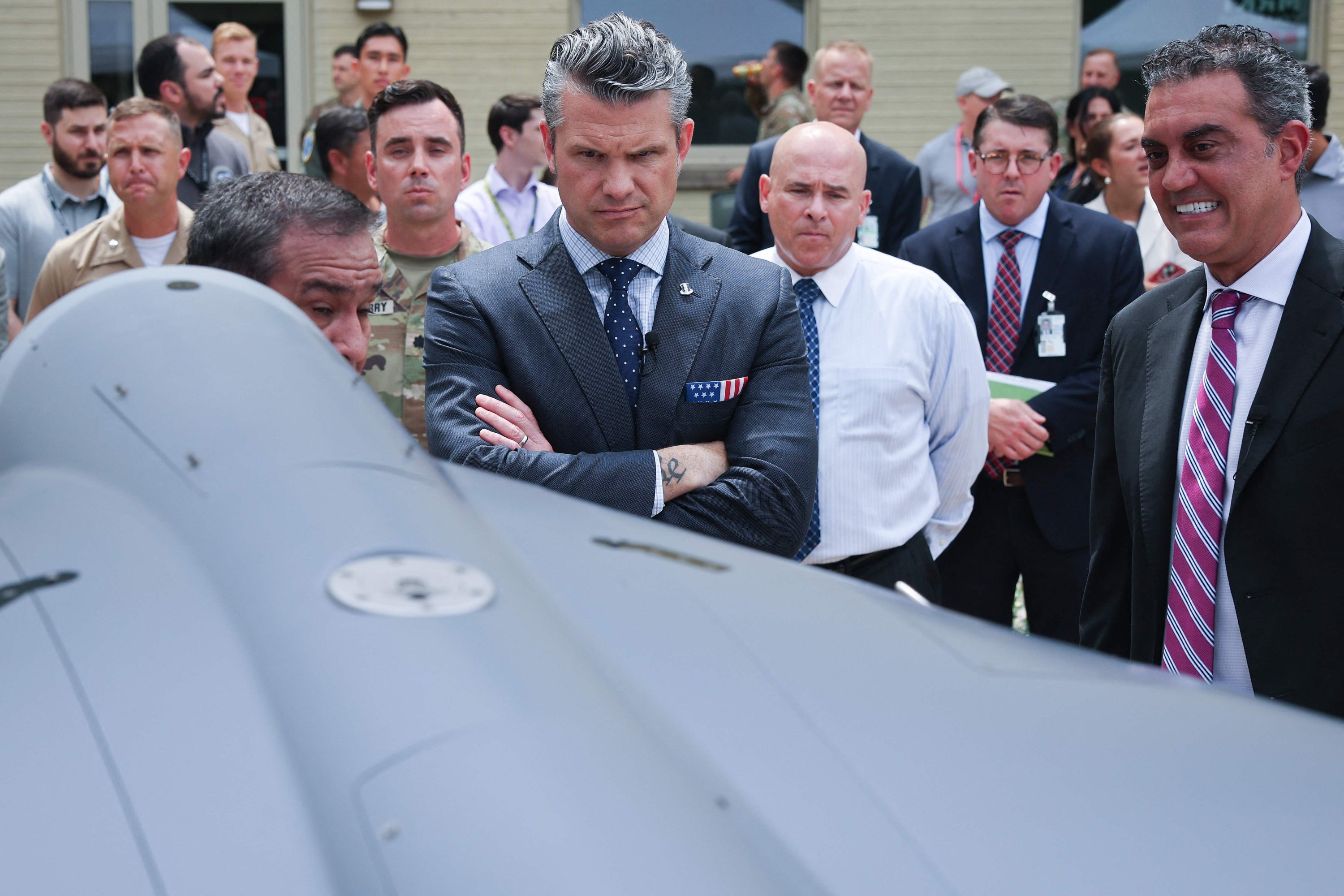
A recent development in the U.S. has blurred the traditional boundaries between civilian innovation and military strategy. In June 2025, the U.S. Army swore in four senior tech executives from OpenAI, Palantir, Meta and a machine learning startup as reserve lieutenant colonels, inaugurating a unit called “Detachment 201.” Detachment 201, officially dubbed the Army’s Executive Innovation Corps, places top Silicon Valley talent in uniform to reinforce America’s capacity in AI and in other cutting-edge technologies. Publicly framed as an act of “silent patriotism” by tech leaders, this initiative signals a new chapter in civil-military cooperation, where service to country doesn’t only mean deploying overseas with a rifle, but it can also mean deploying code and commercial innovation expertise in service of national defense. The commissioning of these tech executives, including a Chief Technology Officer of Meta and a Chief Product Officer of OpenAI, is unprecedented. Rather than serving as outside consultants, they will be insiders in Army ranks, each committing a portion of their time to tackle real defense projects from within. This model effectively brings Silicon Valley into the chain of command.
This development didn’t occur in a vacuum. It is the product of a deliberate, long-term vision in the U.S. defense establishment to merge the nation’s innovation engine with its military muscle. More than a decade of policies and projects foreshadowed Detachment 201. For instance, Palantir Technologies has been working with the Army on an advanced battlefield intelligence system called TITAN (Tactical Intelligence Targeting Access Node). TITAN has been hailed as the Army’s first “AI-defined” vehicle, which is essentially a next-generation mobile command center that uses AI to fuse sensor data and help commanders make faster decisions. This platform, expected in prototype form by 2025, shows how software and AI are reshaping military hardware: Palantir’s design integrates cloud computing and machine learning so soldiers can “see farther and shoot farther” with reduced cognitive load. In other words, the code inside the vehicle is as crucial as the armor outside.
At the same time, defense-focused tech startups like Anduril Industries have emerged as key players, further accelerating the convergence of Silicon Valley innovation and warfare. Anduril, founded by former Oculus VR entrepreneurs, develops autonomous systems varying from drone sentries to AI command-and-control software for the U.S. Department of Defense. Its rapid prototyping of capabilities like counter-drone “ghost” drones and surveillance towers has provided the military with cutting-edge tech at Silicon Valley speed.
The Pentagon has eagerly partnered with such firms (Anduril, Shield AI, SpaceX and others), fundamentally reshaping the concept of national defense to include venture-backed innovation as a pillar of security. The U.S. military’s outreach to technology leaders, exemplified by Detachment 201, is thus a continuation of a trend: leveraging private sector ingenuity for strategic gain. Not long ago, the Department of Defense created the Joint Algorithmic Warfare initiative (notably Project Maven in 2017) to tap AI for analyzing drone surveillance, which was an early attempt at injecting cutting-edge AI into operations. Although Project Maven sparked ethical debates, today there is a stronger consensus in Washington that AI and data analytics are indispensable tools of war, and the question is how best to integrate them. Detachment 201’s answer is to integrate them at the civilian level by having tech professionals wear the uniform and bring their know-how directly to the Pentagon.
Why do these developments matter? Because they herald a world in which the frontiers of defense are written not just in war rooms but in algorithms. The integration of civilian tech expertise into national security infrastructures is poised to alter traditional notions of power projection and deterrence. When a nation’s deterrent power rests partly on invisible lines of code, such as controlling drones, analyzing intelligence and guarding critical infrastructure, the classical metrics of military strength must be rethought. Deterrence in the AI era may be as much about demonstrating algorithmic superiority and resilient networks as about warhead counts. For instance, an AI system that can rapidly neutralize swarms of incoming missiles or drones could prove as important to national defense as a battery of anti-aircraft missiles. Likewise, a breakthrough in quantum-resistant cryptography or cyber-defense can deter adversaries by negating their first-strike advantages in those domains.
Detachment 201 ultimately underscores a deeper reality: We are entering an era when civilian technologists are becoming architects of military power, and patriotism may well be expressed in the quiet efficiency of code. The spectacle of tech executives donning military uniforms is a potent symbol of this new world. It shows that in the competition among states, the winners will be those who successfully establish technology innovation into the national grand strategy. As states increasingly embrace AI as a force multiplier, the ethos of the tech industry – move fast, innovate, iterate – is seeping into defense thinking. This can be a source of strength, as agility and ingenuity are weapons in their own right. But it also demands caution and foresight: institutions must adapt to ensure that the march of algorithmic warfare remains under human ethical guidance and democratic oversight.
Silicon Valley’s “silent patriotism,” in this context, may emerge as the most potent weapon of the 21st century; not because it is loud, but because it is embedded in code. In a world where digital prowess equates to power, nations will lean on their tech professionals as much as their generals. The uniforms may be the same camouflage, but the soldiers wearing them include software engineers and data scientists. The global AI arms race has begun, and its outcome will hinge on something quite intangible: the strategic application of human creativity and values through technology. How we manage that convergence will define the security and liberty of the technopolar age.