For years, the European Union has portrayed itself as a political union founded on shared values and deeper integration, embodied in a common currency, a single market, educational cooperation, the green transition, free movement, solidarity, migration management, and collective security. More recently, discussions surrounding a common European defense have been presented as the latest step in this ongoing process of integration.
However, reality appears to be far more complex. Rather than functioning as a genuine partnership among sovereign states, the EU has increasingly evolved into a political structure that not only governs common policies but also shapes the domestic and foreign policy agendas of its member states.
The recent migration crisis in Ceuta has reignited the debate over the true nature of the EU. Is it a genuine union based on solidarity, or has it evolved into a political project through which powerful lobbying interests increasingly influence the policies of European states?
This debate is not new. In countries such as France, many of the arguments raised decades ago by far-right politician Jean-Marie Le Pen continue to resonate in political discussions today. Among these are the claims that decisions of the European Court of Justice, which override national courts, interfere with national sovereignty; that migration policy should remain under national control; that the EU limits economic independence; and that key decisions are increasingly made by appointed technocrats in Brussels rather than by elected representatives of the member states. According to this perspective, sovereignty has gradually shifted from national governments to the EU. This raises a fundamental question: does the EU adequately protect the sovereignty and security of its own member states?
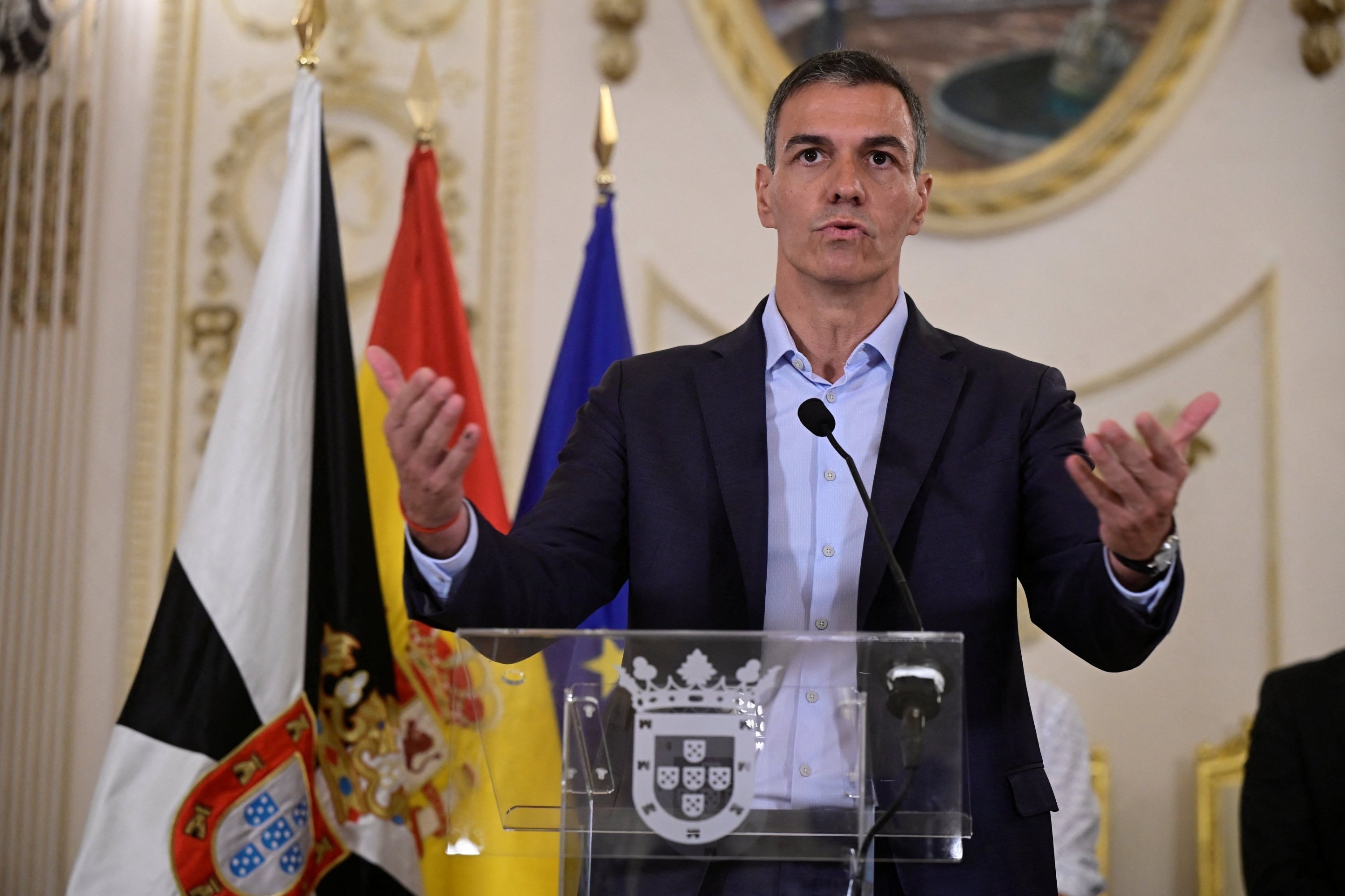
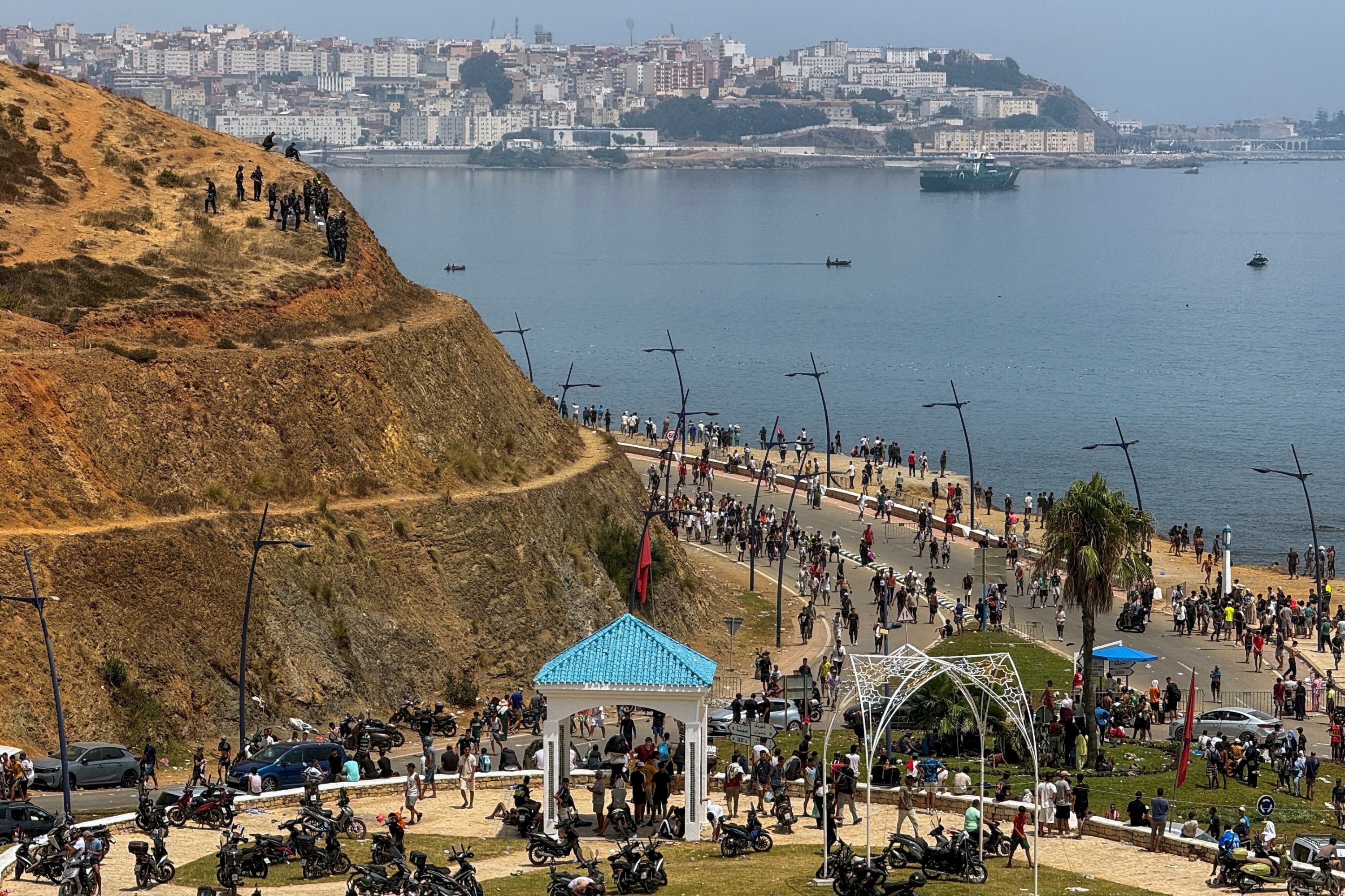
Last week, Spain’s autonomous city of Ceuta in North Africa experienced one of Europe’s largest border crises within hours, as approximately 60,000 irregular migrants crossed the border. Madrid responded swiftly. Following diplomatic contacts with Morocco, border control was restored, and the majority of the migrants were returned within a short period. Prime Minister Pedro Sanchez described the incident not merely as a migration crisis, but as a violation of Spain’s sovereignty and of the EU’s external borders.
The speed with which the crisis unfolded quickly became a subject of debate. Reports claimed that Moroccan security forces had deliberately relaxed border controls. The incident also revived broader discussions about the geopolitical dimensions of migration and its potential use as an instrument of political pressure.
In 2021, a similar crisis occurred when thousands of migrants crossed into Spain from Morocco during a period of diplomatic tension between the two countries over Western Sahara. After the crisis, Morocco once again reinforced its border controls. In 2022, Spain shifted its long-standing position by endorsing Morocco's autonomy proposal for Western Sahara as the most credible basis for resolving the conflict. Since then, migration has continued to be viewed by many observers as a potential source of political leverage over Spain, hanging over the country like the Sword of Damocles.
This time, the pressure came shortly after the Gaza peace plan entered its implementation phase. The Sanchez government had consistently called for a cease-fire and repeatedly condemned Israel's actions in Gaza. After U.S. President Donald Trump urged Israeli Prime Minister Benjamin Netanyahu to proceed with the next phase of the Gaza peace plan, including a withdrawal from Gaza, Spain was suddenly confronted with a massive irregular migration wave from Morocco. Some commentators widely interpreted the timing as Israel's geopolitical revenge, or a form of political payback against Sanchez, allegedly carried out through Morocco, which has emerged as one of Israel's closest strategic partners since signing the Abraham Accords in 2020.
Israel's criticism of Spain had already intensified after Madrid recognized the State of Palestine. Senior Israeli officials accused Sánchez of "rewarding Hamas" and even alleged that he was "complicit in inciting genocide against the Jewish people." Against this backdrop, Israel's U.N. Ambassador Gilad Danon mocked Spain by stating that "Spain, which never misses an opportunity to preach to Israel, has declared a state of emergency in Ceuta," while Spanish Transport Minister Oscar Puente responded that "what is happening in Ceuta has begun to become clearer in light of the statements coming from Israel.
This development was widely interpreted in media and political circles as a direct warning from Israel to the Sanchez administration over its stance on Gaza. Having consistently condemned Israel's military campaign in Gaza, Sanchez stands out within the EU as a key leader who has maintained independence from the Israeli lobby and remained outside the Western baseline on Israel. As a result, the Spanish prime minister has become a frequent target of Israeli criticism. Unable to influence Madrid's foreign policy directly, Israel has sought to exert pressure on Sanchez through both the EU and domestic political dynamics.
What I want to highlight here is the long-standing relationship between Israel and Spain's far-right VOX party. VOX leader Santiago Abascal has repeatedly expressed unwavering support for Israel, visited Israel after the Oct. 7 attacks, and met with senior Israeli officials, while Netanyahu's government has openly welcomed VOX's pro-Israel positions. Against this backdrop, weakening Sanchez politically and strengthening pro-Israel forces such as VOX would better align Spain with Israel's regional and diplomatic interests. Ultimately, the root cause of this migration pressure stems from an international clash of interests, driven by unresolved state conflicts and geopolitical maneuvering between Israel and Morocco.
Particularly striking in this scenario is the posture of Spain’s EU allies. Rather than extending expected support, the EU effectively transformed the situation into an additional mechanism of pressure.
Under the European Union's Pact on Migration and Asylum, protecting the EU's external borders is defined as a shared responsibility. Frontex's rapid intervention teams, financial support mechanisms, border personnel, technical equipment, and crisis management tools were created precisely for extraordinary situations such as this.
Ceuta is not merely Spain's external border; it is also one of the EU's external borders. Yet, instead of activating these common mechanisms, 22 EU member states called for tougher measures ahead of the extraordinary meeting of EU interior ministers, while discussions emerged over the temporary suspension of Spain's Schengen privileges and the reintroduction of border checks on travelers arriving from Spain. However, Ceuta is Spain's “autonomous city” in North Africa and lies outside the Schengen Area. Even travel from Ceuta to mainland Spain requires identification. It is therefore clear that entry into the EU from Ceuta without proper identification is not even possible.
These developments raised fundamental questions about the EU's reliability and credibility, as well as whether the much-invoked principle of "sacred European solidarity" truly exists when one of its member states comes under political pressure.
While Spain expected to receive solidarity from its European partners during the crisis, it instead found itself increasingly isolated within the EU. In a letter addressed to European Commission President Ursula von der Leyen and European Council President Antonio Costa, Sanchez argued that some governments were acting out of prejudice, misinformation, and domestic political considerations, thereby undermining European unity. Stressing that protecting Europe's external borders is the responsibility of the Union as a whole and not Spain alone, he called for an urgent meeting of EU interior ministers.
The Ceuta crisis has also reignited the debate over Europe's security priorities. For years, the EU has committed billions of euros to the security of non-member Ukraine, presenting it as a common European responsibility. Yet when Spain, which safeguards one of the EU's external borders, came under sudden migration pressure, Brussels' response was not to take action to address the crisis but instead to exert political pressure on one of its own member states. This has reinforced criticism that the EU responds differently depending on the crisis, lacks consistency in its decision-making, and does not always act impartially.
The Ceuta crisis is not merely a matter of irregular migration. It is also one of the most significant stress tests of European integration, common border management, and political solidarity. If the EU cannot respond collectively in times of crisis, confidence in future joint security and defense initiatives will inevitably be undermined.
It can also be said that the EU increasingly appears to function as a political project aimed at shaping Europe into a single strategic voice. Member states pursuing more independent foreign policies may be left out of the EU's selective protection umbrella.
By contrast, the EU has repeatedly justified its political, financial and military support to Ukrainian President Volodymyr Zelenskyy by arguing that Ukraine, which is not even an EU member state, is defending Europe's borders. Despite concerns over the postponement of elections under martial law, the banning of 11 political parties, restrictions on media freedoms, and the concentration of executive power in Ukraine, Zelenskyy, who is of Jewish heritage and has consistently expressed strong support for Israel, is not facing alienation from the EU members like Sanchez.
This contrast raises legitimate questions about whether the EU applies democratic standards selectively or whether geopolitical alignment outweighs proclaimed European values. Furthermore, we should ask whether the EU truly maintains unity when the interests of its member states conflict with those of influential political actors and interest groups.
If the EU is prepared to influence the legal systems, agricultural policies, internal affairs, migration policies, trade policies, and social agendas of its member states, why does it fail to stand by one of them during a migration crisis? In searching for an answer, one is reminded of Jean-Marie Le Pen's long-standing criticism of Brussels: that power increasingly rests with technocrats who, according to their critics, are more accountable to the institutions that appoint them than to the citizens of Europe.