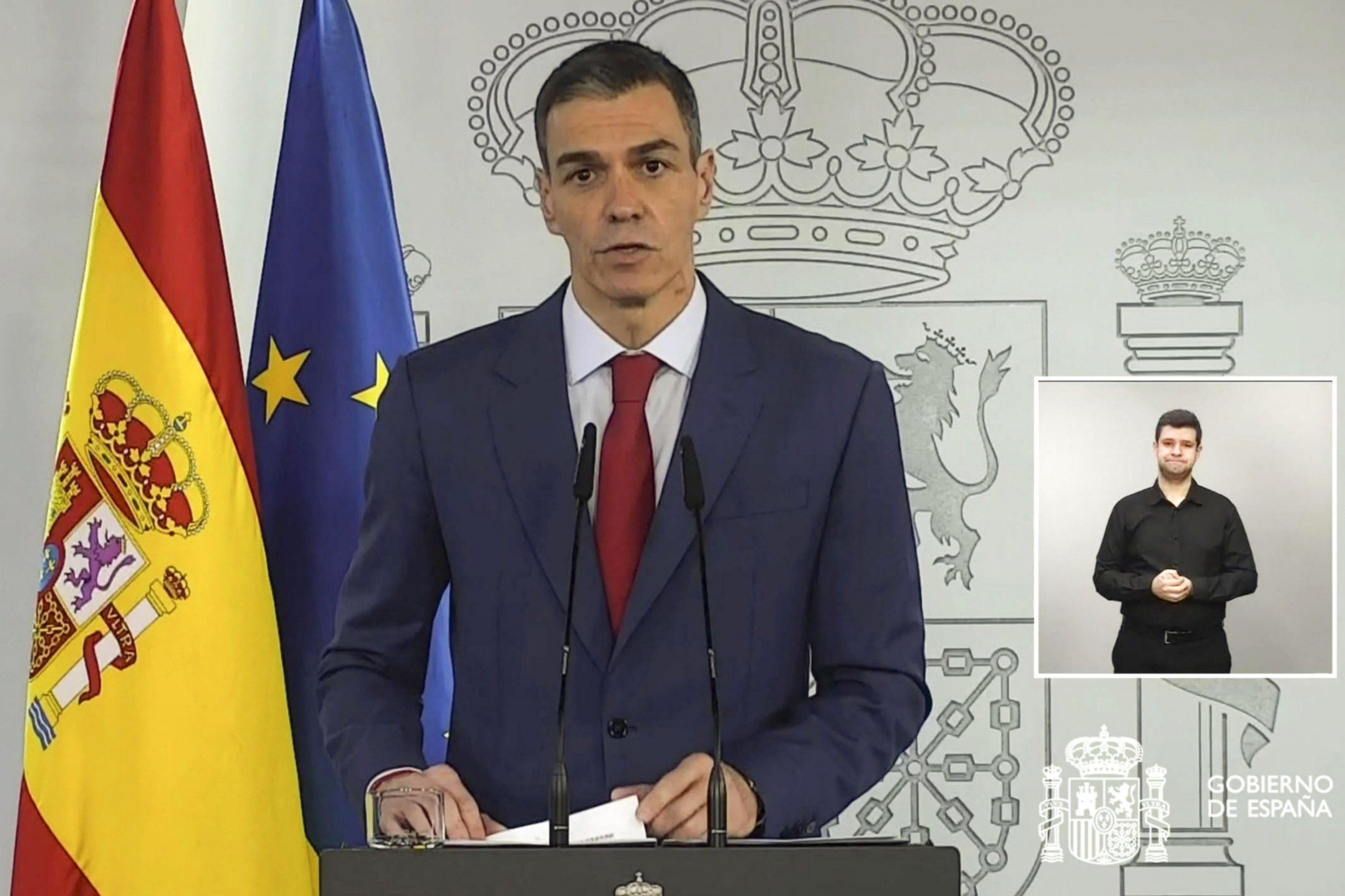
Last week, Spanish Prime Minister Pedro Sanchez drew global attention with his confrontation with U.S. President Donald Trump, while the growing friendship between Türkiye and Spain and the ongoing war in Iran dominated the international agenda. In this context, both Sanchez’s announcement that Spain would not support the Iran war independently of the United States and the potential developments in Turkish-Spanish bilateral relations in the coming period merit closer examination.
Under the government of Sanchez and his party, the Spanish Socialist Workers' Party, Spain has begun to pursue a more independent political path within Europe. For many years, countries within the Western alliance relied heavily on the U.S. due to American-backed defense structures and deep economic ties. Today, however, under the influence of Sanchez’s Spain, some European countries are beginning to assert a greater degree of political autonomy and decision-making independence.
This tendency first became visible during the Gaza War and has continued during the Iran War as well. Moreover, last year, Spain stood alone within NATO as the only country refusing to increase its military expenditure from 2% to 5%, despite widespread pressure.
Despite recent pressures and economic threats from Trump, it is important to briefly explain why Spain announced that it would not support the Iran war and why Spanish military bases are strategically important for the United States.
Due to its geographic position between the Atlantic Ocean and the Mediterranean Sea, Spain holds considerable strategic weight within NATO.
Two key facilities, Naval Station Rota and Morón Air Base, are among the most important U.S. military logistics centers in Europe. The Rota naval base serves as a strategic hub for U.S. Navy operations in the Mediterranean and the Middle East, and the Aegis missile defense destroyers stationed there play an important role in operations across the Mediterranean, the Red Sea, and the Persian Gulf. Morón Air Base, meanwhile, functions as a rapid deployment and response point for the U.S. Air Force and Marine Corps. Logistical shipments and military deployments to Africa and the Middle East frequently originate from this base.
Spain’s reluctance to allow the use of these bases can largely be explained by its pro-peace political stance and by the lasting trauma of the Iraq War.
Recalling the Iraq War and the destruction that followed, Sanchez stated:
“The world has faced this situation before. Twenty-three years ago, another U.S. administration dragged us into an unjust war. The Iraq War led to a dramatic increase in terrorism and triggered serious migration and economic crises.”
It is worth recalling that the alignment of former Spanish Prime Minister Jose Maria Aznar with former U.S. President George W. Bush during the 2003 invasion of Iraq sparked massive protests across Spain. More than 3 million people took to the streets. The public backlash contributed to the fall of the government in the following elections and ultimately led to the rise of Sanchez’s political camp.
Spanish public opinion has historically maintained a strong anti-war sentiment. During the Gaza War as well, large pro-Palestinian demonstrations were organized throughout the country. In this context, Spain’s refusal to support the U.S.-Israel-Iran war, which began with the deaths of civilians, may also strengthen the position of the left-wing coalition in future general elections.
On the other hand, Trump’s threat to cut trade relations with Spain if the country refused to allow the use of military bases during the Iran War may not be advantageous for the U.S. In bilateral trade, the U.S. actually maintains a surplus. In 2025, U.S. exports to Spain reached $26.1 billion, while imports stood at $21.3 billion, giving the U.S. a trade surplus of $4.8 billion.
Besides, the Spanish government received strong political backing from the European Union in this dispute. Other major Mediterranean members of the EU, including France and Italy, also indicated that they would not allow the U.S. to use their military bases for the conflict. Brussels responded to Washington’s threats by stating, “Any threat against a member state is, by definition, a threat against the EU.” In 2025, EU-U.S. relations, already strained by Trump’s customs tariffs, appear to be entering a new phase as European governments push back against American pressure during the Iran War crisis.
Therefore, the idea of Europe’s gradual decoupling from the United States, long debated across the continent, has once again returned to the political agenda. This vision has been championed particularly by French President Emmanuel Macron. The debate intensified after Trump introduced additional customs tariffs in 2025 and called for increased NATO spending by European allies.
According to this approach, the objective is not for Europe to completely break away from the U.S. but rather to become strategically independent, what Macron calls “strategic autonomy.” In this vision, the EU should strengthen its own defense capacity, develop a common European military force, reduce dependence on the U.S. in defense and technology, and retain the ability to pursue its own foreign policy interests even within the broader NATO framework. The goal is for Europe to maintain its alliance with the U.S. while also having the capacity to act independently during major international crises.
Spain, however, appears to be drawing a clear line between alliance commitments and national independence. It seeks a path that preserves cooperation while also emphasizing sovereign decision-making.
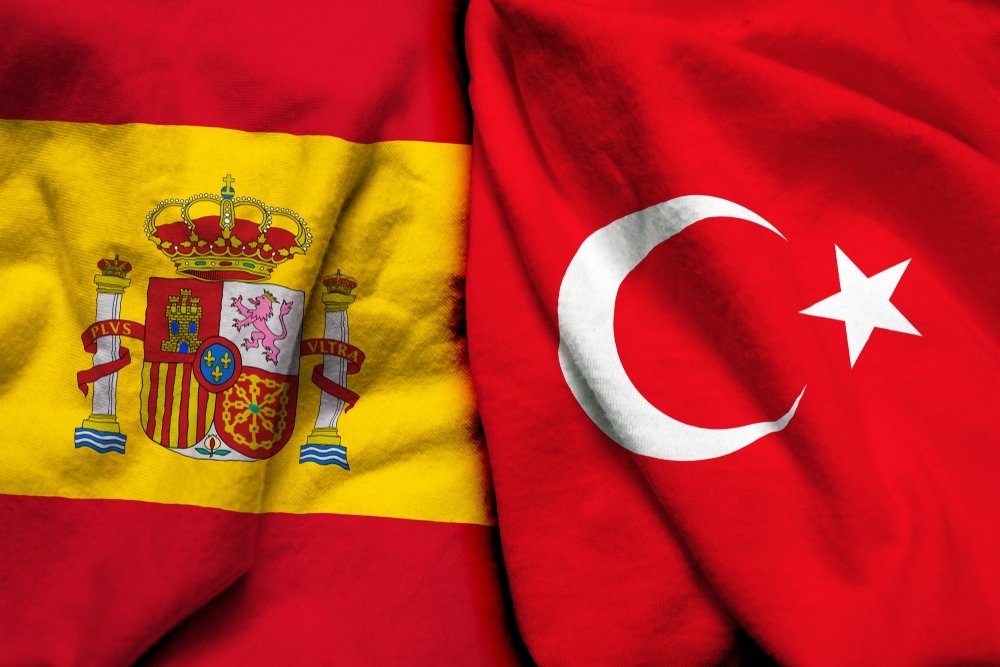
The possibility that the Mediterranean could become a new zone of conflict, and that the Iran war might expand into the region, has alarmed many European countries. In particular, after the airstrike on the Greek Cypriot administration, European states have begun reassessing their strategic positions. In an increasingly polarized world, new alliances are also emerging, and therefore, it is worth briefly touching on this week’s widely discussed topic: the fledgling kinship between Spain and Türkiye.
The two countries have historically maintained positive relations. However, the recent closeness began when Sanchez adopted a firm and distinctive stance from the very beginning of the Gaza War, setting himself apart from several European leaders. His government openly criticized developments in Gaza, officially recognized Palestine, and halted arms exports to Israel. These policies received considerable appreciation both from the Turkish government and from public opinion in Türkiye.
In addition, Sanchez’s relatively welcoming approach to immigrants, similar in some respects to the policies pursued by President Recep Tayyip Erdoğan, has further contributed to bringing the two countries closer.
Then came the Iran crisis. When the U.S. requested the use of Spanish bases for military operations against Iran, Sanchez refused and publicly declared that Spain would not support the war. This decision further strengthened his popularity in Türkiye.
Then suddenly, a wave of sympathy and solidarity seemed to emerge between the societies of the two warm Mediterranean countries. It was as if two lovers, longing for each other across the seas, had finally reunited. Galata Tower, ancient witness to Istanbul's soul, glowed with the colors of both nations. Flags of Spain and Türkiye waved side by side, in the streets and on screens, as social media became a canvas of mutual affection. In addition, in Spain, a campaign for visa facilitation for Turkish citizens has started.
As I mentioned in one of my op-eds for Daily Sabah months ago, the growing friendship between Spain and Türkiye may mark the beginning of a broader geopolitical process that would be fruitful not only for the two countries but for the whole region. Recently, signs have appeared suggesting that a Mediterranean characterized by stability, trade and diplomacy could emerge instead of one defined by conflict and polarization.
The strengthening relations between Türkiye and Spain could potentially expand to include countries such as Algeria and Tunisia, which share similar positions on regional issues. If the Exclusive Economic Zone agreement previously signed between Türkiye and Libya were extended to include these countries, a broader Mediterranean corridor could emerge in the near future. Such a development would activate a trade and security line stretching from Türkiye on one side of the Mediterranean to Spain on the other. With the possible participation of Türkiye’s partners, including the Turkish Republic of Northern Cyprus (TRNC) and Syria, a genuine process of regional stabilization could gradually take shape.
The issue of a maritime jurisdiction agreement between Türkiye and Syria had previously appeared on the political agenda and may return in the context of the Iran war. The current conflict environment may also accelerate the formation of new alliances, as the Mediterranean is increasingly becoming a zone of strategic tension.
In recent days, a missile fired toward the Greek Cypriot administration prompted naval defense deployments from several countries, including the United Kingdom, France, the Netherlands, Greece, Spain and Türkiye. Germany also announced that it was considering sending a naval vessel. In other words, several countries are already preparing for the possibility of a wider conflict in the region. The rich natural resources of the Mediterranean are once again becoming the subject of geopolitical competition and military rivalry.
In this environment, countries are increasingly inclined to define their strategic positions. One example is a structure referred to as the “Hexagon Alliance,” proposed by Israeli Prime Minister Benjamin Netanyahu. This proposed alliance, which would include countries such as India, Greece, the Greek Cypriot administration, and perhaps others, represents a geopolitical structure that could further polarize the region and increase the risk of confrontation.
In such a tense environment, strong alliance agreements become critically important.
There is an ongoing war process in the Middle East that could potentially spill over into the Mediterranean. NATO allies who do not share the U.S.’ position and who do not wish to support the war have begun to question the future of the alliance. For instance, Member of the European Parliament Irene Montero recently stated: “We must leave NATO because being an ally of the United States puts us at risk.”
Such voices are likely to grow louder. These developments, initiated particularly under the leadership of Spain, can be interpreted as efforts by European countries to assert their independence and rediscover their political identity in relation to the U.S. In this sense, it may be argued that a new era in European geopolitics has begun.