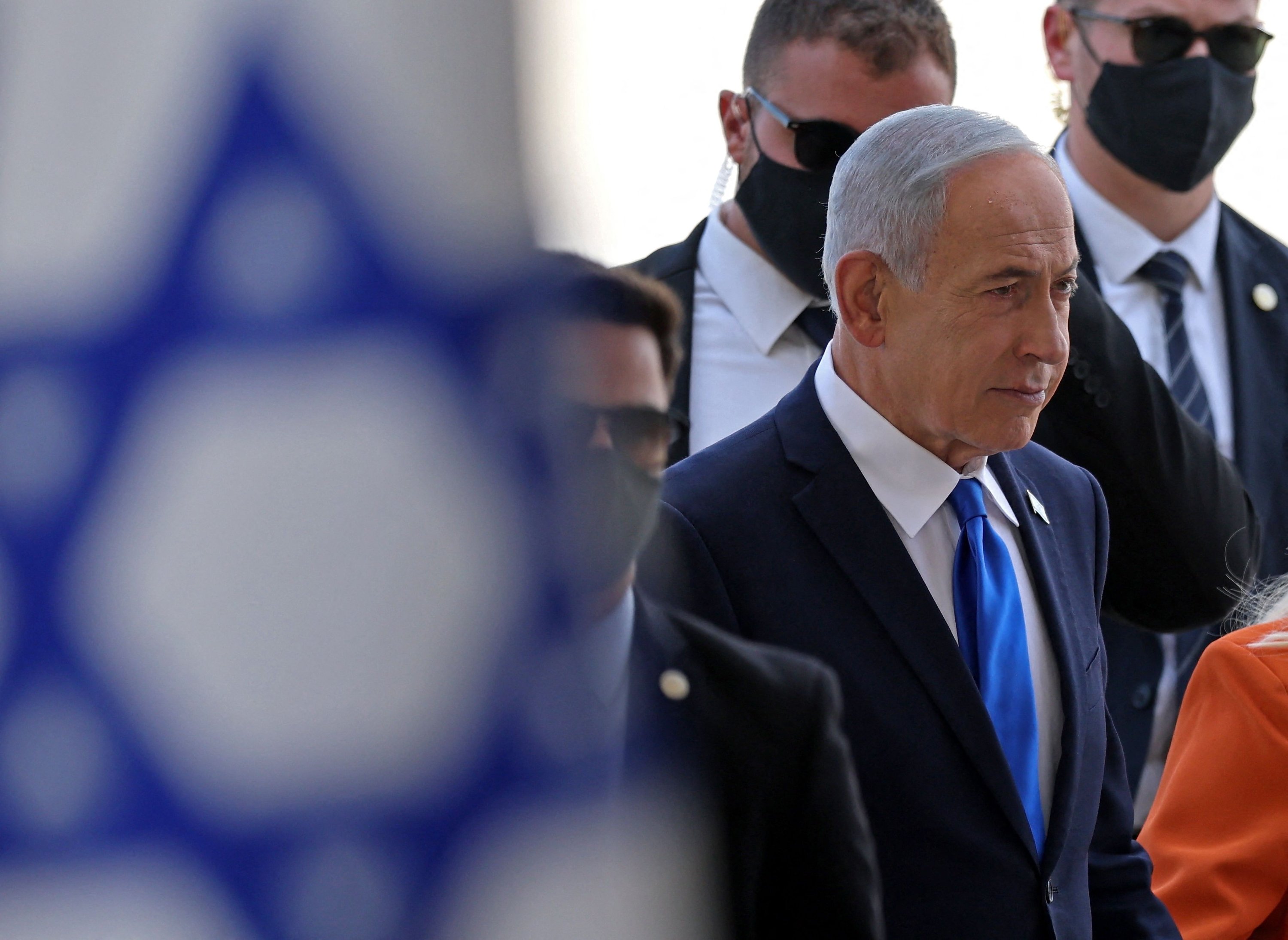
Israeli Prime Minister Benjamin Netanyahu said on Feb. 22 at a Shin Bet leadership conference that Israel is seeking to form its own regional alliance to counter the axis of Iran and the Muslim Brotherhood. Since then, questions have emerged about the specific threats he was referring to, which countries might join the alliance, and what its overall purpose would be.
Thereafter, former Israeli Prime Minister Naftali Bennett's statement, “After Iran, the new threat in the region is Türkiye,” raised suspicions that Netanyahu's words were also aimed at Türkiye.
Although these statements remind us of the “periphery doctrine” of Israel implemented during its founding phase, its recent attempts to form a regional alliance against Türkiye lead us to believe that these latest statements stem more from discomfort with Türkiye's growing influence in the region.
What is this “hexagon bloc” mentioned by Netanyahu? What is the source of Israel's recent hostility toward Türkiye and the anti-Türkiye alliances it has been trying to establish?
Netanyahu's timing, coming when the U.S. was about to strike Iran, is significant. First, it is predicted that after U.S. intervention, either the regime in Iran will change or Iran will be fragmented, and Türkiye will fill the vacuum left by Iran's neutralization.
However, as if Türkiye's policies supporting Palestine against Israel were not enough, Israel was further disturbed by the establishment of a pro-Türkiye administration in Syria, which took significant steps to ensure its territorial integrity. This is because Israel wanted a relatively weak government in Syria so that it could establish a permanent presence in the Syrian territories it occupies and divide Syria according to its own interests.
Following Türkiye's efforts to implement a cease-fire in Gaza, and then ensuring that the YPG, the Syrian wing of the PKK, complies with the integration agreement with the central government, Netanyahu's statement is no coincidence, especially in light of reports that the U.S. will also withdraw from the region.
As can be understood from Netanyahu's speech, the Shiite crescent threat has ended with Iran losing its influence in the region after being removed from Syria, its proxies weakened and now being confronted by the U.S.
However, Israel has sounded the alarm following Türkiye’s recent establishment of close ties with Egypt and Saudi Arabia, as well as reports of a possible military alliance between Türkiye, Saudi Arabia and Pakistan.
The claims that a new Sunni alliance is being formed in the region are causing Israel unease. Israel has, until now, sown discord among the countries of the region, exploiting these divisions to its own advantage and reorganizing the region according to its interests. Therefore, Netanyahu's statements regarding this hexagon bloc directly target Türkiye's growing influence in the region.
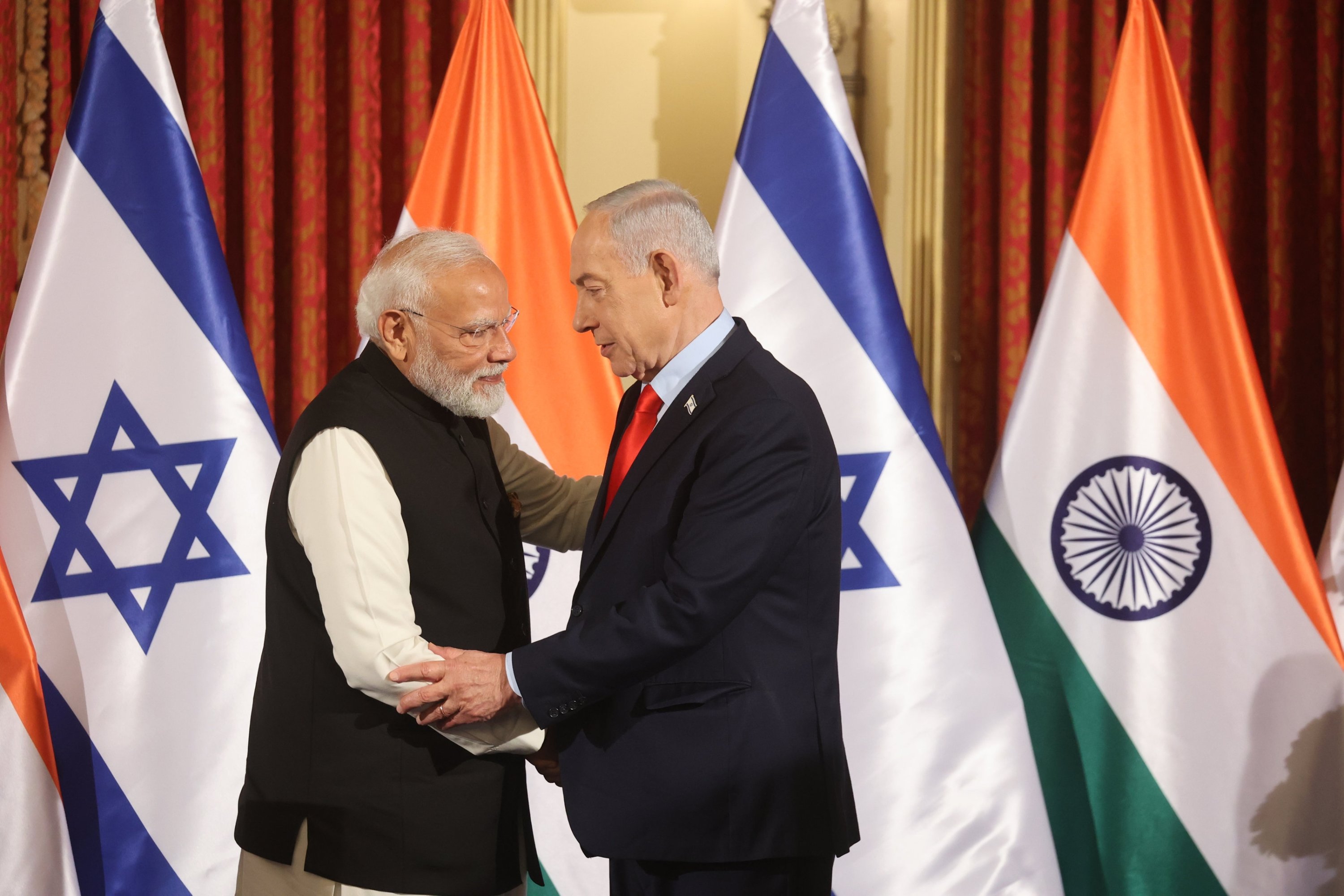
Three days after Netanyahu's statement, on Feb. 25, Indian Prime Minister Narendra Modi, who was visiting Israel for the second time, said: "There is a tremendous alliance between Israel and India, and we will discuss all kinds of cooperation. As you know, India is not a small country. It has a population of 1.4 billion. India has tremendous power and tremendous popularity.“
After making this statement, he said in his speech at the Knesset, ”We will work closely with Israel on projects such as IMEC and I2U2 projects." Given Netanyahu and Modi's warm interactions throughout the visit, it is anticipated that India will be the first member of the hexagon bloc.
Israel has been establishing close ties with Greece and the Greek Cypriot administration since the 2010s, ensuring their membership in the Eastern Mediterranean Gas Forum and positioning them as part of an anti-Türkiye bloc.
Finally, on Dec. 22, 2025, a new agreement was signed between these three countries, aimed at strengthening economic, military and security cooperation.
Immediately after this agreement, Israel also sold Barak MX air defense systems to the Greek Cypriot administration and short and medium-range missiles to Greece for deployment on the Aegean islands, thereby attempting to strengthen these two countries against Türkiye. Therefore, it is believed that after India, Greece and the Greek Cypriots are the strongest candidates for the hexagon bloc mentioned by Netanyahu.
The final candidate is assessed to be Somaliland, which Israel announced it had officially recognized on Dec. 26, 2025. Somaliland, which unilaterally declared independence from Somalia in 1991, has not been recognized by any other state to date, so Israel’s declaration carries no legal validity. Therefore, under international law, it is understood that Somaliland, a province of Somalia, would be recognized by Israel on the condition that it joins the alliance.

Israel is currently being tried by the International Court of Justice for its policy of genocide in Gaza. Furthermore, the International Criminal Court has issued arrest warrants for Netanyahu and former Defense Minister Yoav Gallant for war crimes and crimes against humanity. Therefore, it should have been unacceptable for any country to enter into an alliance with Israel or even be seen in association with it.
Despite all this, countries that cooperate with Israel will be complicit in the crimes it commits. In this case, the countries mentioned above will have to answer to both their own people and the international community.
Furthermore, as if its occupation of Palestinian territories since 1948 were not enough, Israel has been launching attacks on Lebanon under the pretext of "fighting with Hezbollah" and occupying lands of Lebanon and Syria.
Netanyahu, who has declared that they will not withdraw from the occupied territories, has based his claims on his holy books, using the rhetoric of “promised lands.” Netanyahu, who previously accused Iran of establishing a Shiite axis in the region and now accuses Türkiye of establishing a Sunni axis, is clearly attempting to establish a broad Zionist axis. Therefore, Israel is the real threat to the region, not Türkiye.
In addition, it is understood that Netanyahu's statement on the hexagon bloc aims to cover up the controversy that began when Mike Huckabee, the U.S. ambassador to Tel Aviv, said in an interview last week that “it would not be a problem for Israel to take all the land in this region.” By putting such an assertive statement into circulation, he is trying to make people forget Muckabee's gaffe.
Israel has previously attempted to form alliances against Türkiye, and Türkiye has always managed to break up the anti-Türkiye formations. Once again, Türkiye will foil the nonsense of the hexagon bloc that has been put forward today and dash Israel's hopes.