In the final decade of the 20th century, the world transformed into a “global village” with a new global order. During this period, a universally accepted reality became evident: No single country can address the multitude of crises and threats in the world on its own. This recognition has led to the prominence of various alliance mechanisms. In his renowned book "The Origins of Alliances" (1987), Stephen Walt argued that states align themselves not in response to power alone but in reaction to perceived threats. Therefore, it is natural for nations to join alliances whose agendas align with their goals and policies.
Türkiye has played an active role in the Western-centered world order that emerged after World War II. It became a founding member of several international organizations, such as the United Nations, the Council of Europe and the Organisation for Security and Co-operation in Europe (OSCE). By the 1990s, Türkiye took a leading role in creating new alliance mechanisms, including the D-8 Organization for Economic Co-operation.
The idea of fostering cooperation among developing Muslim countries, initially proposed by the late professor Necmettin Erbakan during a seminar on “Co-operation in Development” held in Istanbul in October 1996, was brought to fruition the following year. The D-8 officially came into existence with the signing of the Istanbul Declaration at the summit of heads of state and government, hosted by Türkiye on June 15, 1997, in Istanbul. The summit included the participation of Bangladesh, Egypt, Indonesia, Iran, Malaysia, Nigeria and Pakistan. The secretariat of the organization, with Türkiye playing a leading role, is located in Istanbul. Based on the Istanbul Declaration, the founding principles and objectives of the D-8 emphasize peace over conflict, dialogue over confrontation, equality over exploitation and justice over double standards.
As a result of its efforts to gain effective representation in prominent international organizations, the D-8 was granted observer status at the 68th session of the United Nations General Assembly (UNGA). Additionally, all D-8 member states, which are also members of the Organisation of Islamic Cooperation (OIC), maintain active representation within that organization. Notably, the combined population of D-8 member countries accounts for approximately two-thirds of the OIC population. To strengthen collaboration, a memorandum of understanding (MoU) was signed between the D-8 and the OIC on Oct. 7, 2010, facilitating joint cooperation and bilateral exchanges. Beyond its pursuit of political influence, the D-8 also holds significant economic importance. The organization, whose primary areas of focus include trade, agriculture, food security, industry, energy and transport, has the potential to play a crucial role in the global economy.
With a total population exceeding 1.25 billion (representing about 16% of the global population), the D-8 commands a total trade volume of approximately $2.3 trillion. According to the International Monetary Fund (IMF), this includes exports of $1.12 trillion and imports of $1.17 trillion. Furthermore, the combined gross domestic product (GDP) of D-8 member states stands at $4.8 trillion, constituting 4.3% of the world’s total economic output. These figures underscore the current position and potential influence of the D-8 in the global economy. However, despite the potential of its member countries, the D-8 has yet to fully reflect its capabilities in statistical terms.
An important aspect of Ankara’s vision in international relations, encapsulated in the “Century of Türkiye,” is its defining approach and behavior in foreign affairs. A key pillar of this strategy, particularly formulated during Hakan Fidan’s tenure as foreign minister, is the vision of expanding the institutional basis of foreign relations. This approach, which focuses on preserving existing institutional ties while establishing new ones, is exemplified by the expansion of the D-8 by including Azerbaijan as a member. In addition, one of Türkiye’s key objectives within the D-8 is to foster cooperation and promote effective multilateralism in addressing global challenges. Ankara also aspires to make the global system more equitable and inclusive on a broader scale.
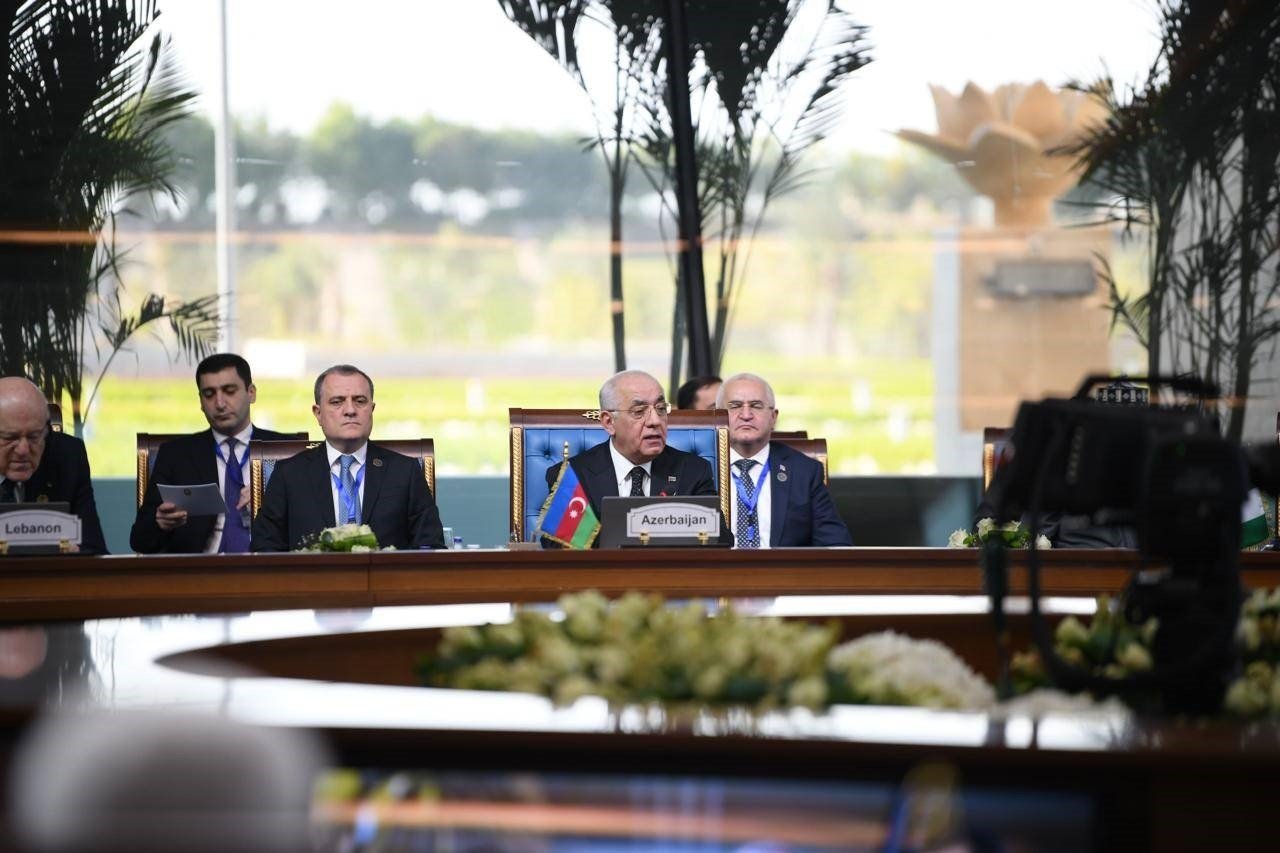
At the 11th summit of the D-8 organization, held in Cairo, Egypt, on Dec. 19, the organization expanded for the first time with the acceptance of Azerbaijan as a new member. Azerbaijan was represented at the summit by Prime Minister Ali Asadov and its membership was formally welcomed in the summit’s final declaration. Türkiye was represented at the Cairo summit by President Recep Tayyip Erdoğan. Key topics of discussion included the issues of Gaza and Syria, highlighting Ankara’s agenda-setting capacity and diplomatic influence, which also played a role in Azerbaijan’s D-8 membership.
In his speech at the summit, President Erdoğan expressed satisfaction with Azerbaijan’s inclusion, stating: “With the membership of Azerbaijan, which has made significant breakthroughs in recent years, in our organization, we are stronger today than we were yesterday. I welcome Brother Azerbaijan to our D-8 family.” The day after the summit, Azerbaijan’s membership in the D-8 was officially announced by the Azerbaijani Foreign Ministry.
This development, significant for both Turkish and Azerbaijani diplomacy, is expected to benefit both countries in political and economic terms. For Baku, joining the D-8 means participating in another international organization where Türkiye plays a leading role, further strengthening Azerbaijan-Türkiye relations while amplifying Azerbaijan’s voice on the global stage. Economically, this membership allows Azerbaijan, with a gross domestic product (GDP) of approximately $75.65 billion according to current IMF data, to integrate into a vast economic bloc with a combined GDP of $4.8 trillion. It is worth noting that by 2023, 91% of Azerbaijan’s total exports (approximately $31 billion) consisted of mineral fuels, mineral oils and products derived from their distillation. Given that energy is one of the primary areas of focus for the D-8, this statistic becomes even more significant. All this data reinforces the conclusion that Azerbaijan’s inclusion in the D-8 can benefit all parties within the framework of a win-win approach. For Türkiye, it highlights the steady progress of its vision to “expand the institutional basis of foreign relations.”