Some months ago, during a quiet exchange with people who follow Sudan not through headlines but through proximity, one remark stood out. Crises do not end when fighting slows. They settle into people, institutions and habits shaped by earlier breakdowns. Experience does not disappear. It accumulates. That observation remains relevant today, as Sudan moves through another violent phase with unsettling speed.
Sudan often slips from international focus precisely when attention matters most. For a long time, the conflict was framed as a narrow struggle between two generals competing for control of the capital city of Khartoum. That description no longer explains what is unfolding. What is happening across Darfur and beyond now reflects something more deliberate and more durable than a conventional civil war.
To understand the present situation, it is necessary to return to April 2023. At that point, the Sudanese Armed Forces confronted a structure called Rapid Support Forces (RSF), the armed group that had long evolved into a parallel army. What began as a contest for political dominance in the capital soon spread outward, drawing in local communities, regional actors and external sponsors.
Within the said armed conflict, the fall of el-Fasher marked more than a tactical shift. On Oct. 26, 2025, after an 18-month siege, RSF fighters overran the last Sudanese army positions in Darfur. Accounts from those who fled described not chaotic clashes, but systematic harm. Homes in some specific neighborhoods were intentionally emptied. Civilians were intentionally targeted, as widely reported. Raids moved door to door. Killings occurred in groups. People vanished. Women were assaulted. Burial sites expanded quietly. These patterns point less to disorder than to intent.
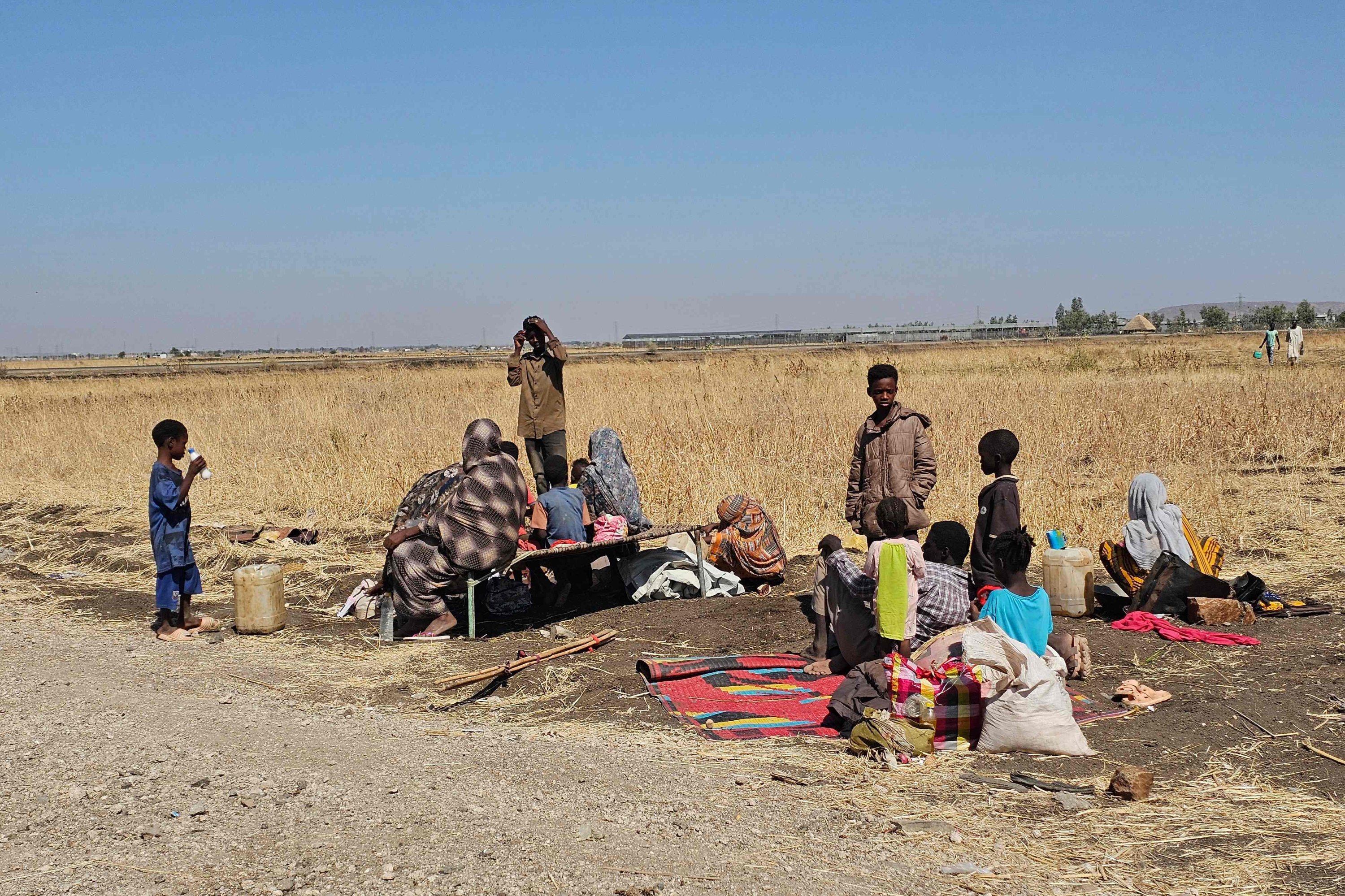
Reports indicate that violence followed ethnic lines. Entire neighborhoods disappeared within days. Satellite imagery in a number of open sources later showed bodies, burned areas and attempts to erase traces of what had occurred. More than 100,000 people fled in a short span. Tens of thousands remain unaccounted for. By early 2026, hunger had tightened its grip on millions in need of urgent assistance.
Sudan has been here before. Armed groups responsible for Darfur’s devastation in the early 2000s did not dissolve. They adapted. In the absence of accountability, they survived.
The RSF, long described as unwilling to submit to integration under the Republic of Sudan’s regular armed forces, draws from that lineage, carrying with them memories many hoped had faded.
What has changed is the geography of the war nowadays. While Darfur remains central, the conflict’s strategic weight has shifted south and east. The Dilling, Kadugli and el-Obeid corridor has become critical. Fighting now follows supply routes rather than symbolic cities. Control is pursued not only through firepower but by cutting food, fuel, and movement.
This reflects a broader transformation. Siege warfare is no longer an exception. It has become a repeated method. From Babanusa to el-Fasher, from Dilling to Kadugli, encirclement, isolation and deprivation are used systematically. Cities are not simply attacked. They are slowly emptied.
It is widely reported that the Sudanese Armed Forces remain active, but weakened. They attempt counter-offensives, regain positions briefly and then lose ground again, sometimes within the same day. The picture is not one of total collapse, but of an actor struggling to hold space in a war that increasingly favors attrition over maneuver.
The humanitarian consequences have expanded accordingly. Displacement is no longer confined to Darfur. Southern and central regions have seen tens of thousands newly uprooted. Food and water lines are cut deliberately. Markets collapsed. Aid routes are blocked. What was once regional has already become nationwide.
Diplomatic engagement has increased, and this should not be dismissed. Yet fighting persists because support flows do not stop at Sudan’s borders. Weapons, drones, funding and political cover continue to reach the battlefield. Cease-fire language loses credibility when these channels remain open.
There is also an imbalance that diplomacy often avoids. It is both known and reported that abuses occur on more than one side. Still, the scale and character of violence against civilians point overwhelmingly in one direction. Treating all actors as equivalent may appear neutral, but it obscures responsibility. International humanitarian law does not require blindness. It requires judgment.
Türkiye’s role deserves careful attention. Its engagement extends beyond formal statements. Ambassador Fatih Yıldız brings experience shaped by a long diplomatic career, including service in a range of earlier postings, as well as periods in which states were strained by war and later navigated transitions, notably in Bosnia-Herzegovina during the 1990s and in post-invasion Iraq. In Sudan, his presence and that of his team reflect sustained contact rather than distant observation.
Türkiye’s humanitarian action here is not symbolic. Alongside Turkish NGOs, the country’s Disaster and Emergency Management Presidency (AFAD) and the Turkish Red Crescent (Kızılay) have delivered food assistance and tens of thousands of tents to displaced populations, particularly near Port Sudan. In the current phase of the war, Türkiye is not only responding to emergencies but also monitoring civilian vulnerability in siege-affected areas.
Law cannot remain postponed. Under the 1948 Genocide Convention, intent remains a defining element. Establishing it takes time. Yet international humanitarian law also prohibits starvation as a method of warfare, the destruction of water systems, forced displacement, and collective punishment. These are distinct violations, not rhetorical claims.
Sudan now tests whether the international system still enforces basic limits. The question is no longer only how the war will end, but whether survivors will be protected and whether responsibility will follow action.
Aid ships reach ports while violence continues inland. Diplomatic meetings multiply as civilians wait without safety. Silence spreads easily in Sudan. Responsibility, if it is to retain meaning, cannot afford to move slowly.