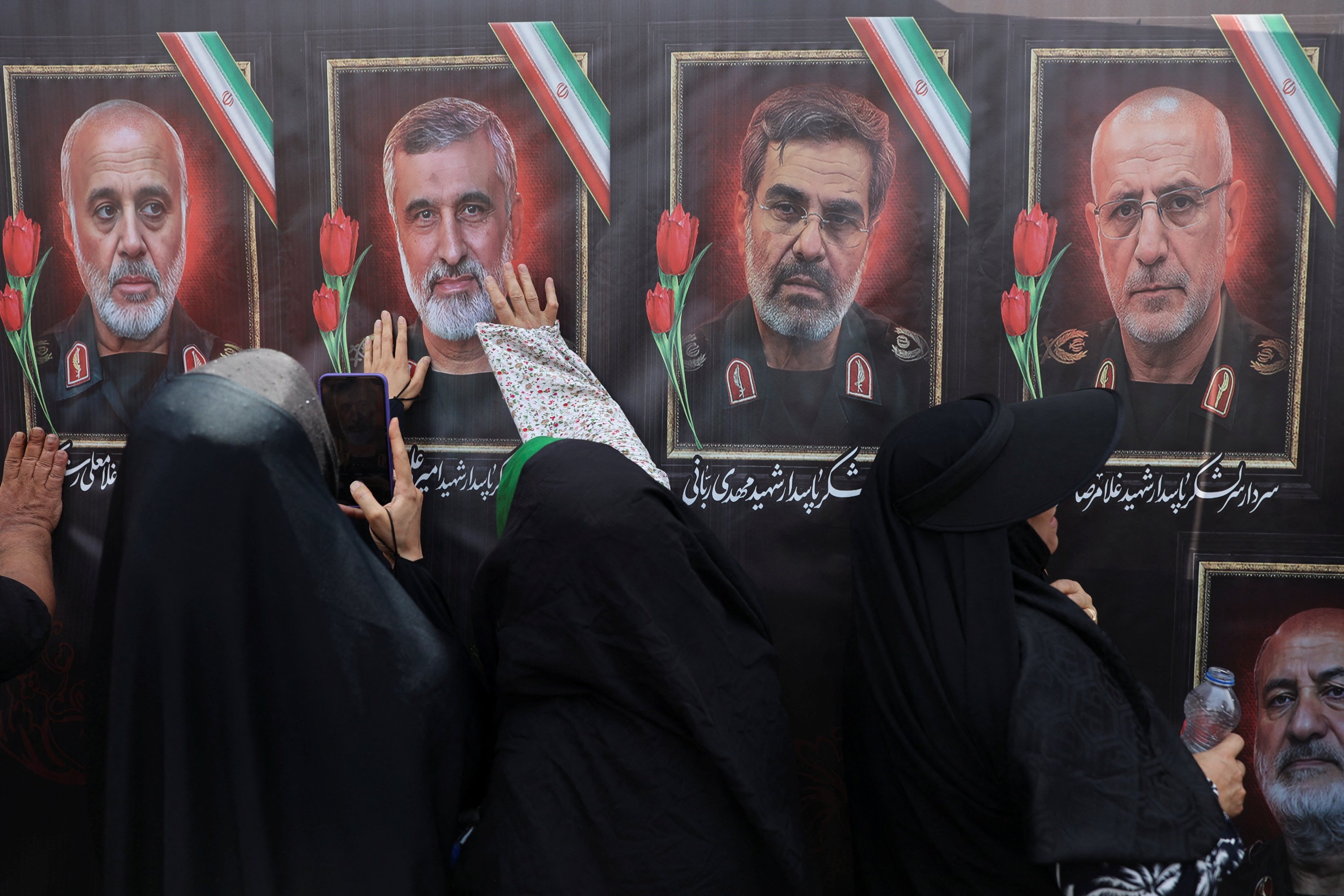
The military conflict between Iran and Israel in June 2025, known in public discourse as the "12-Day War", was not merely a test of Iran's defensive capabilities; it also served as a multidimensional test of the regime, its security architecture, domestic politics and strategic orientation. Israel's coordinated and intense wave of attacks on Iranian territory tested Iran's military deterrence capabilities, which it has prioritized for years, and provided important insights into the effectiveness, weaknesses and strategic sustainability of these capabilities. Upon conclusion of the process, it becomes evident that dynamics with the potential to exert a decisive influence on Iran's military structure, domestic political climate and its relations with the international system have come to the fore.
From the standpoint of the Islamic Republic of Iran, the most salient outcome of the armed conflict is the evident demonstration of the inadequacy of its air defense systems, which have long been a source of great pride. During the large-scale air defense exercises held in January and February 2025 under the designation "Eqtedar-1403," it was declared that the security of air bases in major cities such as Tehran, Tabriz, Isfahan and Kermanshah, as well as strategic nuclear facilities in Natanz, Arak and Fordo, had been guaranteed. As indicated by official Iranian statements, the exercises were presented as substantiating evidence that the country's air defense capabilities had reached a sufficient level of sophistication and that an effective shield had been established against potential external attacks.
However, it is evident that Israel's military offensive was meticulously focused on these specific regions, consequently rendering Iran unable to safeguard these vital centers. This discrepancy between the success of the exercises presented to the public and the reality on the ground has been exposed. This phenomenon is referred to in the extant literature as "self-deception," which is defined as a situation where decision-makers consciously ignore the difference between actual and assumed capabilities. From the perspective of Iran, this process has been a harrowing experience, demonstrating the grave consequences of overconfidence in its own security narrative and the weakening of critical internal control mechanisms.
The success of the attacks can be attributed not only to the inadequacy of Iran's air defense systems but also to the depth of infiltrations within its security and intelligence structures. Recent disclosures have indicated that operational information, target coordinates, and security scenarios employed during the Eqtedar-1403 exercises have been compromised and obtained by Israeli entities. This prompts grave concerns regarding the scope of espionage operations within Iran, particularly with regard to the reliability of personnel engaged in sensitive areas such as the nuclear program, air defense centers, and missile command chains. In this context, one of the most significant developments anticipated following the conflict is the potential emergence of purges and restructuring processes within the intelligence and security bureaucracy. It is probable that the ongoing power struggle between different factions within the regime will intensify as a result of these processes.
Despite the observed deficiencies in the defense sector, the efficacy of Iran's offensive capabilities has been noteworthy during the conflict. In particular, the employment of hypersonic missiles in combat and the destruction they have wrought in Israel have once again highlighted the significance of Iran's non-conventional offensive capabilities. This development has confirmed that Iran is not only a defensive actor but also a regional power with serious offensive capabilities. However, predictions that such attacks would lead to internal unrest, regime change or ethnic-based uprisings in Iran have proven unfounded during this crisis.
There has been no indication of a serious popular movement, nor has there been a widespread tendency toward uprisings among ethnic groups such as the Kurds, Baluchis, Arabs or Azeris. The populace has, for the most part, demonstrated a preference for stability; there has been no mobilization against the regime. This situation demonstrates that the regime's capacity for social control remains intact and that Iranian society has exhibited a "unity reflex" in the face of external attacks.
From the standpoint of Iran, the most pressing issue on the agenda in the post-conflict period is the matter of the direction to be taken in foreign policy. There are three main options available: In order to continue the process of seeking integration into the international system, it is necessary to reenter negotiations with the United States. Furthermore, there is a need to intensify nuclear activities, accompanied by an exclusionary rhetoric and radical security approach. Finally, an attempt should be made to expand strategic flexibility by adopting an ambivalent stance amid uncertainty.
While negotiation and compromise may be theoretically possible, a substantial proportion of the Iranian public and the decision-making elite believe that such a negotiation process following the Israeli attack would be "dishonorable" and damage Iran's reputation. Moreover, trust in the U.S. as a security guarantor in the region has been profoundly eroded. In this context, the propensity to resume negotiations has diminished, while a radical strand of resistance has experienced a resurgence in strength.
A further salient issue that has come to the fore in Iran in the aftermath of the attacks is the balance of power between factions within the regime and the transformations that are to be expected, most notably in the security bureaucracy. The allegations of espionage activities have been directed toward numerous security institutions, most notably the Revolutionary Guards. The purges that will take place during this process will not be limited to the security sphere, but will also be decisive for Iran's overall state architecture and elite balances. In particular, comprehensive restructuring may be imminent in areas such as the balance of power within the Revolutionary Guards, the coordination of foreign intelligence, and the security of the nuclear program.
The 12-day conflict served as a multifaceted test for Iran, revealing not only weaknesses in its defense capabilities but also the effectiveness of its offensive capabilities. Concurrently, this process also exposed the reflexes of Iranian society in the face of external threats, the limits of the regime's internal resilience, and the challenging choices confronting the decision-making elite. The responses of the Islamic Republic of Iran to fundamental questions, such as whether the country will opt for compromise or resistance in foreign policy, and whether it will pursue reforms or intensify its repressive policies domestically, will not only shape the country's future but also that of the region.