

Daily Sabah logo

Politics
Diplomacy Legislation War On Terror EU Affairs Elections News Analysis
TÜRKİYE
Istanbul Education Investigations Minorities Expat Corner Diaspora
World
Mid-East Europe Americas Asia Pacific Africa Syrian Crisis Islamophobia
Business
Automotive Economy Energy Finance Tourism Tech Defense Transportation News Analysis
Lifestyle
Health Environment Travel Food Fashion Science Religion History Feature Expat Corner
Arts
Cinema Music Events Portrait Reviews Performing Arts
Sports
Football Basketball Motorsports Tennis
Opinion
Columns Op-Ed Reader's Corner Editorial
PHOTO GALLERY
JOBS ABOUT US RSS PRIVACY CONTACT US
© Turkuvaz Haberleşme ve Yayıncılık 2026

Daily Sabah - Latest & Breaking News from Turkey | Istanbul

  • Politics
    • Diplomacy
    • Legislation
    • War On Terror
    • EU Affairs
    • Elections
    • News Analysis
  • TÜRKİYE
    • Istanbul
    • Education
    • Investigations
    • Minorities
    • Expat Corner
    • Diaspora
  • World
    • Mid-East
    • Europe
    • Americas
    • Asia Pacific
    • Africa
    • Syrian Crisis
    • Islamophobia
  • Business
    • Automotive
    • Economy
    • Energy
    • Finance
    • Tourism
    • Tech
    • Defense
    • Transportation
    • News Analysis
  • Lifestyle
    • Health
    • Environment
    • Travel
    • Food
    • Fashion
    • Science
    • Religion
    • History
    • Feature
    • Expat Corner
  • Arts
    • Cinema
    • Music
    • Events
    • Portrait
    • Reviews
    • Performing Arts
  • Sports
    • Football
    • Basketball
    • Motorsports
    • Tennis
  • Gallery
  • Opinion
    • Columns
    • Op-Ed
    • Reader's Corner
    • Editorial
  • TV
  • Opinion
  • Columns
  • Op-Ed
  • Reader's Corner
  • Editorial

The clock is ticking toward a second war in the Gulf

by Eray Güçlüer

Jun 01, 2026 - 11:39 am GMT+3
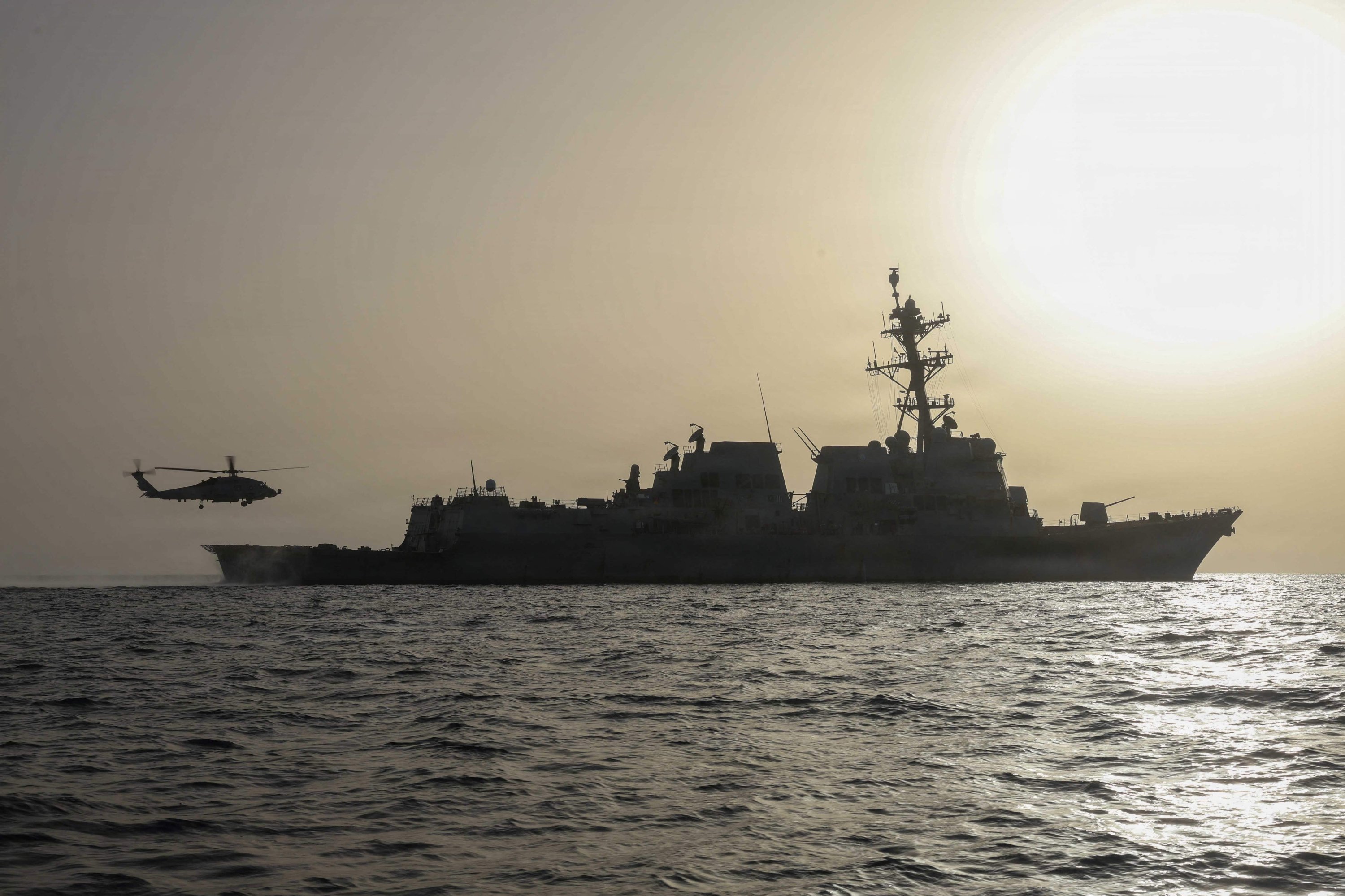
A MH-60R Sea Hawk, assigned to Helicopter Maritime Strike Squadron (HSM) 50, is taking off from the flight deck of Arleigh Burke-class guided-missile destroyer USS Thomas Hudner during flight deck operations, May 19, 2026. (AFP Photo)
by Eray Güçlüer Jun 01, 2026 11:39 am

Cease-fire talks continue between the U.S. and Iran, but military buildup points toward escalation

Despite diplomatic efforts between the United States and Iran, tensions in the Middle East show no signs of easing. This is no longer merely a regional crisis; it has become one of the most critical fronts in the global power struggle. While cease-fire talks appear to be ongoing, the reality on the ground tells a different story. While diplomacy is being discussed at the table, war preparations continue on the ground.

The primary reason for this deadlock is the China factor. Washington has failed to reach an agreement that would force Beijing to back down on Iran. It appears that the U.S. has tried to persuade China to cut off its support for Iran through economic concessions and the Taiwan issue, but has failed to achieve results. From China’s perspective, Iran is not merely an energy supplier; it is also a strategic buffer keeping the U.S. out of its own region. Beijing knows that if Iran weakens, the U.S. will shift all its attention to the Asia-Pacific. For this reason, it appears determined to continue its support for Iran.

The second major sticking point is Israel. The Tel Aviv administration does not want a lasting reconciliation between the U.S. and Iran. Israel’s priority is the complete elimination of Iran’s nuclear capabilities. However, the issue is not merely the nuclear program. From Israel’s perspective, the primary strategic goal is to destabilize Iran from within over the long term and break its regional influence, in other words, the “Iraqification” of Iran.

The U.S.’s initial plan, however, was different. It was assessed that Washington aimed to bring the regime in Iran under control using a model similar to Venezuela’s, seeking to make the system manageable through pressure on the leadership. However, Iran’s stronger-than-expected resistance, particularly when combined with support from Russia and China, prevented the U.S. from achieving its desired outcome during the 40-day war.

Today, Iran is preparing for the possibility of a new attack. Its underground missile capacity is being expanded, its central command system is being strengthened, and a new military structure, directly managed from the center, is being established in place of the “mosaic defense model.” This implies that a potential second war would be more organized and more intense.

Obstacles to the cease-fire

The three key issues standing in the way of a cease-fire are now clear: the Strait of Hormuz, Iran’s nuclear capabilities and Hezbollah. The U.S. continues to pressure Iran’s oil exports via the Strait of Hormuz. The goal is to wear down Tehran economically through an embargo and a de facto blockade. Iran, however, views its nuclear capabilities as a necessary deterrent against Israel. In a scenario where Tel Aviv possesses nuclear weapons, Tehran is not backing down.

Meanwhile, as Israel’s attacks on Gaza and Lebanon continue, the ground for regional diplomacy is crumbling. It was precisely at this point that President Donald Trump’s call for “Abraham Accords” withTürkiye, Saudi Arabia, Qatar, Pakistan, Egypt and Jordan drew attention. This move is actually an attempt to build a new Middle East security architecture centered on Israel. However, the U.S.’s objective in this initiative, which has little real-world counterpart on the ground, is to form a broad front centered on Israel against Iran and shift the U.S.’s burden onto regional allies. This would create a foundation to redirect its focus from the Middle East toward China.

The most notable development on the ground is that the third U.S. aircraft carrier has not yet arrived in the Gulf. It is reported that preparations are ongoing for the new task force set to replace the USS Ford. The completion of this deployment will send not only a military but also a political message. This is because the U.S. is currently pursuing a two-pronged strategy: on one hand, gradually escalating tensions to force Iran to make concessions at the negotiating table, and on the other, preparing for a larger military operation.

As the November election approaches, it is clear that the Trump administration is seeking a “victory image” in foreign policy. For this reason, the military buildup in the Gulf, the increase in missile stockpiles, and the strengthening of air defense systems are not routine preparations. The Middle East is on the brink of a new breaking point. And the entry of the third aircraft carrier into the Gulf may well be the spark that ignites the second major wave of war.

About the author
Faculty member at Altınbaş University, president of Eurasian Strategic Research Center (ASAM), and editor-in-chief of Times of Defence magazine
The views and opinions expressed in this article are solely those of the author. They do not necessarily reflect the editorial stance, values or position of Daily Sabah. The newspaper provides space for diverse perspectives as part of its commitment to open and informed public discussion.
  • shortlink copied
  • KEYWORDS
    gulf us-israel-iran war donald trump iran hezbollah israel
    The Daily Sabah Newsletter
    Keep up to date with what’s happening in Turkey, it’s region and the world.
    You can unsubscribe at any time. By signing up you are agreeing to our Terms of Use and Privacy Policy. This site is protected by reCAPTCHA and the Google Privacy Policy and Terms of Service apply.
    No Image
    Gazan child brings hope to Palestinians with his roses
    PHOTOGALLERY
    • POLITICS
    • Diplomacy
    • Legislation
    • War On Terror
    • EU Affairs
    • News Analysis
    • TÜRKİYE
    • Istanbul
    • Education
    • Investigations
    • Minorities
    • Diaspora
    • World
    • Mid-East
    • Europe
    • Americas
    • Asia Pacific
    • Africa
    • Syrian Crisis
    • İslamophobia
    • Business
    • Automotive
    • Economy
    • Energy
    • Finance
    • Tourism
    • Tech
    • Defense
    • Transportation
    • News Analysis
    • Lifestyle
    • Health
    • Environment
    • Travel
    • Food
    • Fashion
    • Science
    • Religion
    • History
    • Feature
    • Expat Corner
    • Arts
    • Cinema
    • Music
    • Events
    • Portrait
    • Performing Arts
    • Reviews
    • Sports
    • Football
    • Basketball
    • Motorsports
    • Tennis
    • Opinion
    • Columns
    • Op-Ed
    • Reader's Corner
    • Editorial
    • Photo gallery
    • DS TV
    • Jobs
    • privacy
    • about us
    • contact us
    • RSS
    © Turkuvaz Haberleşme ve Yayıncılık 2021