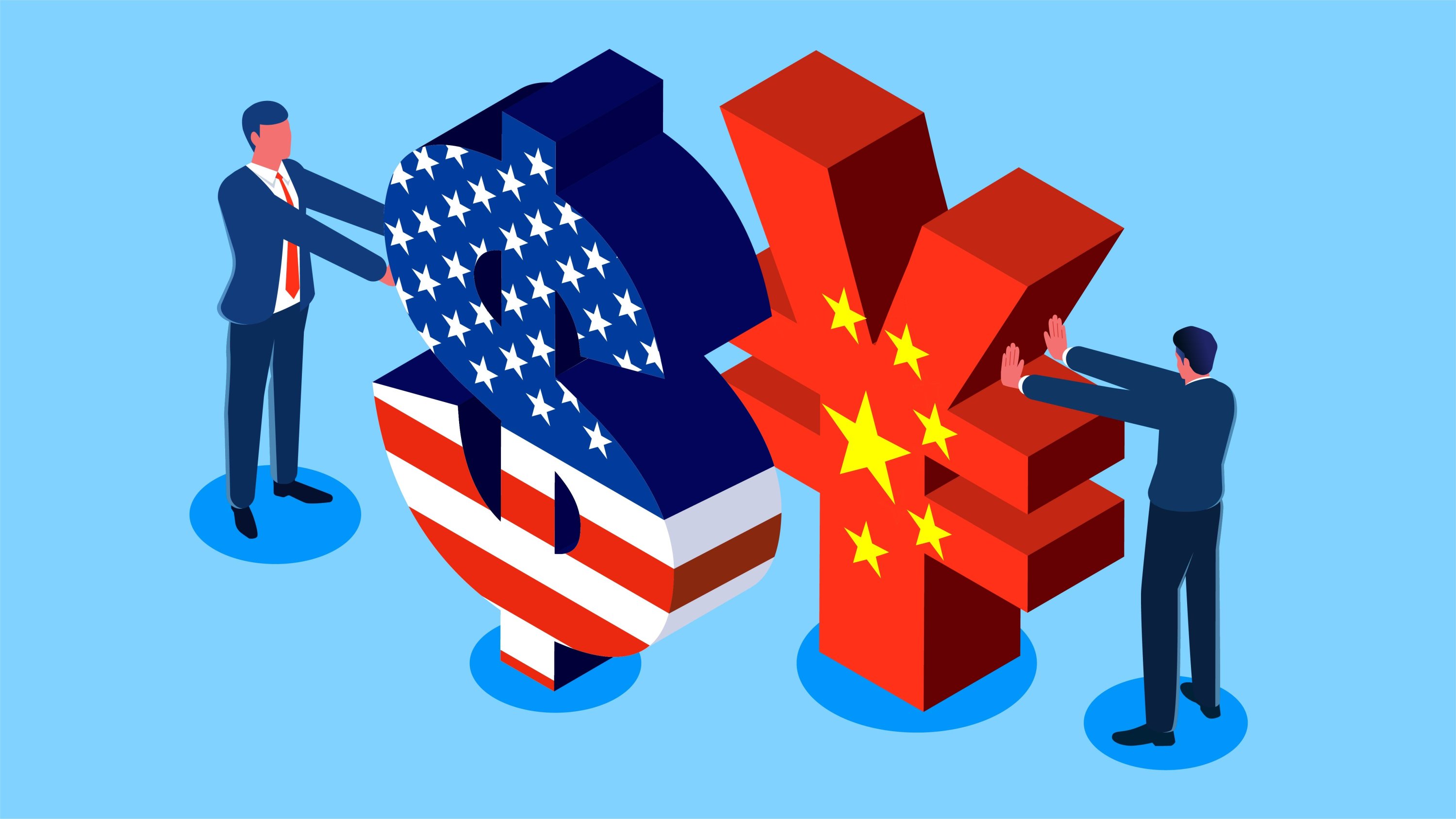
In the 21st century, the U.S.-China relationship has emerged as a defining axis of global geopolitics, often characterized as a “Cold War 2.0.” Unlike the Cold War of the past, this competition is marked not by military confrontation but by a struggle for dominance in technology, markets and global influence. The world is now divided into two major blocs, with limited interaction between them, while cooperation within each bloc intensifies. Rather than reversing globalization, we are witnessing its reconfiguration – driven by technological competition, economic nationalism and domestic market priorities.
At the heart of this new landscape is advanced technology, now the cornerstone of global power. Nations are racing to dominate critical sectors like artificial intelligence (AI), biotechnology and telecommunications. One particularly prominent battleground is the electric vehicle (EV) industry, where both the U.S. and the European Union have imposed tariffs to shield their domestic industries. Simultaneously, countries like Türkiye are pursuing Chinese investments to develop their own EV sectors and are also seeking collaboration with China to build nuclear energy plants, adding layers of complexity to an already intricate geopolitical web.
For third-party actors caught between these two powerhouses, navigating this competitive environment is fraught with challenges. Aligning too closely with one bloc risks alienating the other, leading to economic sanctions or diminished trade opportunities. Countries that court Chinese investments, for instance, could find themselves at odds with U.S. and EU policies. Conversely, those who lean too heavily on Western partnerships may forfeit valuable economic ties with China. This geopolitical balancing act requires strategic foresight, as nations weigh their long-term interests against the backdrop of evolving alliances and economic pressures.
Third-party countries are not merely passive actors but can proactively capitalize on the U.S.-China competition to secure strategic gains. By adopting a multi-alignment approach, these countries can benefit from both sides without being ensnared in rigid alliances. For instance, they can diversify trade routes and establish preferential trade agreements with both blocs to enhance their bargaining position. Many developing nations, for example, have leveraged China’s Belt and Road Initiative (BRI) to attract critical infrastructure investments while simultaneously engaging in security and technological collaborations with the U.S. and its allies.
Moreover, third nations can exploit the U.S.-China rivalry by positioning themselves as neutral grounds for technological and financial investments. Countries like Türkiye, Vietnam and Brazil, among others, are exploring ways to attract foreign investment by enhancing their own technological capabilities and establishing themselves as competitive alternatives in the global supply chain. Türkiye’s growing interest in the EV sector and its efforts to collaborate with both the West and China on nuclear energy are prime examples of this dual-strategy approach.
To succeed, third countries must not only diversify their economic partnerships but also enhance their technological capacities and build resilient domestic institutions. By fostering homegrown innovation and avoiding dependency on a single power, these nations can insulate themselves from geopolitical volatility while capitalizing on emerging opportunities. This strategy allows them to secure essential resources and markets, enhancing their geopolitical agency in this new era.
Domestically, the political climate in the U.S., including forthcoming elections, is unlikely to shift the overall trajectory of its relationship with China. There is a rare bipartisan consensus that countering China’s rising influence is a national imperative. This underscores the reality that the U.S.-China rivalry is not merely the product of shifting political leadership but a structural feature of the modern international system.
As this competition unfolds, it becomes clear that the contest is not only about economic or technological supremacy; it is also about shaping the global order of the future. Those who excel will not only be the nations that master cutting-edge technologies but also those that can navigate this evolving landscape with agility and strategic vision. For the U.S., embracing this reality is crucial to maintaining its leadership role on the global stage, positioning itself to face both the challenges and opportunities of this new Cold War.
Looking ahead, the U.S.-China rivalry is likely to intensify as both powers seek to redefine global norms. Through the lens of neorealism and the security dilemma, it is evident that the strategic competition will continue to provoke mutual suspicions and arms buildups, with both nations perceiving each other's actions as existential threats. Power Transition Theory suggests that China's rapid ascent poses a direct challenge to U.S. hegemony, creating an environment ripe for conflict unless a stable power-sharing mechanism is established. However, from the standpoint of liberal institutionalism, there remains an opportunity for international institutions to mediate tensions by fostering dialogue and creating economic interdependencies that discourage unilateral aggression. Third-party countries can leverage these theoretical dynamics by acting as mediators or facilitators, while strategically positioning themselves to benefit from economic partnerships with both blocs.