The European Union's relatively passive response to the attacks on Iran by the United States and Israel has once again exposed divisions both among EU institutions and member states, as well as across the transatlantic alliance.
The first reaction from Europe after the U.S. and Israel launched strikes on Iran on the morning of Feb. 28 came from European High Representative for Foreign Affairs and Security Policy Kaja Kallas. Kallas said their priorities were protecting civilians, facilitating the evacuation of EU citizens and personnel, and continuing to explore diplomatic solutions.
Following Kallas, European Commission President Ursula von der Leyen and European Council President Antonio Costa issued a joint message calling for restraint.
Subsequently, governments in Spain, the United Kingdom, Germany, France, Italy and Ireland also urged de-escalation and said they were following developments with "deep concern."
Europe's cautious and restrained stance in the face of rapidly unfolding events drew criticism from both Brussels-based international media and European social media users, as well as observers across the Atlantic.
Not only were the responses to the crisis seen as passive, but the EU's inability to produce a unified message also attracted attention.
While the legitimacy of the attacks under international law emerged as the main line of division within Europe, the differences in tone between capitals have also become particularly visible along the Berlin-Madrid-Brussels axis.
German Chancellor Friedrich Merz paid a visit to the U.S. on March 3 and met President Donald Trump at the White House. During the visit, he avoided directly criticizing Washington. Germany’s position now breaks its alignment with the other members of the EU triad – the U.K. and France.
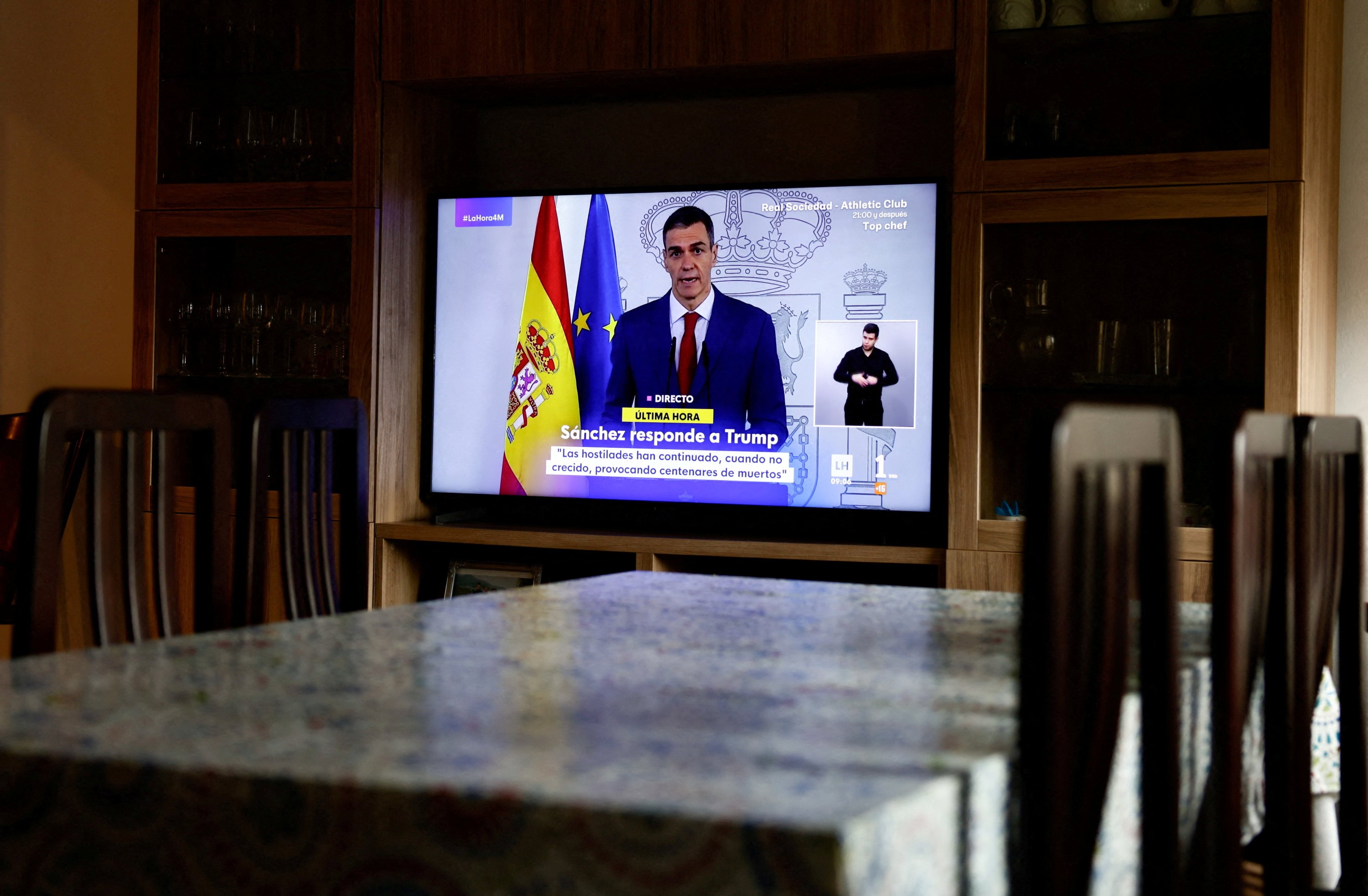
On the other hand, the strongest reaction to the U.S. came from Spanish Prime Minister Pedro Sanchez. He described the U.S. and Israeli strikes as a "unilateral military action."
Spain's position was later raised with Trump's threat to cut trade ties with the country.
Sanchez responded sharply to the threat, saying: "You cannot play Russian roulette with the destiny of millions."
Following the heated statements, White House Press Secretary Karoline Leavitt, responding to journalists' questions, said Spain had agreed to cooperate with the U.S. military. However, Madrid quickly rejected the claim.
Spanish Foreign Minister Jose Manuel Albares firmly denied the statement.
Speaking to Spanish media, Albares said: "The Spanish government's position regarding the war in the Middle East, the bombings in Iran, and the use of our bases has not changed."
The emerging picture suggests that the Iran crisis has once again tested the EU's ability to produce a common foreign policy. It has not only exposed disagreements among member states but has also brought renewed attention to institutional power dynamics in Brussels.
It has been suggested that a subtle rivalry has emerged between two of the EU's top figures, von der Leyen and Kallas, over who should lead the bloc's response to the crisis.
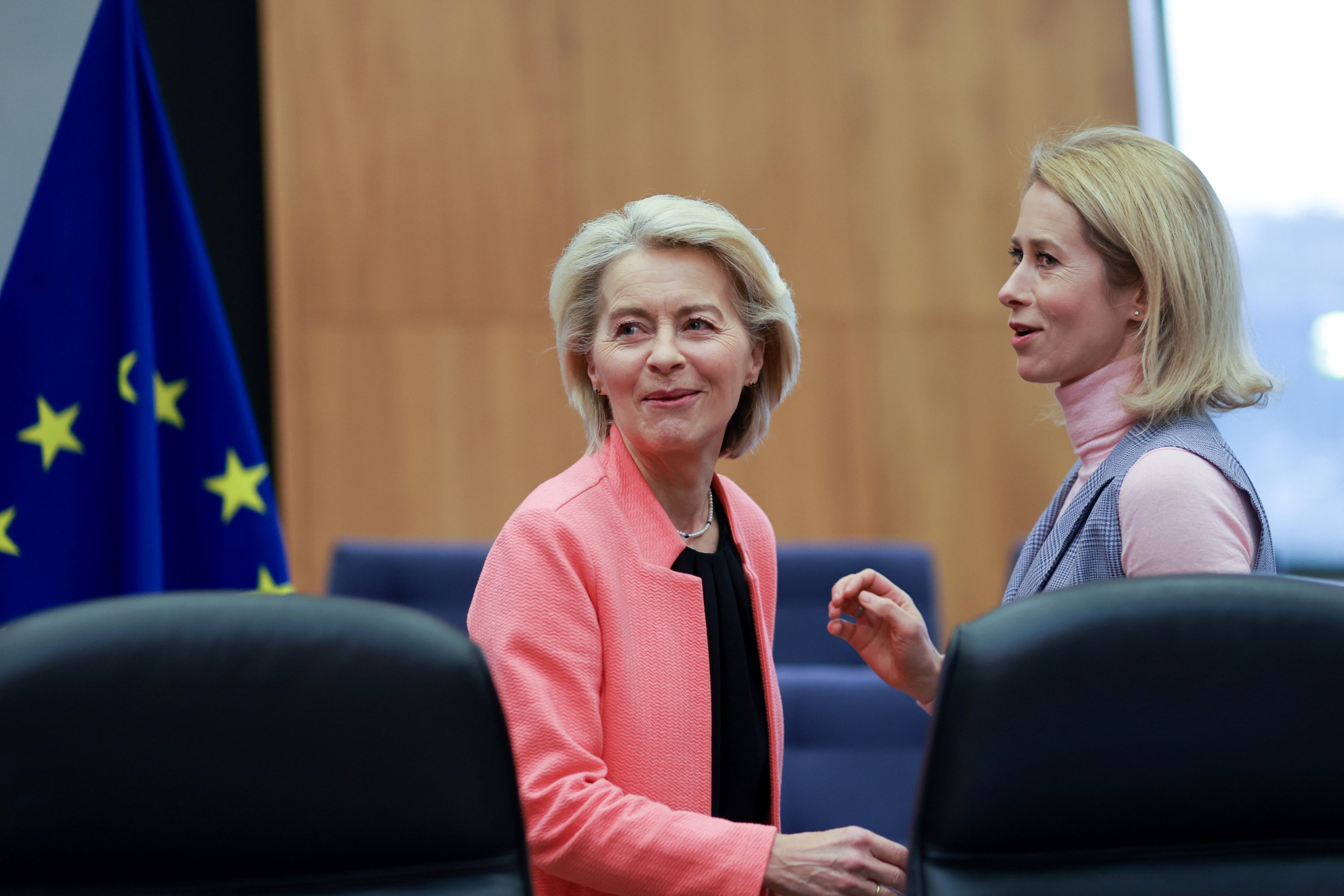
Kallas convened an emergency meeting of foreign ministers, while von der Leyen chaired a "special security meeting." Despite intense diplomatic activity, the fact that the two leaders did not meet directly drew attention in Brussels political circles.
Diplomatic sources say the Iran crisis has become not only a test of the EU's foreign policy but also of its institutional coordination capacity.
Europe's cautious approach is also believed to be influenced by the political and social legacy of the 2003 Iraq invasion. Public skepticism toward military interventions remains strong across Europe, and many governments continue to avoid direct military engagement in the Middle East.
In addition, Europe's security focus remains largely centered on the Russia-Ukraine war, which has led the bloc to adopt a more limited and cautious position regarding Iran.
Unlike in 2003, Europe appears generally satisfied with the possibility that a more negotiable leadership could emerge in Iran without direct Western military involvement on the ground.
According to diplomatic sources in Brussels, the EU's priority is to prevent the conflict from escalating into a wider regional war and to limit potential spillover effects on Europe. However, this cautious stance has been interpreted differently in Washington.
In the U.S., particularly among circles close to Trump, Europe has been criticized for being "soft" on Iran.
These criticisms have strengthened views that the Iran issue could become another point of tension in transatlantic relations, which have already been volatile during the first year of Trump's second term.
In the coming days, Iran's potential next moves, fluctuations in energy markets, and the tone of U.S. expectations from Europe are likely to be key factors shaping the future of transatlantic relations.