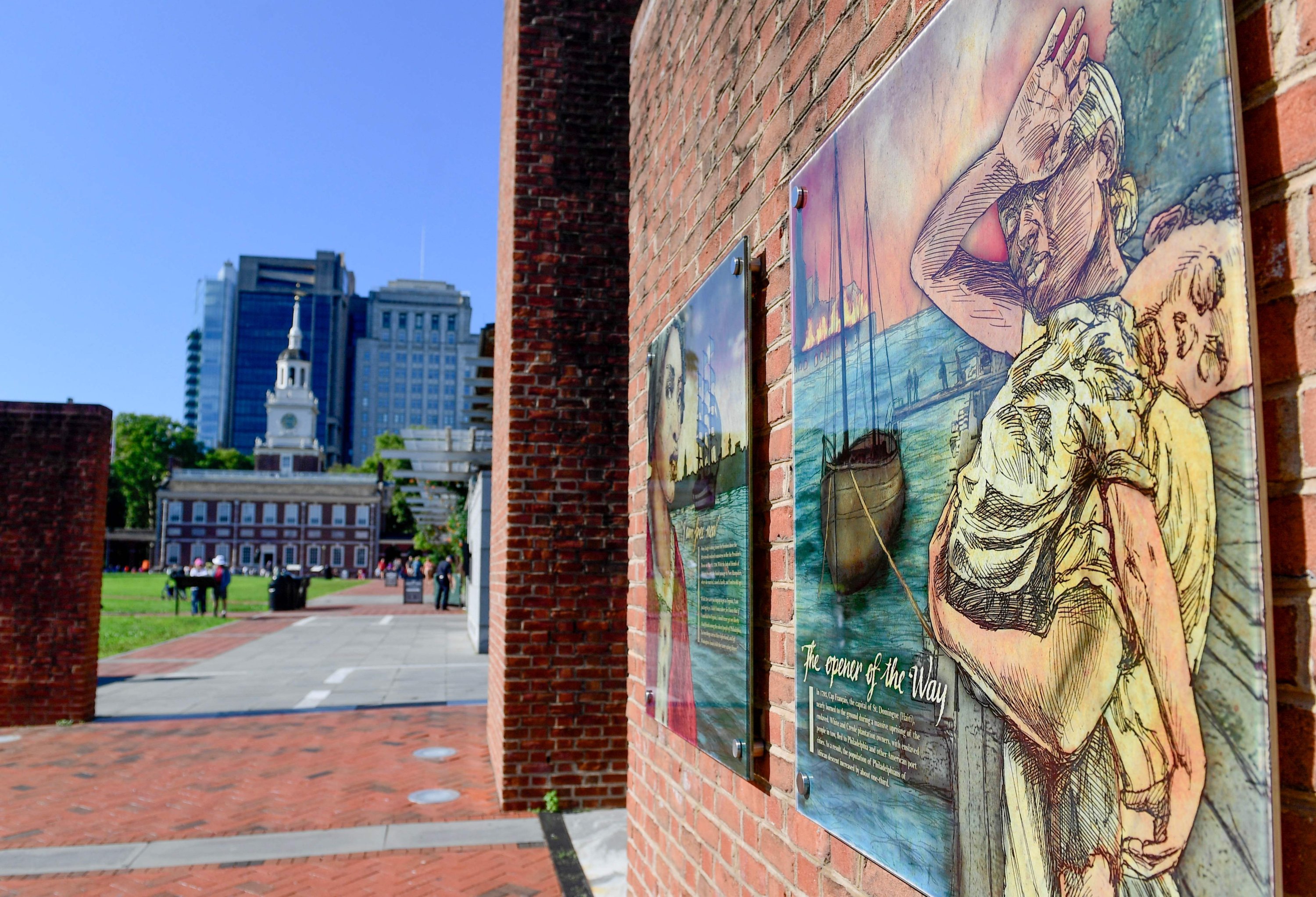
In his characteristically peculiar tone, U.S. President Donald Trump delivered yet another bizarre statement; this time describing museums, of all institutions, as the “last remaining segment of woke.” These cultural spaces, we are told, have been guilty of indulging in excessive and unhelpful discussions of America’s historical crimes, including a uniquely racist form of slavery. Thus, the dear leader (or “daddy,” as some European leaders have grown fond of calling him) instructed his officials to “start the exact same process that has been done with colleges and universities where tremendous progress has been made.” One such progress, to recall, was the effective barring of Harvard University from admitting international students because this elite institution had failed to meet the government’s standards of “combating anti-Semitism.”
One wonders what museums would actually look like in Trump’s utopia. The casual dismissal of the central role of slavery in the history of Western industrial development would doubtless be reflected in the presentation of artefacts on display. What else? In place of Black history exhibitions, for example, perhaps there would be a hall dedicated to proving, despite all available evidence to the contrary, that Adolf Hitler was a “literal communist,” as the “anti-woke” crusader Elon Musk once opined in a conversation with Alternative for Germany's (AfD) Alice Weidel. Or maybe a gallery extolling the virtues of coal mining, complete with animatronic Ronald Reagan reminding schoolchildren that “freedom isn’t free” – who knows?
The crux of the matter, according to Trump, is that museums say “nothing about success, nothing about brightness, nothing about the future” when it comes to the U.S. Yet, apparently, they must have a lot to say about these things. Summoning the Muse of the Odyssey, then, Trump could ask museums to “tell the story of that man skilled in all ways of contending.” And that man, of course, would be none other than the dear leader himself. After all, who would not prefer walking through the constructs of Trump’s imagination over appreciating, say, a Rembrandt?
In reality, however, the Smithsonian museums, the specific targets of Trump’s attack, hardly neglect success, brightness or the future. What The Guardian described as “a Benjamin Franklin exhibit that links his scientific achievements to his ownership of enslaved people” may indeed incite the feelings of some. Still, one can always choose to visit the National Portrait Gallery in Washington to admire the stately portraits of the founding president of the union, George Washington, and read about the heroic deeds he undertook, while being conveniently spared the fact that some of those deeds also earned him the nickname “town destroyer” among the Iroquois. This would be Trump’s personal choice, since having to confront the Iroquois people’s grievances would be just like being forced to acknowledge “how bad slavery was.”
In this way, Trump’s ideal museums would adopt the attitude of “focusing on the positive.” Consider, for example, how this motto might be applied to current events. Israel’s destruction of Gaza could be displayed not through images of flattened neighborhoods or the names of the thousands of children killed, but through a simple placard assuring visitors that such suffering is part of a divine plan. One could even imagine a Christians United for Israel (CUFI) wing of the museum, looping the words of its leader, Pastor John Hagee, possibly Trump’s favorite Christian, who once claimed that God sent Hitler to create Israel. In this setting, atrocity would no longer be presented as atrocity; it would become providence, or a necessary step toward redemption. Who knows what these words even mean? Violence would still be there, but it would have been transformed into something to celebrate, something “bright” for the future. This is what Trump asks of museums: suspend the negative and focus on the positive.