For almost 100 years, the security of energy supply has been a crucial part of the agenda in most countries. To increase supply security, countries must diversify their energy sources, supply routes and suppliers as well. As a country highly dependent on imported energy resources, Türkiye has been cautiously trying to take these critical steps for nearly 20 years. Its efforts to diversify the countries from which it imports fossil energy resources, the routes through which it procures these resources and the uses of these resources are remarkable. While the country continues to utilize fossil fuels for uninterrupted energy supply, it is focused not only on the consumption of these resources but also on their production within its own borders and becoming a trading hub in which these sources are sold. Announced in 2017 and meticulously implemented since then, the National Energy and Mining Policy is a clear reflection of these goals.
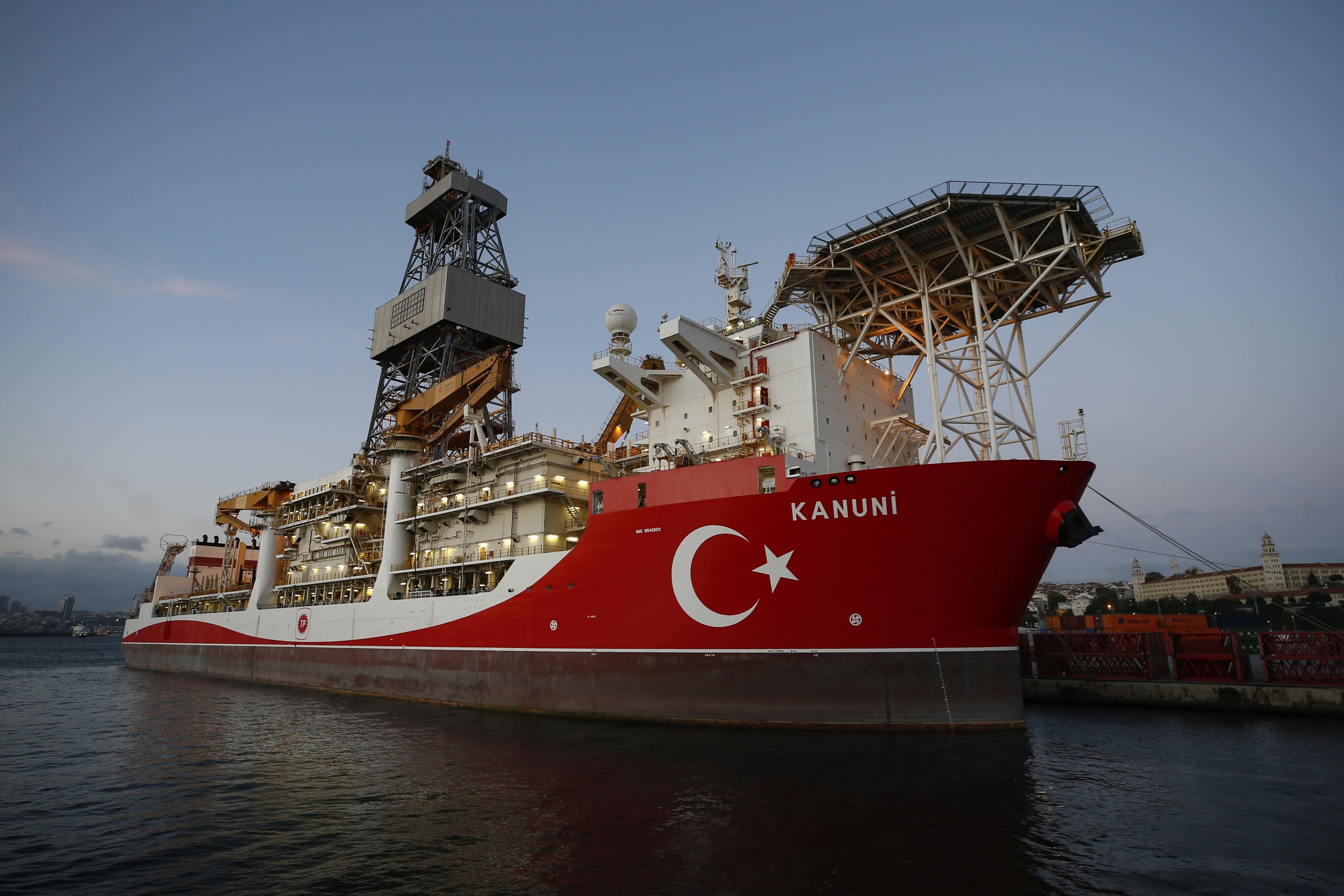
In recent years, Türkiye has significantly expanded its hydrocarbon exploration and production activities, both on land and at sea. By adding Oruç Reis and Barbaros Hayrettin Pasa seismic research vessels and Fatih, Yavuz, Kanuni and Abdülhamit Han deep-sea drilling vessels to its fleet, it has become one of the few countries able to carry out hydrocarbon exploration and drilling activities with its own capabilities. The Sakarya Gas Field, the largest offshore natural gas discovery in the world in 2022, is a testament to the efficacy of this policy. Production in the field began in 2023, and it is already being utilized in the domestic market. With a steady increase in production, Türkiye aims to export Sakarya gas soon.
However, since Türkiye approaches the energy issue by prioritizing a win-win understanding, the country’s noteworthy fleet is designed to serve beyond its territorial waters. The country also cares about unlocking the potential reserves of friendly and allied countries and bringing them into the economy. To this end, it has been meticulous in leveraging the advantages provided by its geography and historical ties for over two decades.
The 2022 memorandum of understanding (MoU) signed with Libya for bilateral work on land and seas in the field of oil and natural gas and the 2023 MoU signed with Somalia for hydrocarbon exploration and drilling in maritime jurisdictions clearly demonstrate Türkiye’s potential to cooperate with other countries. The seismic research vessels started their mission in Somalia in October and are expected to be followed by exploration and drilling vessels soon. This strategic initiative by Türkiye is expected to not only ensure the commercializing of Somalia's offshore hydrocarbon resources but also position the nation as a new partner in TPAO's international production endeavors, which already include Azerbaijan, Russia, Iraq and Afghanistan.
In addition to pipelines, Türkiye can import natural gas in the form of liquefied natural gas (LNG) through its regasification terminals and floating natural gas storage and regasification (FSRU) facilities. This allows Türkiye to increase its gas supply security by not being dependent only on piped gas and the countries from which it imports gas. The LNG infrastructure also provides a stronger bargaining position in negotiations with supplier countries over natural gas imports. This has been particularly evident in the negotiations with Russia, which, in the aftermath of the Russian-Ukrainian War, is seeking more reliable ways to deliver its gas to the markets.
In 2023, Russian President Vladimir Putin called on President Recep Tayyip Erdoğan to establish a natural gas trading center in Istanbul with the aim of facilitating the delivery of Russian gas to diverse markets, particularly European countries. The establishment of competitive market conditions is expected to encourage the center to expand its gas supply to other countries, thereby contributing to the development of a hub where gas is priced in Istanbul. This could potentially pave the way for Türkiye to consume more affordable gas in the domestic market while creating a stable and reliable supplier with affordable prices for other countries. Pipeline gas exports could be doubled by updating the gas contracts imported through pipelines from Azerbaijan and Iran to allow for re-export.
Furthermore, as of 2024, Türkiye imports LNG from a variety of countries, including Algeria, the U.S., Egypt and Trinidad and Tobago. The gas purchased is not only consumed in the domestic market but also re-exported to other countries. The Türkiye-Greece Natural Gas Interconnected Pipeline is the first pipeline through which natural gas can be exported since 2007. In 2023 and 2024, following the agreements with countries such as Bulgaria, Hungary, Romania, Moldova and North Macedonia, Türkiye achieved a record-breaking natural gas export volume in 2024. While exports are expected to increase further after the realization of the gas trade center, Türkiye is likely to reinforce its importance in global markets by transforming into one of the trade centers and one of the important consumption centers in the region.