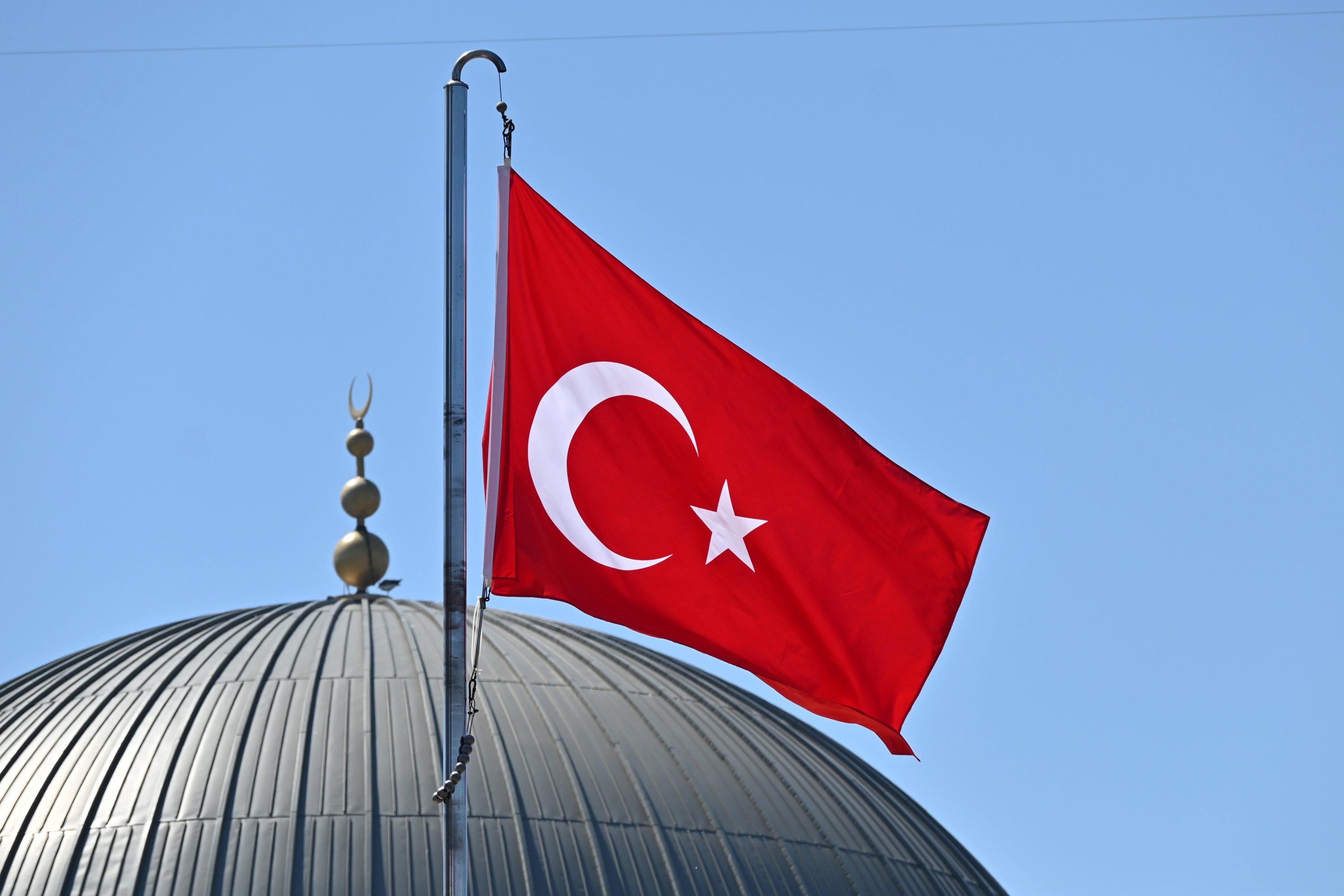
Every country keeps a balance sheet that no ministry publishes. It records what the world believes that country can deliver. Entries are made by an airline that lands on time, by a television series and, far less visibly, by engineers who hand over a hospital or a railway that works. The ledger is shared: a deposit by one sector is available to every other, and a default by one is charged to all.
Türkiye's contracting sector deserves to be read with that ledger in mind, because on Aug. 21 the Trade Ministry announced that 43 Turkish companies had entered Engineering News-Record's (ENR) 2026 list of the world's Top 250 International Contractors, second only to China's 75. Their international work last year was worth $24.9 billion, 4.5% of the global total, placing Türkiye seventh by project value, ahead of Japan and the Netherlands. Since the first job in Libya in 1972, Turkish firms have taken on close to 13,000 projects in 138 countries worth more than $567 billion.
Those numbers describe scale, but the strategic value lies in the mechanism behind them, and the clearest way to see it is to look at how East Africa's largest recent rail contract was won. Uganda spent eight years with a Chinese contractor on its Malaba to Kampala railway. The financing never came, and in 2023 Kampala cancelled the agreement. When it turned to a Turkish contractor that had just delivered more than 500 kilometers (over 300 miles) of standard gauge line in neighboring Tanzania, Ugandan officials explained the choice in one sentence: They had done their due diligence and seen what it built next door. A finished railway in Tanzania was the real bid document in Uganda. That is the reference effect, and it is the heart of the story.
Contracting is unusual because its product cannot be sampled before purchase. A government buying a $3 billion railway is buying a promise. It cannot test the line before signing; it can only look at the previous one. Reputation is not the decoration of this business. It is the business. Because a client evaluates the Türkiye brand before a specific firm, every delivered project writes a line into the national account, not only the corporate one.
The capability behind those references was built largely at home, over a quarter century in which Türkiye carried out one of the most intensive infrastructure programs of any emerging economy: new airports, a high-speed rail, motorways, tunnels under the Bosporus and a generation of large hospitals built under public-private partnership. Turkish contractors learned on those sites how to run compressed schedules, manage vast workforces and answer to lenders and regulators at the same time, and then they exported the experience. The water pipeline to the Turkish Republic of Northern Cyprus (TRNC) is the purest example: 80 kilometers of pipe suspended 250 meters (820 feet) below the Mediterranean, the first of its kind anywhere, delivered by a Turkish contractor in 2015 and still carrying 75 million cubic meters of water a year to the island. Experience acquired at home became a reference abroad.
On the scale of a national gateway, the same logic is visible in Kuwait, where a Turkish contractor's roughly $4.3 billion contract for Terminal 2 at the international airport remains the largest single package ever awarded abroad to a Turkish firm, and where in May 2026 Kuwait's prime minister attended the signing of the contracts for its final phases. A terminal designed for 25 million passengers a year is the first thing an investor or a returning citizen touches of the Kuwaiti state. Türkiye's name will be attached to that first contact for decades.
Health infrastructure converts into public opinion more directly still, and the training and research hospital Türkiye built in Mogadishu shows how: it treats about 40,000 patients a month, runs Somalia's largest dialysis center and trains the Somali physicians who staff hospitals across the country. Somalis simply call it the Erdoğan Hospital. A patient who walks out of that ward does not need a communication strategy to form a view of Türkiye. The view is already formed.
The loop closes with Turkish Airlines (THY), which flies to more countries than any other airline in the world, above 130, with roughly 65 destinations in Africa alone. Where Turkish contractors build or complete airports, from Dakar to Kuwait City, THY is very often already on the arrivals board. The builder creates the gateway, the airline fills it, and the passenger who steps off an aircraft that ran on time into a terminal that works absorbs a single impression of the country behind both. The two deposits compound.
In the vocabulary of international relations, this is soft power of an unusual kind: attraction grounded not in culture but in demonstrated capacity, which is the form of attraction states trust most. A nation brand built this way is a stock of expectations that lowers the cost of every later transaction. Türkiye's defense industry, today its most visible export, negotiates with cabinets whose transport ministers have a Turkish-built railway running on time. A diplomat argues a position before an audience whose most concrete experience of Türkiye is a terminal that opened. Neither cites the other. Both draw on the same account.
The relationship runs both ways, and that is where foreign policy enters, because what liberal theory calls complex interdependence is exactly this: Dense economic ties create mutual stakes that make cooperation cheaper and rupture costlier. Türkiye's contracting map reads like a map of its diplomacy. Turkish firms shaped the capitals of Central Asia and remain the backbone of construction across the Organization of Turkic States (OTS). They built the pipelines and are now building the Kars to Nakhchivan railway that binds Azerbaijan to Türkiye. They are laying motorways across the Balkans, where a Turkish presence is familiar rather than foreign. Good relations bring contracts, delivered contracts deepen relations, and the cycle repeats. Look at what is coming: Iraq's Development Road from the Faw port to the Turkish border, and the reconstruction of Syria. Who builds those will be decided by trust and foreign policy as much as by price, and Türkiye holds both. Infrastructure export is not an adjunct to foreign policy. It is one of its load-bearing legs.
For partner countries, the return is concrete: cheaper freight, a working hospital, a modern gateway, local jobs and, as in Dakar, where Turkish firms completed the new airport and stayed to operate it, a partner that remains after the ribbon is cut. For Türkiye, the direct return is engineering revenue, machinery and material exports, and the pull a large project exerts on the suppliers and operators behind it. The indirect return is larger, and it is the point of this article.
Türkiye built this capacity at home, on its own airports, tunnels and hospitals, and then fused it with two things: an image of reliability earned project by project, and a foreign policy that opened doors in Central Asia, the Balkans, the Gulf and Africa. That fusion is what soft power actually is: not a campaign, but the sum of what a country demonstrably does, credited to a single name. For someone abroad, Türkiye is not a set of ministries and companies but one brand. The aircraft on the runway, the hospital in Mogadishu, the terminal in Kuwait, the bridge, the dam and the pipeline under the Mediterranean are entries in one account, each raising the value of the others. That account is the asset to guard. Every project delivered on time adds to it; every one that is not, subtracts. The task of the coming decade is to keep writing in the credit column, and to make sure the world keeps reading it as one signature.