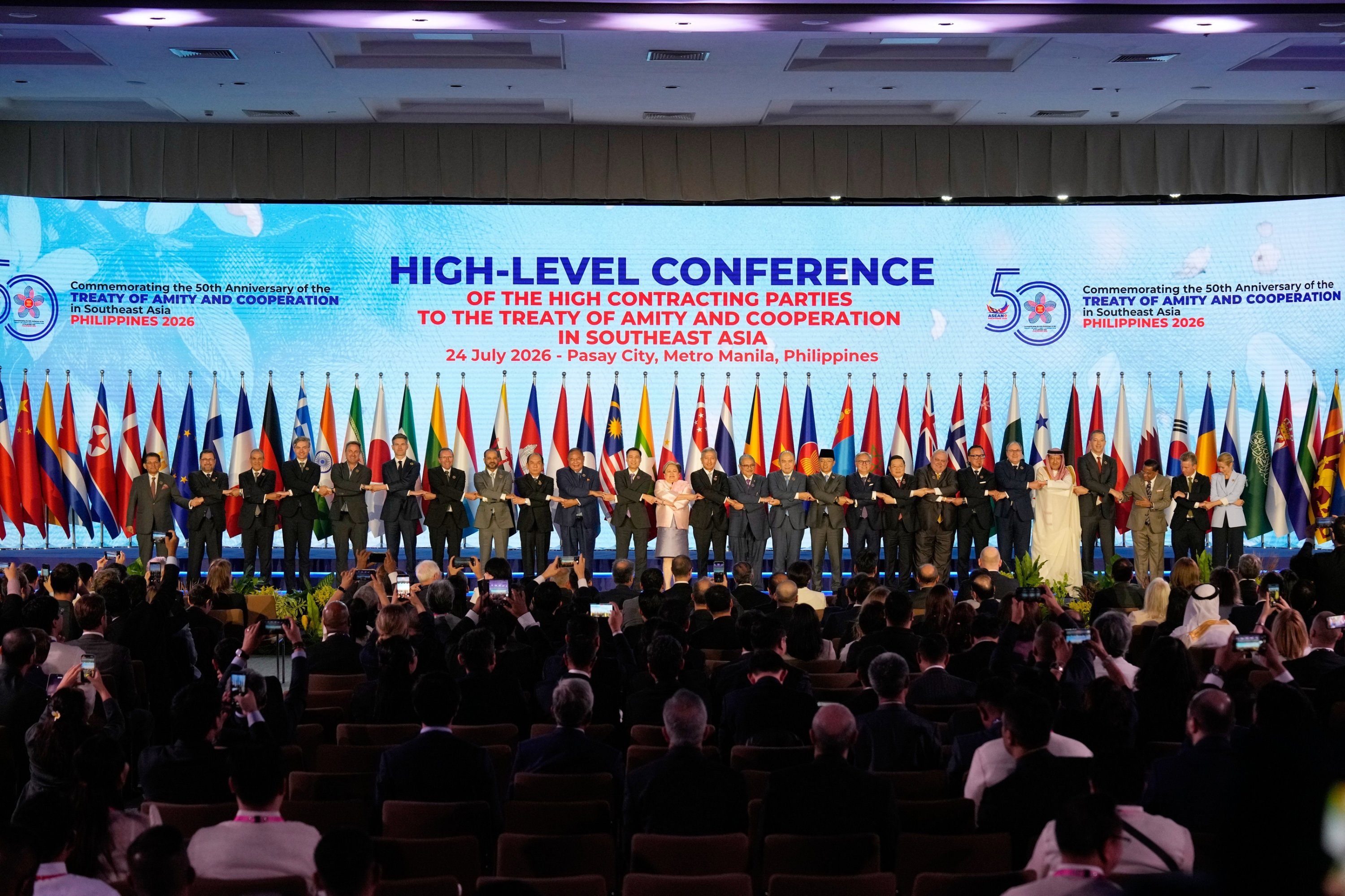
Türkiye’s elevation from an ASEAN Sectoral Dialogue Partner to a full ASEAN Dialogue Partner represents far more than just another diplomatic milestone. It reflects a transformation in Southeast Asia’s external relations and demonstrates Türkiye’s emergence as a strategic stakeholder in one of the world’s fastest-growing regions. The decision, reached during the 59th ASEAN Foreign Ministers’ Meeting in Manila, marks the culmination of years of diplomatic efforts and deepening economic ties between Türkiye and ASEAN.
However, ASEAN’s decision to appoint Malaysia as the country coordinator for ASEAN-Türkiye Dialogue Relations is equally significant.
This responsibility warrants greater attention than it has received thus far. Within the ASEAN framework, country coordinators have a critical diplomatic role. They serve as the primary link between ASEAN member states and external dialogue partners, while also coordinating meetings, identifying new areas of cooperation, and ensuring that political momentum translates into tangible outcomes.
Thus, Malaysia's appointment shows confidence in Kuala Lumpur's experience, credibility and capacity to manage regional affairs.
Several factors explain why Malaysia emerged as the most suitable choice.
First, Malaysia successfully chaired ASEAN in 2025. In that period, Malaysia gained institutional experience in managing ASEAN’s expanding network of external partners and balancing rivalries while upholding the principle of “ASEAN Centrality.” The diplomatic capital accumulated during the chairmanship did not dissipate when the Philippines assumed the ASEAN Chairmanship in 2026. Instead, it positioned Malaysia as a trusted actor capable of maintaining continuity in ASEAN's external relations.
Second, Malaysia's long-term regional vision aligns closely with Türkiye's own strategic perspective.
The ASEAN Vision 2045 aims to build an innovative and integrated regional community that is capable of handling the uncertainties in the international environment. Türkiye’s Asia Anew Initiative, launched in 2019, also seeks to strengthen institutional, strategic and economic engagement across Asia. These two visions do not act as competing frameworks: rather, they complement each other by emphasizing long-term connectivity, diversified partnerships and sustainable development.
Thirdly, Malaysia has become Türkiye’s primary gateway to Southeast Asia. While Türkiye continues to expand its engagement across ASEAN, its commercial presence is most significant in Malaysia, Indonesia and the Philippines. Defense cooperation has grown rapidly through naval programs, aerospace collaborations and defense industry partnerships. Educational exchanges continue to flourish, while the scope of bilateral trade has diversified beyond traditional sectors to include digital technology, the halal industry, higher education, and advanced manufacturing. Malaysia and Türkiye have also strengthened cooperation in artificial intelligence (AI), green technology and aerospace, demonstrating that the relationship is driven by future-oriented industries rather than merely conventional trade.
The appointment also signals ASEAN's confidence in Türkiye as a long-term regional partner.
The upgrade to Dialogue Partner status recognizes that Türkiye’s engagement is now comprehensive and no longer limited to specific sectors.
In 2017, when Türkiye became ASEAN's Sectoral Dialogue Partner, the cooperation established was limited and focused on specific issues. Since then, bilateral relations have expanded significantly. Political consultations have become more frequent, business networks have matured, and strategic dialogues have broadened. The elevation to Dialogue Partner status acknowledges that Türkiye’s engagement is now comprehensive rather than confined to specific sectors.
Beyond bilateral relations, Türkiye’s elevated status carries broader strategic implications for the Indo-Pacific region. For middle powers such as Australia, South Korea, Japan and India, Türkiye’s more active engagement expands the network of credible ASEAN partners without undermining the principle of ASEAN Centrality.
Rather than competing with existing Dialogue Partners, Türkiye establishes an additional avenue for cooperation.
For major powers including the United States and China, Türkiye’s expanded role reflects ASEAN’s consistent stance on diversifying its strategies. Instead of over-relying on any single external bloc, ASEAN continues to broaden its diplomatic space by forging partnerships with actors able of contributing to regional stability while respecting ASEAN-led mechanisms. The same view applies to long-standing partners like the European Union and the Gulf Cooperation Council, where Türkiye’s engagement has the potential to create complementary opportunities rather than strategic rivalry.
So, what can observers expect from this new partnership?
From a political and strategic perspective, Türkiye will enjoy greater participation in ASEAN-led mechanisms, including the ASEAN Regional Forum and relevant ASEAN-led strategic dialogues. This institutional presence opens up opportunities for closer cooperation in areas such as cybersecurity, counterterrorism, humanitarian assistance, and maritime security.
Economically, both sides can strengthen their partnership. Existing free trade agreements between Türkiye and individual ASEAN member states may eventually contribute to broader regional economic integration as trade relations continue to develop.
The socio-cultural dimension should not be overlooked either. Türkiye has consistently invested in educational cooperation, scholarships, humanitarian diplomacy, and technical training. As a Dialogue Partner, these initiatives are likely to become more institutionalized through capacity-building programs across ASEAN, technology transfer, and people-to-people exchanges.
For Malaysia, the coordination of this relationship represents both an opportunity and a responsibility.
The opportunity lies in positioning Malaysia as a key diplomatic bridge between ASEAN and Türkiye, thereby reinforcing Kuala Lumpur’s role in fostering strategic dialogue between Southeast Asia and the wider Islamic world. However, the responsibility involved is far greater. Malaysia must ensure that this cooperation remains inclusive and practical, benefiting all ASEAN member states rather than being concentrated on only a select few.
In the end, the significance of Malaysia’s appointment extends beyond its bilateral relations with Türkiye. It demonstrates that ASEAN increasingly values members capable of preserving institutional memory, even after their chairmanship terms have concluded.
As ASEAN moves into the implementation phase of Vision 2045, and Türkiye advances its Asia Anew initiative, Malaysia finds itself uniquely positioned at the intersection of these two strategies. If managed effectively, this coordination role has the potential to become one of Kuala Lumpur’s most significant diplomatic responsibilities in the years ahead.