We are going through a period of rapid and profound transformation of the international system. Advancements in emerging technologies, intensified geopolitical competition over markets and supply chains, ongoing regional and global instability, and the erosion of multilateral norms are reshaping the foundations of global politics. At the same time, long-held assumptions about trans-Atlantic partnership are being questioned, debated and re-evaluated.
In such a dynamic environment, bilateral relations and alliances cannot and should not remain stagnant. To continue serving mutual interests, partnerships and alliances need continuous review, renewal and adaptation to current realities. In short, avoiding inertia and strategic blindness is a necessity.
One must evaluate the current relationship between Türkiye and the U.S. within this backdrop. Since the end of World War II, we have experienced fluctuating relations with the U.S., sometimes resulting in serious crises. These fluctuations were mostly the result of short-term policies and a lack of dialogue on the part of the U.S., as well as the influence of American lobbies operating against Türkiye. In today's rapidly changing international order, it is important for Türkiye-U.S. relations to overcome this volatile structure and to build a partnership based on fundamental principles and durable future cooperation.
Turkish foreign policy is based upon several fundamental principles, some of which are: the protection of our national interests through self-reliance and/or sound alliances and partnerships, regional ownership to resolve regional problems, respect for territorial integrity and sovereignty of other countries, peaceful resolution of problems through diplomacy and respect for international law. Our foreign policy aims to create and increase stability and prosperity both at the regional and global levels through bilateral and multilateral cooperation mechanisms. We continue to pursue these aims and principles in the rapidly changing international environment and believe that Türkiye-U.S. relations can be further developed based on similar fundamental values and principles.
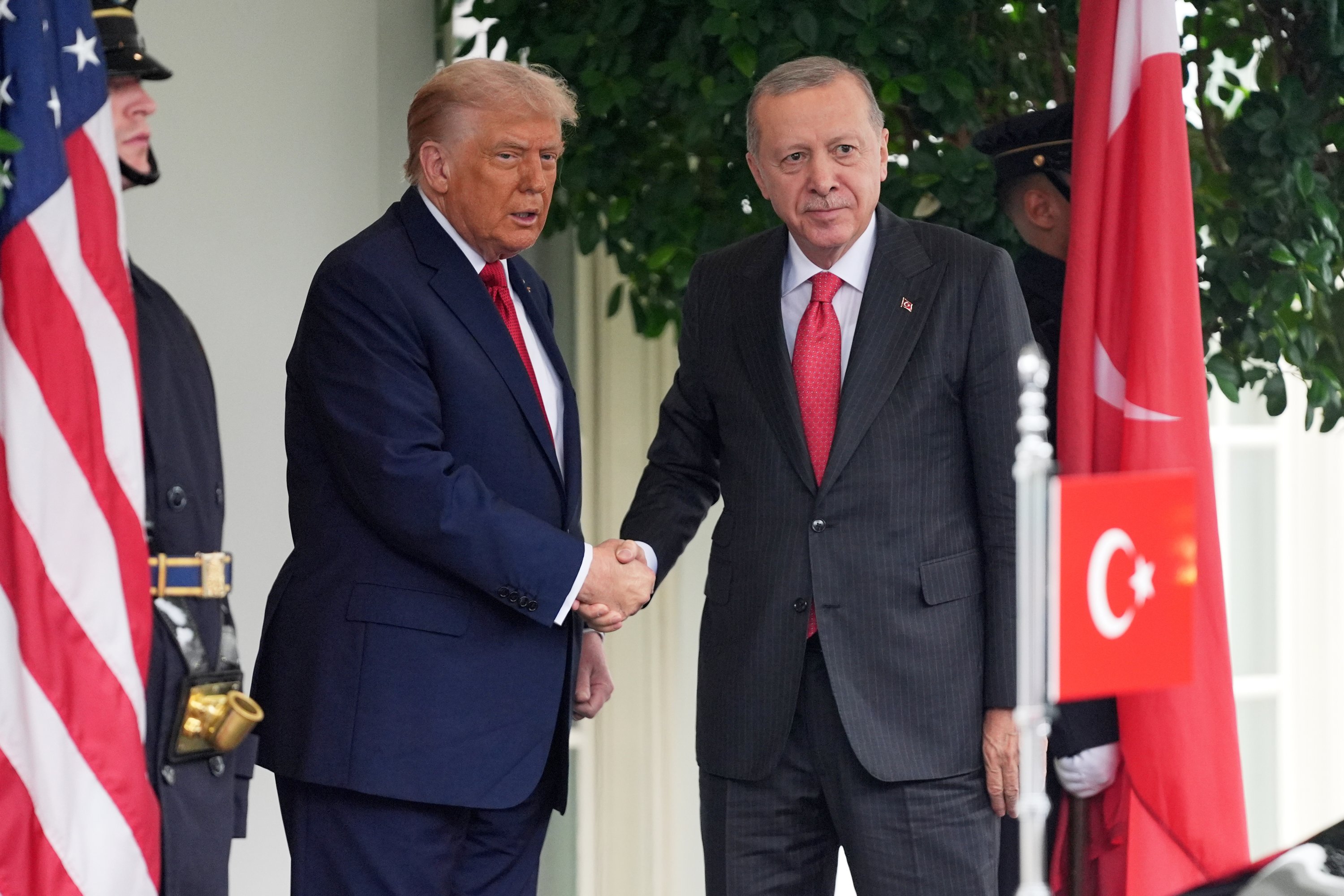
In recent years, we have been witnessing a significant rapprochement between Türkiye and the U.S. There is close dialogue at the governmental level. The cordial relationship between President Recep Tayyip Erdoğan and U.S. President Donald Trump has been a driving force in this regard. This dialogue between leaders has allowed for the rapid advancement of bilateral relations and the development of alternative solutions to chronic regional problems.
There is undoubtedly great potential to advance bilateral relations between the two countries. There exists a strong will in both countries to increase the current trade volume from around $35 billion (TL 1.53 trillion) to $100 billion. There are also significant opportunities to increase mutual investments and cooperation in such fields as science and technology, energy, defense, infrastructure, health and tourism.
Furthermore, we are observing that the foreign policies of the two countries are converging on some very important regional issues. The conflicts in Ukraine, the Middle East, the Caucasus and North Africa lead to instability, chaos and terror, which results in irregular migration and serious humanitarian crises. These are consequences that neither Türkiye nor the U.S. desires.
Solutions for regional problems require the involvement of regional actors. It is important to see that the U.S. government better appreciates Türkiye’s role in ending conflicts in the region. Türkiye-U.S. cooperation on certain issues not only benefits the two countries but also contributes to the achievement and maintenance of stability and prosperity for the region.
In order for Türkiye-U.S. relations to be maintained and further developed, Congress needs to be involved and adopt a similar positive approach toward Türkiye.
This is particularly important for matters related to the defense industry. Historically, defense industry cooperation has played an important role in Türkiye-U.S. relations. And yet, currently, we see that there are certain restrictions for Türkiye that should never exist among allies. These restrictions neither align with the interests of the U.S. nor the interests of NATO.
It is encouraging to see that the U.S. government has recently adopted a more positive approach toward the removal of these restrictions. It is crucial that Congress does not hesitate and timely adopts a similar positive stand toward Türkiye to contribute to long-term cooperation, which will be to the benefit of all stakeholders. This requires a strategic mindset and close dialogue. There is a need to develop and strengthen relations between the legislative bodies of the two countries. We believe that parliamentary diplomacy can play an important role.
To this end, as the Foreign Affairs Committee of the Turkish Grand National Assembly, we will be visiting Washington this week. During our visit, in addition to our meetings at the Congress, we will address these issues in detail at our contacts with think tanks, academia and NGOs. Through parliamentary diplomacy, we will push for the transformation of Turkish-U.S. parliamentary relations from "a turbulent- crisis management mode" to a "steady partnership” based on solid and principled foundations.