The structural transformation undergone by the international system in recent years has led states to redefine their foreign policy priorities, while also deepening the search for the tools and institutional mechanisms through which these policies will be implemented. The era in which security was defined by border security and diplomacy by classic bilateral contacts is largely behind us. Today, state capacity is directly related to the extent to which foreign policy, defense, internal security and intelligence apparatus can work in coordination.
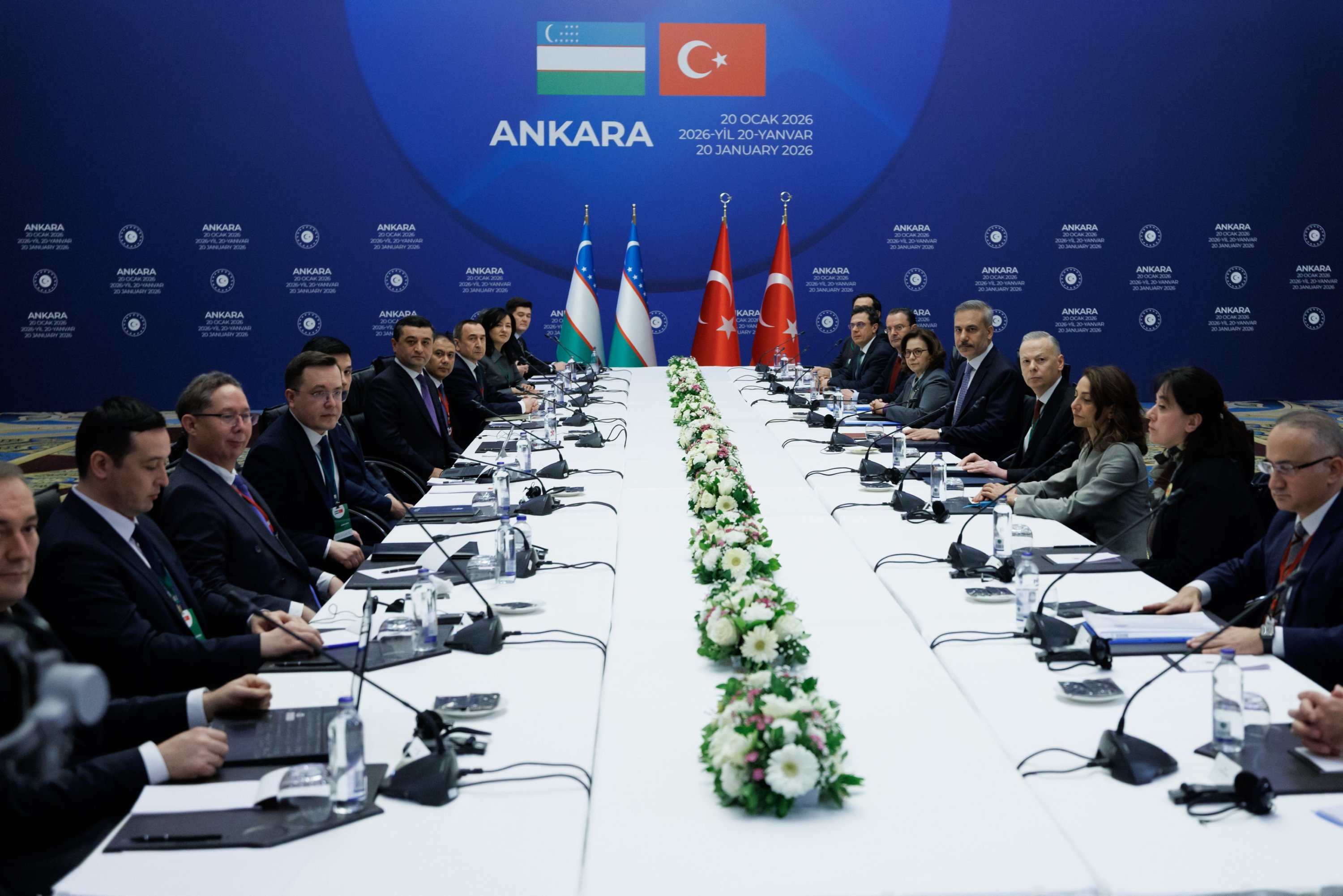
In this context, the first meeting of the 4+4 mechanism held in Ankara between Türkiye and Uzbekistan represents a strategic milestone, demonstrating that bilateral relations have moved beyond routine diplomatic contacts. The 4+4 format refers to the four most critical seats in the decision-making mechanisms of both countries – the foreign minister, the minister of national defense, the minister of the interior and the head of intelligence – sitting together around the same table.
The signing of the “Action Plan” covering the years 2026-2027 during the meeting demonstrates that this new understanding of cooperation is not merely rhetorical. It is supported by a comprehensive roadmap aimed at creating more favorable, sustainable and concrete conditions for cooperation for the people of both countries.
The 4+4 mechanism reflects the strategic choice of Türkiye and Uzbekistan to address security through institutional capacity in an environment of increasing uncertainty, multilayered threats and great power competition in Eurasia. Particularly at a time when Central Asia is being reshaped along the axes of security, connectivity and geo-economics, Ankara and Tashkent's determination to institutionalize their relations, without leaving them to personal diplomacy or temporary political harmony, points to a long-term strategic orientation that warrants careful analysis.
The most noteworthy aspect of the Türkiye-Uzbekistan 4+4 mechanism is its approach to security as a simultaneous and integrated field. Bringing together foreign policy, defense, internal security and intelligence institutions simultaneously on the same platform demonstrates that the approach to security is not reduced to military threats and cross-border risks, but is shaped on the basis of an understanding consistent with political objectives, geopolitical positioning and a long-term regional vision. In this respect, the 4+4 mechanism represents an integrated approach that removes security from being a reactive field and places it at the center of strategic planning.
Such cooperation can quickly become ineffective during periods when coordination between leaders weakens, the regional context changes, or domestic political priorities shift. The 4+4 mechanism, however, offers a structure designed precisely to overcome this fragility. Based on regular consultation, coordination and joint planning, this structure aims to shape the understanding of security away from immediate reactions and towards strategic processes based on foresight.
Particularly in today's conditions, where cross-border risks such as terrorism, extremism, organized crime, cyber threats and irregular migration are becoming increasingly complex, the importance of intelligence sharing and internal security coordination is growing. The direct involvement of intelligence agencies in the mechanism demonstrates that this structure will not be limited to responding to crises. It will focus on early detection of risks and a preventive approach to security.
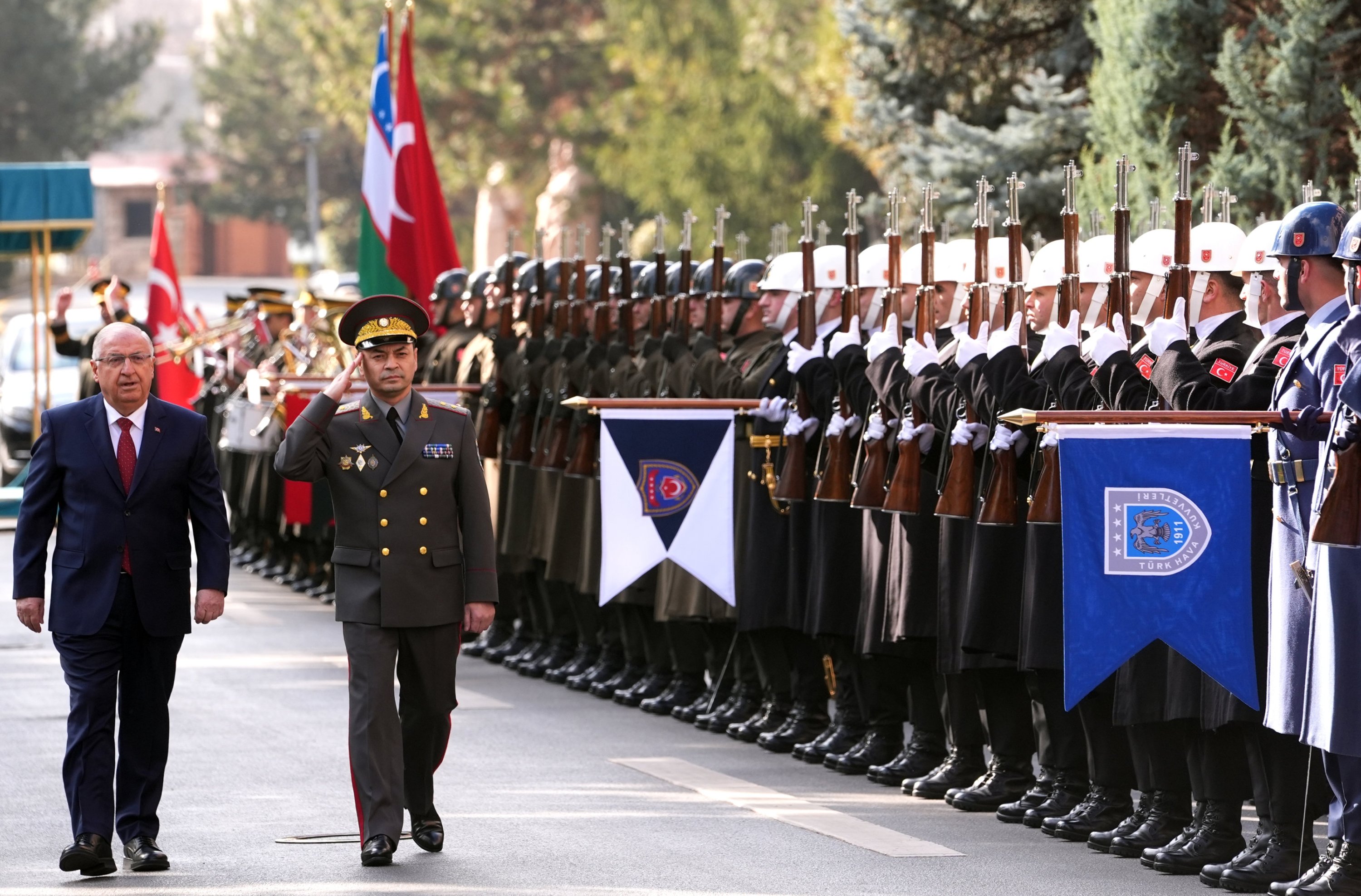
Contacts at the level of defense ministries indicate that the military dimension of this cooperation is also intended to be placed within a systematic framework. Joint exercises, training programs, cooperation in the defense industry and technical capacity sharing demonstrate that security between Türkiye and Uzbekistan is being addressed in a long-term and planned manner. In this respect, the 4+4 mechanism has the potential to serve as a model example of how security can be institutionalized in the Turkic world.
Indeed, this partnership between Türkiye and Uzbekistan demonstrates that security is not approached as a concept reduced to a defensive reflex against threats; rather, it is positioned as a functional tool in shaping the regional order. In this context, the mechanism is of high strategic value in that it demonstrates that the two countries have begun to address their security policies with a broader strategic perspective at the Eurasian level, leaving behind narrow approaches that define them within the context of national borders.
The 4+4 mechanism is underpinned not only by security considerations but also by increasingly decisive geo-economic and strategic connectivity objectives. In today's international system, transport routes, energy corridors and trade networks are not considered within a framework limited to economic efficiency or cost calculations. They are fundamental components of great power competition, regional influence struggles and strategic balancing policies.
This transformation has removed connectivity from being a technical infrastructure issue and placed it directly at the center of foreign policy and security strategies. The deepening of contacts between Türkiye and Uzbekistan along the lines of the Middle Corridor and Trans-Caspian connections is a reflection of this new strategic mindset.
Geo-economic interconnectedness is addressed in the literature as a sphere of power that reflects the capacity of states to use economic instruments for strategic purposes. At this point, the connectivity process inevitably entails a trade-off between economic rationality and national security priorities: while aiming for the high economic efficiency offered by full integration into global trade networks, strategic autonomy is being built to minimize the geopolitical vulnerabilities that these networks may create.
Indeed, the fundamental arena where this conceptual trade-off materializes is the transport projects that reflect Türkiye and Uzbekistan's determination to become geostrategic “hubs.” Transport and logistics routes stretching from the heart of Central Asia to the west of Anatolia elevate Ankara and Tashkent from being “passive transit stops” in the global system to the position of “central actors” capable of determining the direction, security and cost of flows. This geo-economic depth functions as the most vital power factor, expanding the maneuvering space in the foreign policy of both states and providing each country with a strategic tool in an environment of intensifying global competition.
The fact that Türkiye and Uzbekistan address connectivity from the perspective of security and foreign policy demonstrates that it is positioned as one of the central elements of geo-economic planning processes. One of the noteworthy aspects of this approach is that connectivity is not seen as limited to physical infrastructure projects. On the contrary, political will, institutional coordination and security cooperation are considered complementary elements of geo-economic connectivity. The mechanism plays a critical role in this regard.
Institutional alignment creates a foundation that enables the sustainability of economic and logistical cooperation. After all, in a region where security cannot be established and political coordination is weak, it is impossible for connectivity to achieve a permanent and reliable structure.
However, the partnerships developed in areas such as the defense industry, digital infrastructure and production chains demonstrate that connectivity is not limited to physical elements. It is deepened through economic and technological dimensions. This multilayered structure indicates that the geo-economic relationship established between Türkiye and Uzbekistan serves long-term strategic goals rather than short-term gains.
Ultimately, this new format of partnership developed in Türkiye-Uzbekistan relations goes beyond the traditional view that separates security from geoeconomics. It offers a holistic perspective that treats these two areas as intertwined, complementary and mutually reinforcing elements. This perspective clearly reveals the two countries' goal of playing an active role in shaping the balance of power in Eurasia.