As Türkiye navigates an increasingly volatile Middle East and Caucasus, its engagement in the Balkans – often overshadowed by more pressing regional crises – emerges as a crucial stabilizing pillar in its foreign policy. With ongoing security challenges and economic uncertainties in its immediate neighborhood, Ankara is recalibrating its diplomacy to secure its interests in southeast Europe. President Recep Tayyip Erdoğan’s recent diplomatic outreach to key Balkan states signals a strategic shift in Turkish foreign policy, one that could reshape the balance of power in the region and bolster Türkiye’s position as a pivotal player in European and global geopolitics.
Türkiye’s foreign policy operates like a tripod, with one leg in the Caucasus, another in the Middle East and the third in the Balkans. While the first two regions have commanded Türkiye’s attention due to high-stakes conflicts, the Balkans offer a more stable arena. It allows Ankara to project influence and secure long-term economic and security gains from developing a middle corridor of trading routes between Europe and Asia. Erdoğan’s recent diplomatic tour underscores Türkiye’s intent to reinforce this third leg, securing its geopolitical interests and positioning itself as a key intermediary between the East and the West.
Türkiye’s foreign policy is widely recognized for its pragmatism. Ankara navigates its relationships with agility in a region fraught with complexities, striking deals and forming alliances that secure its economic and security interests. While the Caucasus and the Middle East have been the focus of Ankara’s attention in recent years, the Balkans are reemerging as an essential theater of Turkish diplomatic engagement.
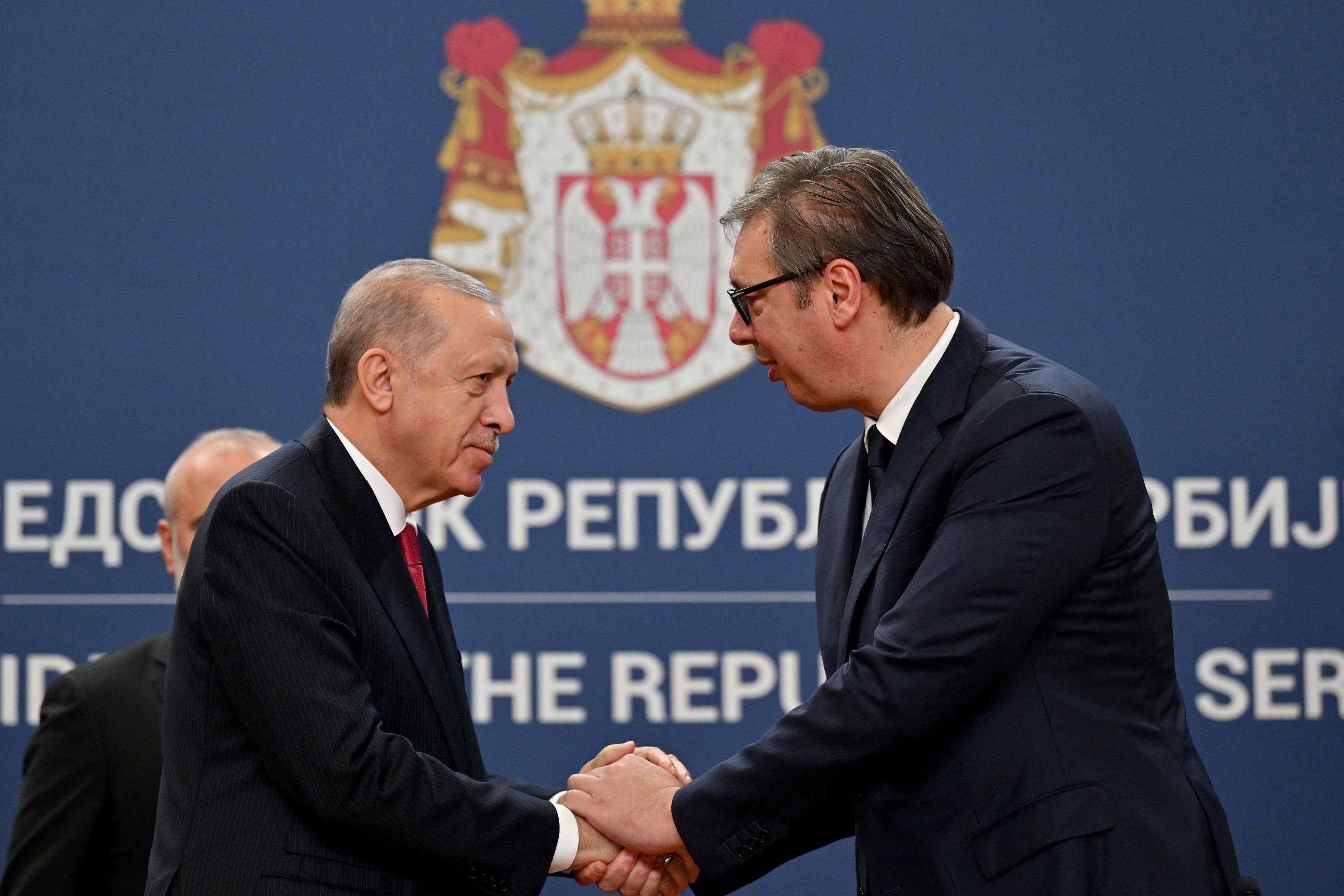
The historical ties between Türkiye and the Balkans run deep, shaped by centuries of Ottoman rule and cultural interaction. Yet, it wasn’t until Erdoğan’s recent diplomatic visits to the region that Ankara’s intent to firmly establish its presence there became apparent. His mini-tour through key Balkan states was not merely a gesture of goodwill but a renewed commitment to Türkiye’s regional strategic objectives.
Türkiye’s relationship with the Balkans has been inconsistent in recent years, often overshadowed by more pressing concerns in the Middle East. However, with Erdoğan's visit to Albania and Serbia, this has changed. Meanwhile, the focus on the Balkans is not only about cultural ties but also about securing strategic influence in a region that has long been a crossroads of competing powers.
Türkiye’s approach to Albania and Serbia exemplifies the pure pragmatism that defines its foreign policy. The agreements with Albania and Serbia are calculated moves to expand Ankara’s geopolitical influence and secure critical economic and security advantages in the Balkans. By strategically deepening ties with these two nations, Türkiye is positioning itself as a key regional power capable of projecting influence in southeast Europe and beyond. Yet, Turkish pragmatic foreign policy will benefit all sides.
In Albania, the Turkish influence is maintained through cultural diplomacy, with the construction of the Namazgah mosque in Tirana – the largest in the Balkans – serving as a symbol of Ankara’s soft power. In the context of Iran’s retaliation to Israel’s aggressive posture, Türkiye’s interests in Albania are also shaped by security concerns, particularly concerning Iranian activities linked to the presence of the People's Mujahideen Organization of Iran, also known by its Farsi name Mujahideen-e-Khalq, an exiled Iranian opposition group. Albania’s strategic location near the Ionian and Adriatic seas further enhances its importance to Türkiye.
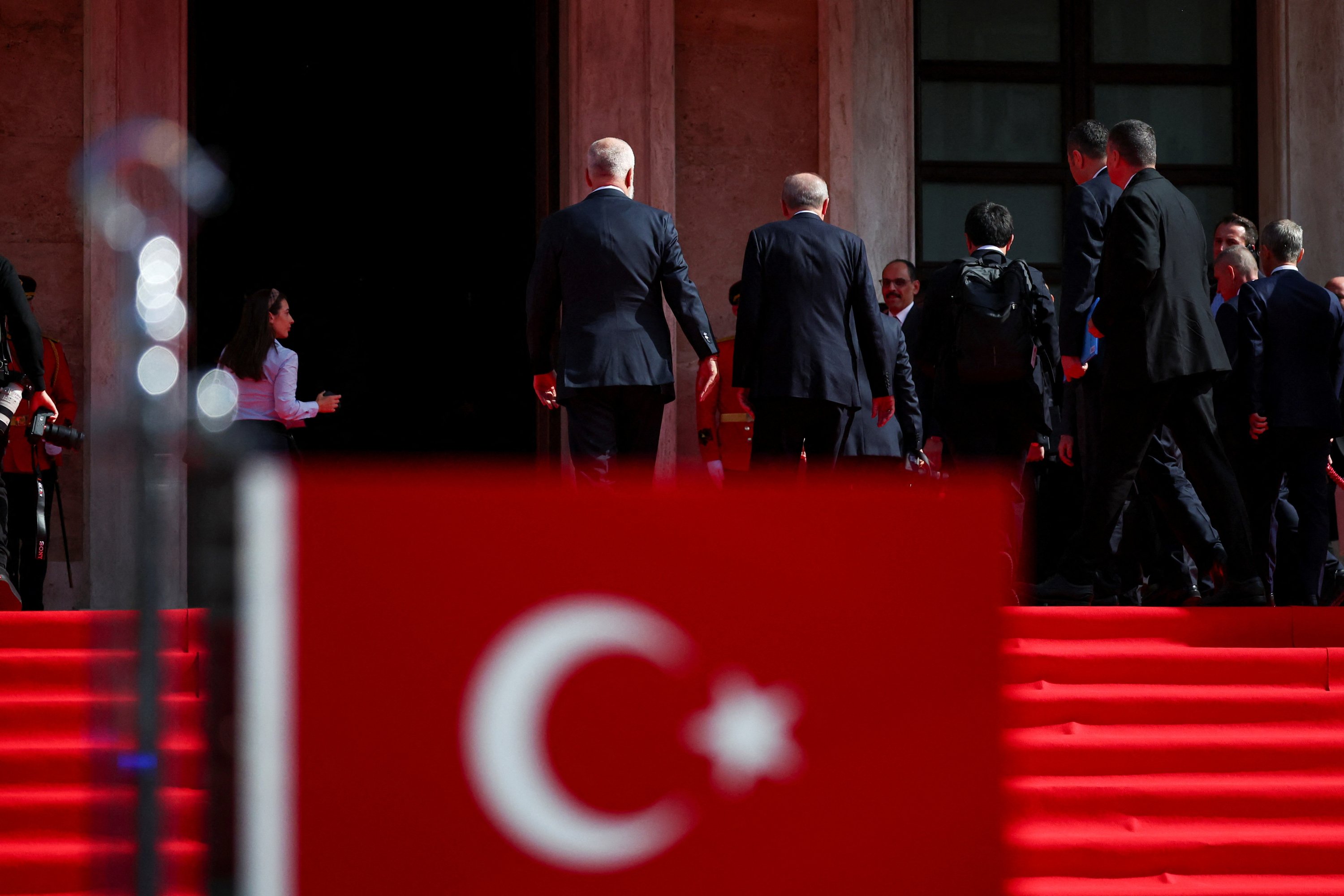
Serbia, on the other hand, represents an entirely different kind of opportunity for Ankara. As the most developed military-industrial power in the Balkans, Serbia offers Türkiye a pathway to strengthen its own defense industry. The agreement for defense industrial cooperation between the two countries allows Türkiye to get closer to the EU market geographically. It opens doors for expanded outreach in Africa and Asia, leveraging Serbia’s established customer base. This is a clear example of how Türkiye uses pragmatic alliances to advance its broader strategic goals.
Critics of Türkiye’s engagement in the Balkans, usually coming from the West, often frame Ankara’s growing influence as a threat, citing concerns about Türkiye's perceived illiberal governance. However, this narrative is oversimplification and overlooks the pragmatic, economy-focused nature of Türkiye’s recent agreements with Albania and Serbia. Ankara has not sought to impose political conditions on its Balkan partners nor pressured these countries to align with Turkish political agendas.
A clear example of pressure to influence political decisions in the Balkans is the EU’s recent support for Bulgaria’s artificially created bilateral issue with Macedonia regarding recognizing a Bulgarian minority of nearly 3,000 people if Macedonia wants to start the EU negotiation process. Under the so-called French proposal, Macedonia is being pushed to amend its constitution to accommodate this minority, reflecting external political influence rather than mutual cooperation. On the contrary, Türkiye's approach is rooted in mutual economic development. Hence, agreements with Albania and Serbia have centered on infrastructure development, energy cooperation, trade facilitation and defense industry growth, all of which foster economic resilience and regional stability.
Moreover, with all three countries aspiring to join the EU, Türkiye’s role as a more developed partner presents an opportunity for them to strengthen economically and better prepare for EU accession. Türkiye’s experience navigating the EU’s complex negotiation process offers valuable insights for Albania and Serbia as they seek to fulfill the Copenhagen criteria. Beyond trade and economic growth, Türkiye can bring technological expertise to the region, enhancing local industries and fostering an entrepreneurial mindset. This know-how transfer can lead to long-term economic development, positioning the Balkans as a competitive market within the European framework while building stronger ties with Ankara.
In this context, it can be said that unlike the political pressure exerted by other external actors, Türkiye’s pragmatic engagement with Albania, Serbia and Macedonia emphasizes mutual economic growth without imposing political conditions.
As Türkiye faces instability in the Middle East and Caucasus, the Balkans provide a stable arena for expanding its influence and strengthening ties with countries that share its EU aspirations. Türkiye is well-positioned to help its Balkan partners meet economic and development goals. This pragmatic diplomacy promises long-term gains for both Türkiye and its Balkan partners.