The ongoing conflict in Gaza entered a new phase after Oct. 7, 2023. Subsequently, Israel’s large-scale military operations and heavy bombardments of Gaza have plunged the region into a severe humanitarian crisis. However, a significant breakthrough has been achieved as Israel and Hamas reached an agreement on the first phase of a comprehensive cease-fire deal, under the leadership of U.S. President Donald Trump and with the crucial mediation efforts of Türkiye, Egypt and Qatar. This development, while highly significant, also reflects a storm of diplomacy behind the scenes.
Nevertheless, the world has witnessed numerous instances in which Israel targeted civilians even during previous cease-fire or humanitarian pause periods. Hence, whether this new process can lead to a just and lasting peace remains uncertain. Nevertheless, it should not be overlooked that a crucial step has been taken toward achieving such peace. At this stage, the 20-point plan announced by the Trump administration has not only positioned Türkiye as a visible mediator but also demonstrated a renewed confidence-building process in international diplomacy.
Türkiye’s engagement reflects not only its historical legacy but also a state philosophy centered on humanitarian principles. Historically, after the Ottoman Empire established sovereignty over the region in 1517, the territories of Palestine enjoyed a long-lasting climate of peace and prosperity. For centuries, communities of different faiths and ethnicities coexisted under a framework of stability, religious freedom and economic security. However, after the 1917 Balfour Declaration, Western intervention in the Middle East disrupted this balance, marking the beginning of a century of continuous conflict, occupation and suffering. This historical rupture still underlies the artificial borders and ongoing instability of today’s Middle East, as well as the enduring struggle for Palestinian statehood. The Balfour Declaration’s principle of granting the Jewish people “a national home” continues to serve as an ideological foundation for regional discord and asymmetry.
At this juncture, Türkiye’s historical and humanitarian-centered approach gains particular significance. Türkiye regards the recognition of Palestine as a state not merely as a diplomatic issue but as both a historical responsibility and a moral obligation. For this reason, since the escalation of violence in Gaza after Oct. 7, 2023, Ankara has treated the tragedy not only as a humanitarian crisis but also as a test of the moral legitimacy of the international order. Within this framework, Türkiye proposed the establishment of a guarantee mechanism to ensure the sustainability of the cease-fire and institutionalize the responsibility of the international community. Diplomatically, Ankara pursued an intense campaign to bring global attention to the humanitarian catastrophe in Gaza while simultaneously urging Western actors to take concrete action.
These efforts yielded tangible results. The recognition of the State of Palestine by Spain and Ireland strengthened Türkiye’s diplomatic narrative within Europe. Following that, the recognition of Palestine by several Western actors, such as the United Kingdom, France and Canada, at the United Nations marked a highly significant diplomatic milestone. The increase in the number of U.N. member states recognizing Palestine to 157 during the 80th General Assembly represented the culmination of this diplomatic momentum. This evolution demonstrates that Türkiye, though often acting behind the scenes, remains one of the most active and influential actors within the international system.
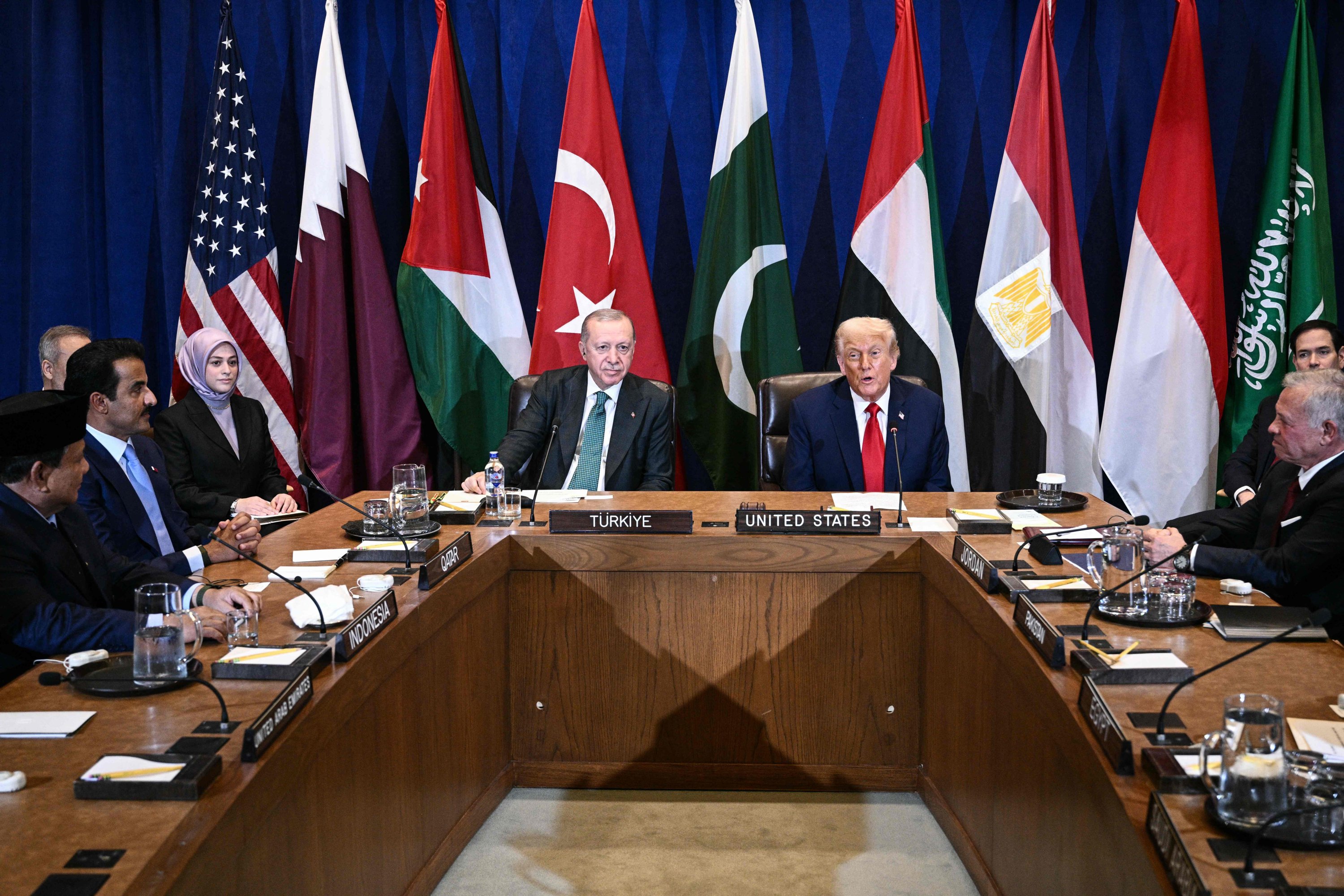
Shortly thereafter, a meeting between President Recep Tayyip Erdoğan and U.S. President Donald Trump signaled the emergence of a new framework for consensus regarding the Gaza issue. The images of Erdoğan and Trump sitting together at the U.N. General Assembly were widely interpreted as evidence that a certain level of understanding, or at least initial steps toward consensus, had been achieved regarding Gaza.
The second phase of Türkiye’s active diplomatic engagement took place during the Erdoğan-Trump meeting at the White House, where Gaza was the central agenda item. It later became clear that the 20-point cease-fire plan, subsequently announced by Washington, had been shaped around the areas of agreement reached between the two leaders. While the 20 articles of the plan may not immediately secure permanent peace or full Palestinian sovereignty, its phased framework aimed at achieving an immediate cease-fire represents a significant diplomatic achievement.
Throughout this process, Türkiye has meticulously woven a network of back-channel diplomacy, building influence both on the ground and at the negotiation table through a multilayered mediation strategy. Later, during the talks held in Sharm el-Sheikh, Egypt, Türkiye assumed the role of a third-party facilitator, ensuring the continuity of communication between the sides. Ankara’s contribution was crucial in enabling Hamas to participate in the negotiation process and in maintaining direct contact between the parties. Simultaneously, Egypt and Qatar’s initiatives played a key role in accelerating the process and facilitating the establishment of humanitarian corridors within Gaza. As of Oct. 10, 2025, marking the second anniversary of the conflict, Hamas and Israel reached a partial understanding on several key issues. They emerged from the negotiation table with a cease-fire agreement. However, the cease-fire remains fragile and uncertain.
Within this framework, Türkiye welcomed the new cease-fire agreement and announced that it would closely monitor its strict implementation. This declaration created a mood of both tension and cautious optimism across the region. However, Israel continued to target Gaza and strike civilian areas even during the final moments before the cease-fire took effect.
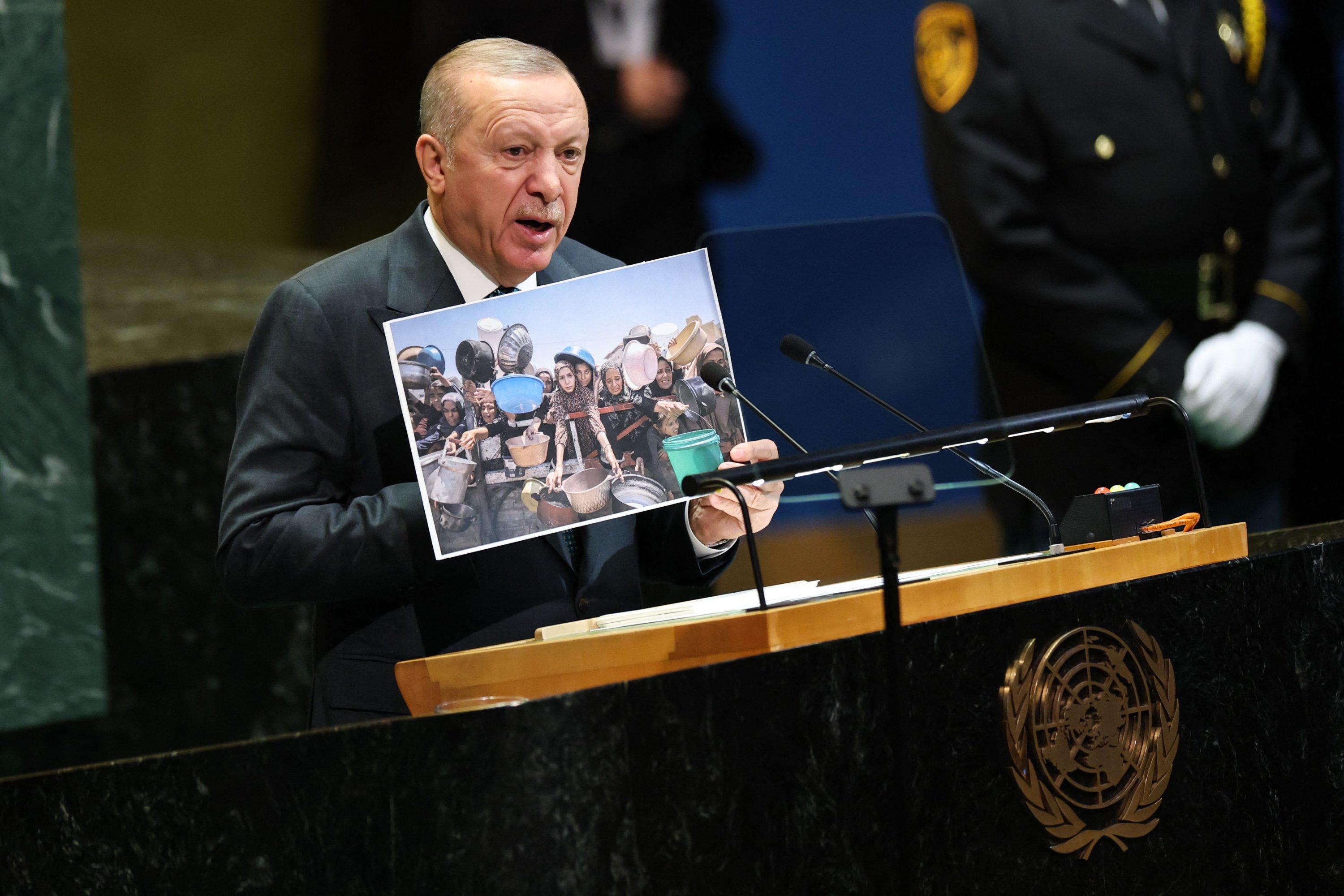
Following the enforcement of the cease-fire, hundreds of thousands of displaced Palestinians began returning to their heavily devastated homes and neighborhoods. Nevertheless, Gaza’s humanitarian crisis remains profound: more than 80% of the infrastructure has been destroyed, and over 67,000 Palestinians have lost their lives, including more than 20,000 children, the most heartbreaking dimension of the tragedy. The region now requires tens of billions of dollars in reconstruction funding.
The subsequent stages of the agreement involve highly complex and uncertain issues such as the disarmament of Hamas, the deployment of an international stabilization force and the formation of a technocratic administration for Gaza. Serious doubts persist regarding the durability of the accord, as Israel’s history of noncompliance and the deep mistrust between the parties remain formidable obstacles. Erdoğan called on Israel to honor its commitments, emphasizing the urgency of taking humanitarian steps before winter, resettling civilians displaced in tent camps and accelerating the restoration of essential infrastructure.
At this stage, Türkiye has emerged not merely as a mediator but as one of the principal architects of the emerging guarantee mechanism. Ankara’s diplomatic initiative and humanitarian engagement constitute key elements ensuring that the cease-fire can be effectively upheld on the ground.
With the implementation of the cease-fire agreement, the Israeli army has remained positioned along the so-called “yellow line,” which covers approximately 53%-55% of Gaza’s territory. This line had been designated as a “security buffer zone” during preliminary understandings reached in the summer of 2024 with the participation of the U.S., Egypt and Türkiye. At this stage, Türkiye’s influence and role across the three main pillars of the agreement have become increasingly evident. The first of these pillars is the security guarantee, which involves monitoring the cease-fire and reporting potential violations. The second is humanitarian facilitation and coordinating international humanitarian assistance. Lastly, overseeing the technical implementation of prisoner exchanges and troop withdrawals is essential.
Taken together, these elements reveal the evident necessity of establishing an international peacekeeping force to ensure lasting stability in the region. Although the 20-point framework does not explicitly define such a mechanism, it is evident that a sui generis structure, tailored to the region’s civilian realities, is essential.
History demonstrates that traditional U.N. and NATO peacekeeping missions have often generated instability and fragility rather than sustainable security. The cases of Afghanistan, Lebanon and particularly Bosnia-Herzegovina, where the Srebrenica genocide remains an enduring wound in collective memory, serve as stark reminders of these shortcomings. For this reason, I believe that Türkiye’s deep familiarity with the region and its human-centered diplomatic approach will play a crucial role in shaping a more effective peace mechanism.
However, this must proceed through a coordinated and inclusive framework, involving other key actors under a robust civilian guarantor system. In this context, the participation of institutions such as türkiye's Disaster and Emergency Management Presidency (AFAD), the Turkish Red Crescent and other field-capable humanitarian organizations will be of critical importance, not only for implementing humanitarian measures and ensuring security, but also for facilitating reconstruction and building sustainable governance structures in Gaza. The civilian emphasis in mediation efforts is of great importance.
Israel’s attacks on seven different regional actors over the past two years stem from its power projection strategy. In essence, Israel has been sustaining its influence by reproducing instability as a permanent “sphere of threat” within the region. However, this pattern of power projection has been disrupted by Türkiye’s inclusion at the cease-fire negotiation table. Türkiye’s multilayered role in the Gaza process, particularly through its guarantee diplomacy initiative, has created a balancing effect that alters Israel’s structural position within the system.
Undoubtedly, the key challenge for Türkiye is maintaining “humanitarian leadership without partisanship.” Nevertheless, its participation in the cease-fire negotiations has demonstrated Ankara’s capacity to reshape the balance of power in a way that makes peace attainable. What remains now is the effective implementation of this emerging system, both on the ground and at the negotiation table, to translate diplomacy into sustainable stability.