Over the past 20 years, Türkiye has undergone a massive transformation across nearly all fields – from education and health care to transportation and infrastructure, from the defense industry to foreign policy. This large-scale transformation, realized in what is actually a relatively short period of time, has several prominent defining characteristics. First, large segments of the population that had long been unable to access these services were brought to the center and enabled to participate in governance. Groups that had experienced prolonged deprivation and faced difficulties in accessing public services in their daily lives – from education to health care – have, in this period, gained access to all such services. Moreover, they have seen that their demands are taken into account and, by actively participating in governance, have been able to become agents of this transformation themselves. As a result, the country has become capable of fully mobilizing and utilizing its entire accumulated capacity.
Second, a healthy relationship with history – one that embodies profound experience and accumulated wisdom but had long been interrupted – has been re-established, and self-confidence has been regained. As this long-eroded sense of confidence has been reinforced, the possibility of articulating a new narrative for the present has emerged. In this way, the country has been able not only to respond more swiftly to contemporary challenges but also, especially in the international arena, to transition from a dependent actor to a rule-shaping actor operating on the basis of reciprocity. This, in turn, has further strengthened the self-confidence generated by addressing the infrastructural deficiencies highlighted in the first characteristic.
Third, every institution and organization has made this growth sustainable by continuously increasing its capacity to contribute to it. Consequently, in order to keep pace with this expansion, these institutions have internalized the transformation and moved into a phase where they can generate their own distinct success stories. They are now able to engage with their international peers with confidence, thereby steadily expanding both the competitive and cooperative capacities of individual institutions. The recent success stories in energy, the defense industry, tourism and aviation are just a few examples of this process.
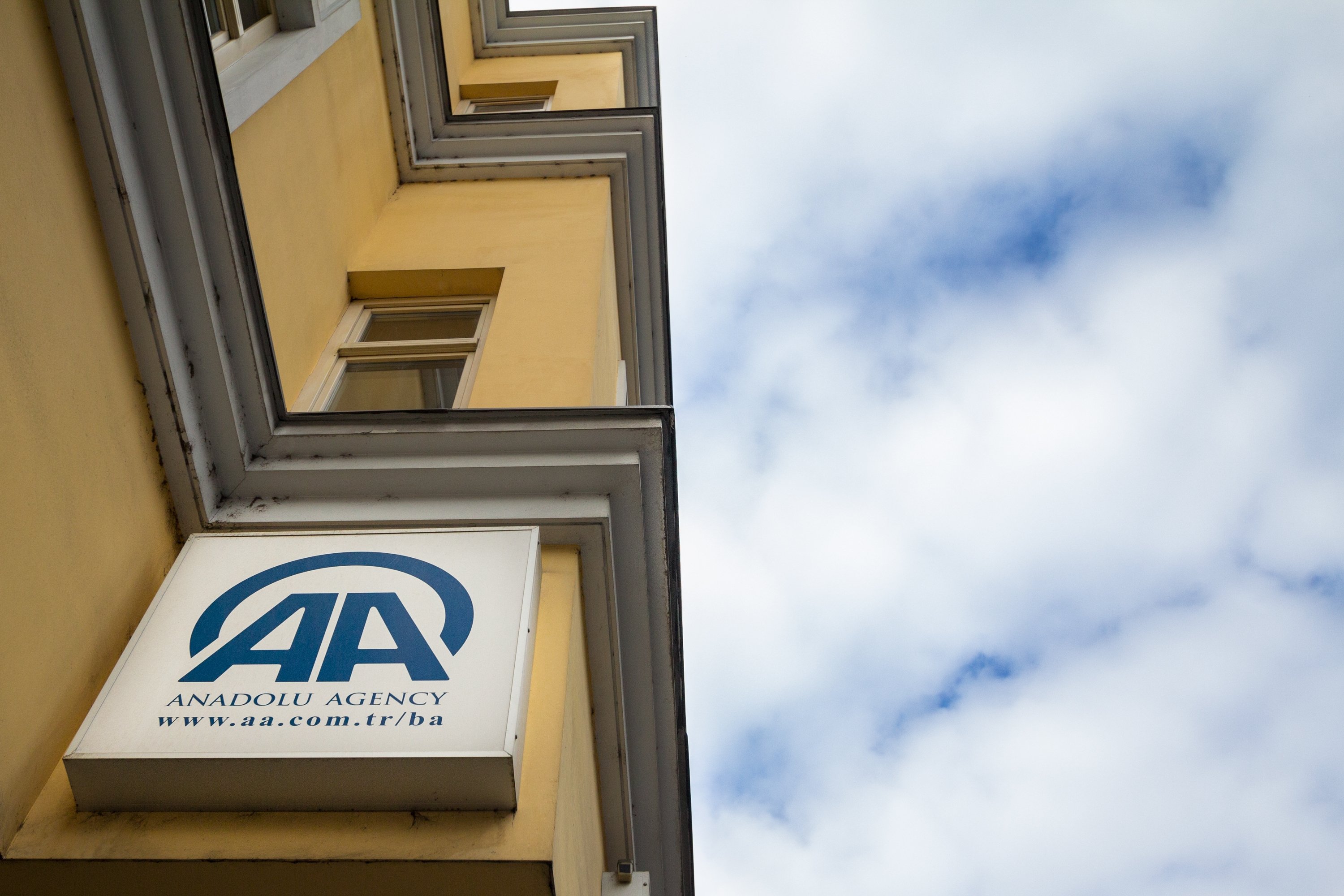
In this context, Anadolu Agency (AA) stands as one of the finest examples of this transformation in the field of journalism. Established on April 6, 1920, upon Mustafa Kemal Atatürk’s instruction to convey the rightful voice of the War of Independence to the world, AA has not only successfully fulfilled this mission but has also become an integral part of the story of the new republic. Over the past 20 years, alongside the major transformation experienced in the country, AA has continuously expanded its capacity and succeeded in becoming a significant voice of this process. While in 2004 it operated domestically with only 10 regional directorates and 18 offices, today it provides services through 14 regional directorates and 85 offices. At the same time, by steadily expanding its international network, it has increased the number of its overseas representations from 20 in 2007 to a presence in 137 countries today. In doing so, it has also expanded its international subscriber base, now reaching 208 subscribers from 76 different countries.
It has also steadily increased the number of languages in which it publishes. For example, while AA was producing content in only three languages in 1998, it has since added Bosnian, Croatian, Serbian, Montenegrin, French, Albanian, Macedonian, Spanish, Indonesian and Arabic, bringing the total to 13 languages today. Accordingly, by expanding its linguistic outreach, AA has continuously broadened its sphere of influence. Through the offices and broadcasting centers it has established in Gaza, Baghdad, Abuja, Tripoli and Cairo, it has strengthened its presence in Africa and the Middle East, and today it continues its journalistic activities across a vast geography stretching from South Africa to Iran and from Qatar to Morocco. By consistently extending its geographical footprint, AA also closely follows global developments through its offices in Brussels, London, New York, and Beijing.
On the other hand, in order to take its position in media and communication technologies a step further, AA has established AA Technology Company. With the vision of becoming a pioneer in media technologies, it continues its activities with the aim of building a strong media technologies ecosystem and constructing the technology company of the future. Just as artificial intelligence technologies are transforming every field, they are also profoundly reshaping media and communication. In order not to miss this transformation, AA has organized initiatives such as the Media Technologies Hackathon, the Forum on Managing Artificial Intelligence in Media, and the Reporter: Rethinking Journalism in the Digital Age Forum, thereby revealing the potential of artificial intelligence in the media sector and implementing the necessary transformations within its own organization. For example, within this framework, AA Technology has developed the journalist drone TEPE.
In his seminal work Orientalism, Edward Said defines Orientalism not merely as a pure field of Eastern studies or an attempt to understand the East, but as an effort to produce, manage and discipline Western representations of the East. Said emphasizes that orientalism constitutes the West’s unilateral approach to representing and interpreting the East, or more precisely, a form of domination. Accordingly, within the Orientalist corpus, the East does not speak for itself; rather, the West makes the East speak in ways it chooses, explains its supposed mysteries and defines it. Orientalist texts thus provide external representations. In other words, Orientalism is grounded in Western representations, cultural codes and historical accumulations, and these representations acquire meaning primarily for the West. For this reason, Orientalist discourse reflects not the reality of the East, but how the West perceives and represents the East.
In this context, international communication channels have long drawn on Orientalist rhetoric, constructing events taking place in our region and around the world – including in our own country – in ways that consistently reinforce this perspective. As a result, the East has been rendered passive, continuously exposed to one-sided Western representations, as its right to articulate its own story in its own voice has been usurped. As we also noted in our previous article on TRT, the growing presence of TRT in digital platforms – through successful international digital news initiatives and multilingual broadcasting – has sought to challenge and weaken the influence of orientalism in this sphere. The same effort lies at the heart of AA’s activities. In producing news content, AA breaks away from the Orientalist framework and strives to convey international developments accurately through its own dynamics. The most essential condition for moving from being an object of orientalist representations to becoming a subject is the capacity to transmit truth from its source and within its authentic context. By combining its historical mission with the institutional competence built over the past twenty years, AA has powerfully reinforced this capacity.
Within this framework, AA increased its total volume of content from 584,000 items in 2006 to 2.4 million in 2025, and expanded its infographic production from 1,553 in 2015 to 4,647 in 2025. By producing content that shapes the global news agenda, AA has achieved significant success in breaking the influence of Orientalist rhetoric at the international level. The same effort has also been evident in bringing Israel’s massacres in Gaza to the attention of the world. Covering the Gaza attacks that began on Oct. 7, 2023, with 112 reporters, photojournalists and freelance journalists, AA documented Israel’s acts of genocide and war crimes. Through the books "The Evidence," "The Witness" and "The Perpetrator," which include visuals accepted as evidence by the International Criminal Court (ICC), AA has achieved major success in combating disinformation rooted in Orientalist rhetoric both regionally and globally.
Gala screenings of the documentary "The Evidence" were held in Ankara, at the Turkish House in New York, at the Yunus Emre Institute in London, and at the U.K. Parliament building in London. The documentary was also screened at the 12th Bosphorus Film Festival organized by the Bosporus Culture and Arts Foundation, the 7th International Al-Jazeera Balkans Documentary Film Festival organized by Al-Jazeera Balkans, the symposium titled “The Israel-Palestine Issue and International Law as Its Dimensions Shift After One Year” organized by Istanbul University, as well as in Santa Ana, California, U.S., and in Doha, the capital of Qatar.
In summary, alongside a growing Türkiye, the institutions that have made this growth possible have not only expanded quantitatively but have also generated new capacities, self-confidence and spheres of influence, thereby providing positive feedback to the process. This institutional depth, which has emerged across many fields – from infrastructure and the defense industry to energy and cultural diplomacy – has increased the country’s room for maneuver while also enabling institutions to assume roles that continuously expand and deepen their own scale. Anadolu Agency occupies a central position within this whole, as it is simultaneously a witness to the transformation, a carrier of it and an interpreter of it on a global scale. As Türkiye has grown stronger, AA’s capacity to gather news, produce content and convey it to the world has expanded; and as AA has grown stronger, Türkiye’s voice has become audible across wider geographies in a more authentic and more effective manner.