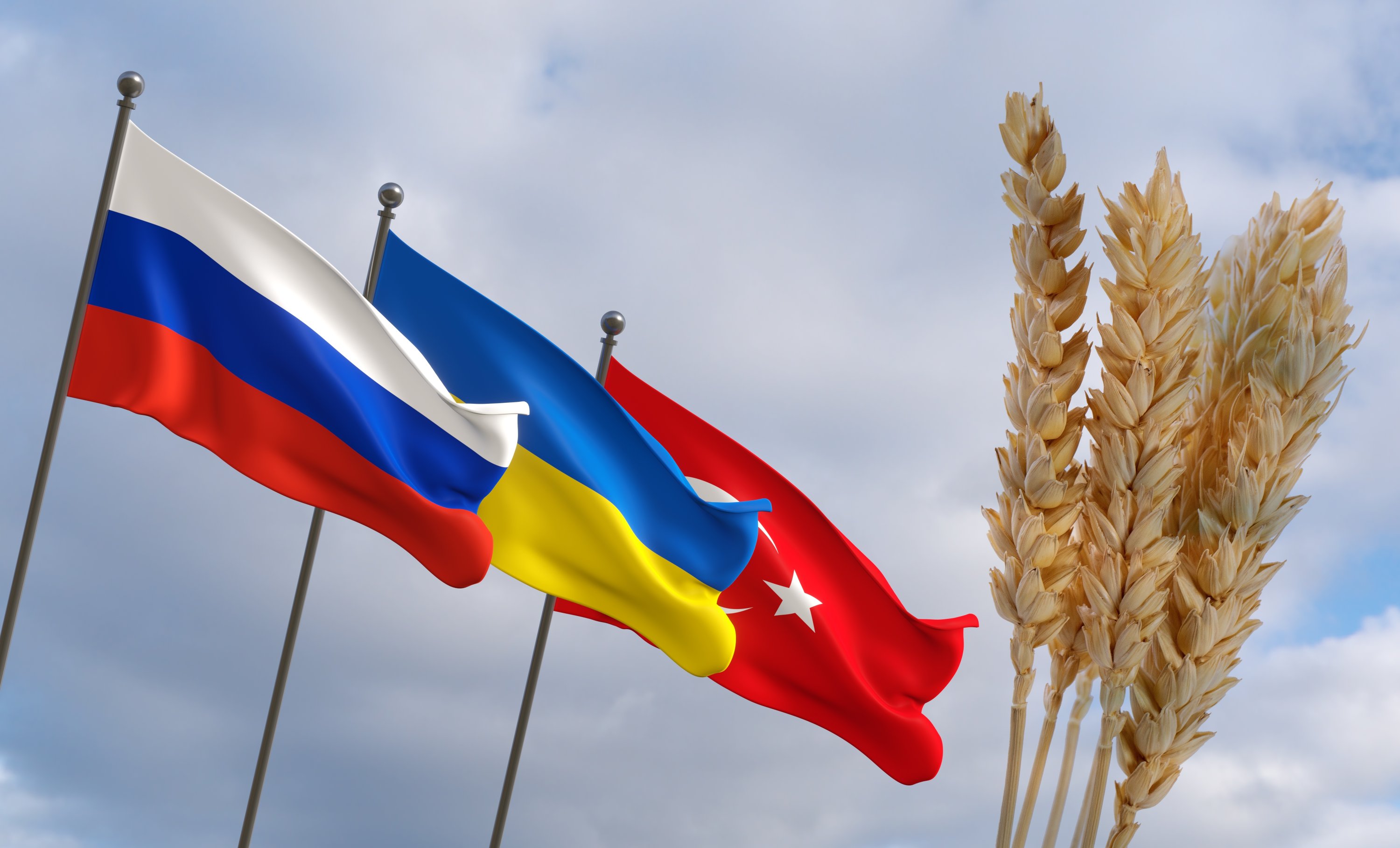
Ukraine and Russia reached an agreement to allow exports of grain and other agricultural products to resume from selected Ukraine Black Sea ports after months of a Russian blockade. The agreement comes at a time when storage capacity is reaching its limits, with much of the 2022 wheat harvest and the approximately 20 million metric tons of grains and oilseeds harvested in 2021 remaining in storage – unable to ship because of the blockade.
The deal, brokered by Türkiye and the United Nations, has been widely praised; resuming Ukraine trade has helped ease market prices, consolidating the reductions seen in recent weeks and helping to bring them back to the pre-COVID-19 levels of 2020.
The agreement has helped to alleviate rising food insecurity and global hunger concerns. Hundreds of millions of people in the Middle East and North Africa (MENA) region and elsewhere depend on Black Sea wheat imports as an essential part of their diets and are contending with high prices.
The Russian blockade resulted in a sharp reduction in exports as grain was diverted to Romanian ports on the Black Sea or alternative routes by rail and barge to the Baltic Sea through Poland. Despite these efforts, exports averaged only 1.5 million-2 million tons monthly, one-third of the normal level. As a result, around 20 million tons of grain from 2021, including 6 million tons of wheat (13% of the 2021 harvest), were not shipped, causing severe stress on available storage capacity outside of conflict areas, estimated at roughly 24 million tons in early May.
With nearly 19 million tons of wheat harvested this summer and an additional 38.2 million tons of feed grains expected to be harvested during fall, analysis had suggested storage capacity would be exhausted by late summer (before the harvest of spring-planted crops) forcing the use of temporary storage bags, keeping unharvested crops in the fields or storing part of the harvest on the ground.
Temporary storage could lead to large quality losses in the grain, while the ongoing war threatens further damage to grain transport and storage within the country.
Secondly, consumers of Ukrainian grains including food products (wheat) and feed (corn, barley but also wheat in some markets) also stand to benefit from the deal. These include MENA countries such as Egypt that import to meet the majority of their wheat and feed grain needs and account for half of the Ukrainian wheat exports, as well as distant countries like China, which rely on Ukrainian corn, among other products, for livestock feed.
Among the MENA countries, Türkiye is an important processing center for Black Sea grains, and its food processing industries would also benefit from the normalization of trade. Among the poorest and more food insecure countries, meanwhile, the deal was expected to have two principal effects: Assuming that World Food Programme (WFP) food assistance exports would receive top priority, it could provide much-needed relief to the 20 hunger hot spots identified by the Food and Agriculture Organization (FAO) and the WFP. And if the agreement leads to lower prices on global markets, it could address the affordability challenges faced by most low-income countries today.
Despite its shaky start, many hoped that the Russia-Ukraine agreement would result in increased exports of agricultural and fertilizer products. The deal helped mitigate some of the impacts of the war on the world’s poorest households. Is it enough to restore the pre-war status quo? Not really. The crisis in supplies of wheat and other agricultural products was driven by many factors and there was a need to rebuild global inventories. This rebuilding process would be greatly accelerated if Ukraine manages to recover its role in the global market. Yet the war is ongoing, with continuing adverse impacts on production and daily uncertainty – a single errant rocket could cause insurers to balk at providing insurance.
In the short run, implementing the agreement at scale and for the rest of the year is essential to avoid storage issues that could ultimately drive both prices and production down in Ukraine. The deal is tenuous; nevertheless, it remains the beacon of hope as the first step toward normalization of trade out of the Black Sea region and has improved food security for hundreds of millions.
Türkiye was also expected to play a key role in implementing the agreements. In line with this expectation, the Joint Coordination Centre was established in Türkiye’s largest city of Istanbul and the merchants' vessels were inspected in the harbors determined by Türkiye at the entry to and exit from the Turkish Straits.
Internationally praised for its mediator role, Türkiye has coordinated with Moscow and Kyiv to open a corridor from the Ukrainian port city of Odessa to resume global grain shipments long stuck due to the Russia-Ukraine war.
While the deal empowered Türkiye as the main interlocutor for the grain shipment, it also placed a great responsibility on the country in terms of being the nation that ensures the smooth functioning of the mechanism.
The agreement also helped confirm Türkiye’s policy of neutrality in the Ukraine conflict and strengthened President Recep Tayyip Erdoğan on the world stage as a leader making progress in resolving the grain crisis.