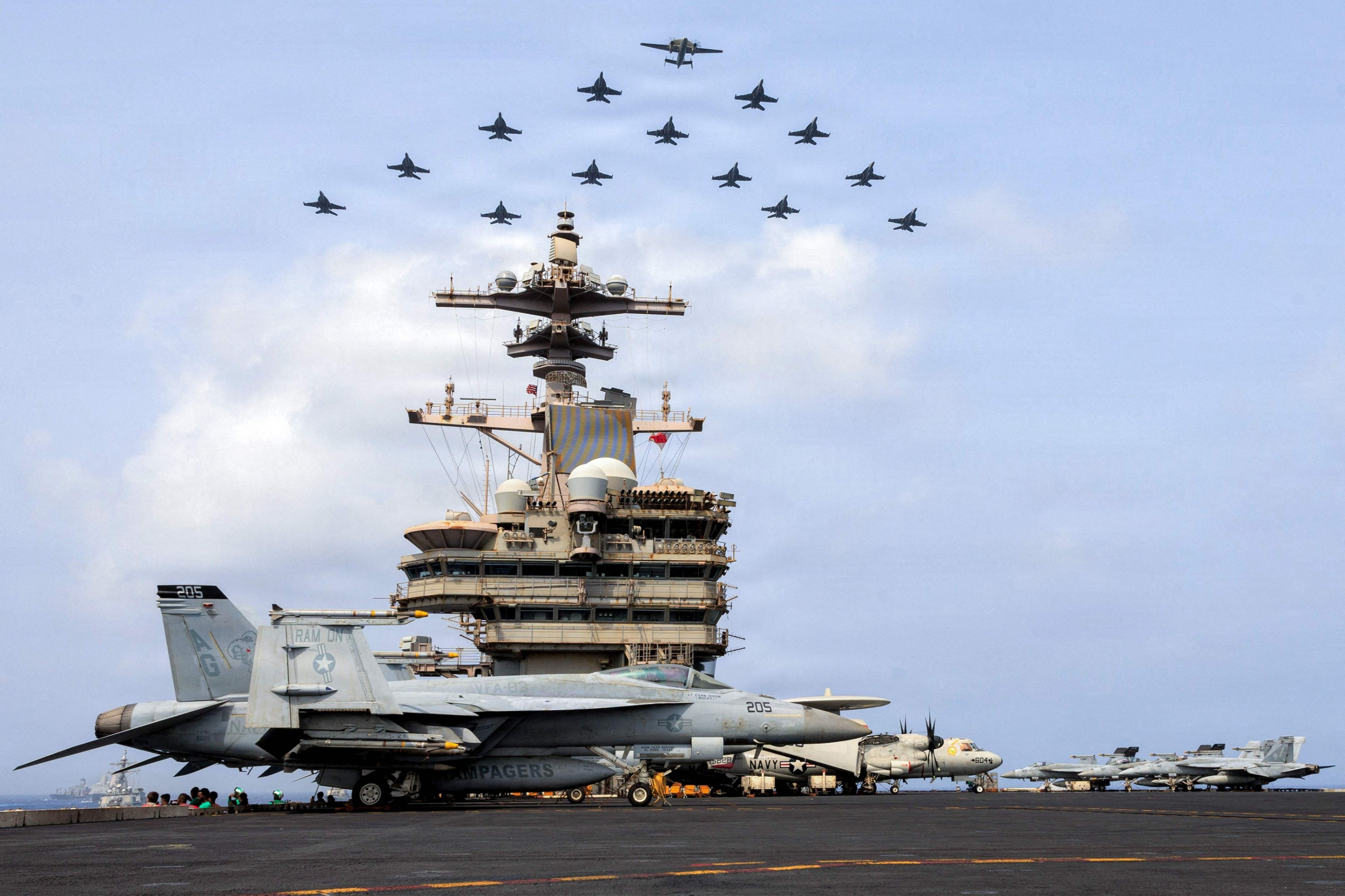
In the autumn of 1938, Europe did not want another war.
The wounds of World War I were still fresh. Political leaders believed diplomacy could prevent another catastrophe, while public opinion embraced the idea of "peace at any cost." When the Munich Agreement was signed, many believed Europe had escaped a devastating conflict.
Not everyone shared that optimism. British statesman Winston Churchill issued a warning that would become one of history's most enduring political quotations: "You were given the choice between war and dishonour. You chose dishonour, and you will have war."
A year later, Europe was engulfed in the most destructive war in human history.
Today, the world once again stands at a critical crossroads. The escalating tensions in the Middle East, intensifying rivalry among major powers, competition over energy corridors, and growing military deployments inevitably evoke memories of the international atmosphere of the late 1930s. History never repeats itself exactly, but the strategic calculations of great powers often follow familiar patterns.
Looking at the developments surrounding Iran, one question naturally arises: Was Washington's repeated call for a cease-fire genuinely intended to stop the war? Or was it merely the opening move in preparing for a longer and far more comprehensive confrontation?
In the early days of the conflict, U.S. President Donald Trump's primary objective appeared to be ending the fighting quickly, keeping the Strait of Hormuz open, and preventing major disruptions to global energy markets.
Today, however, the picture looks very different.
Statements coming from both Washington and Tehran now share a common theme: both sides insist they are prepared for a prolonged confrontation.
So what changed?
Does the changing rhetoric indicate that the objectives of the war have changed as well? Or were the calls for a cease-fire, from the very beginning, a strategic effort to buy time?
There are no definitive answers to the questions today. Nevertheless, developments on the ground present several possibilities worth considering.
One possibility is that Washington initially expected a rapid outcome but revised its strategy after discovering that Iran proved far more resilient than anticipated. Iran has demonstrated that its military capabilities, vast geography, mountainous terrain, large population and defense infrastructure developed under decades of sanctions make it a country against which conventional military operations are unlikely to produce quick results.
The experiences of Iraq and Afghanistan have also shown that the United States has become increasingly reluctant to pursue large-scale ground invasions. Against that backdrop, it is conceivable that Washington has shifted toward a long-term strategy of attrition, combining economic, political, and military pressure over an extended period.
If that is the case, the cease-fire initiative takes on a different meaning.
Tehran may have concluded that the U.S. was not seeking peace in the first place and that the diplomatic process was designed only to create an opportunity to complete military preparations for the next phase of the conflict.
Moreover, from Iran's perspective, the issue may not simply be the U.S.'s current military strikes but the possibility of a long-term strategy aimed at weakening or even fragmenting the country.
Another striking development concerns the Strait of Hormuz.
During the opening phase of the conflict, even modest increases in oil prices generated significant concern in Washington. The Trump administration repeatedly emphasized that any prolonged disruption to shipping through Hormuz would be unacceptable for the global economy.
Today, those urgent warnings appear far less prominent, which inevitably raises new questions.
Has Washington become willing to tolerate a prolonged risk to the Strait of Hormuz? If so, what gives the U.S. that confidence?
At present, no alternative energy corridor exists that can fully replace Hormuz. A substantial share of Gulf oil exports still passes through this narrow waterway, while existing pipeline alternatives remain limited in capacity. It is therefore difficult to assume that Washington would simply rely on current alternatives.
Perhaps the strategic calculation has changed. Perhaps the objective is no longer to control Iran as a whole but instead to establish an internationally supervised security zone around the Strait of Hormuz and its surrounding areas. Such a scenario could significantly strengthen Washington's position regarding global energy security.
For Israel, however, the equation is different.
Even if the Strait of Hormuz were secured, Iran would continue to exist as a regional power. From Israel's perspective, the perceived threats posed by Iran's ballistic missile capabilities and nuclear ambitions would remain. This makes Israel's relative silence in recent weeks particularly noteworthy.
Political figures and security officials who previously advocated stronger military action against Iran have become noticeably more restrained. Does this silence suggest that Washington and Tel Aviv have reached an undisclosed understanding behind closed doors? Or is Israel simply waiting for the next phase of an American strategy already set in motion?
Another fundamental question follows.
With whom would the United States conduct such a prolonged campaign?
Financial support from the Gulf states alone would almost certainly be insufficient.
What would be required is sustained intelligence sharing, integrated air defense, logistics, naval capabilities and uninterrupted access to regional military bases. While the Gulf states possess significant resources, carrying the burden of a prolonged campaign against a country as large and capable as Iran would be an extraordinary challenge. Under such circumstances, it appears more plausible that Washington would seek a multilayered coalition involving Britain, European allies and regional security partners.
Yet, beyond all these scenarios, one fundamental reality should not be overlooked.
Iran is neither Iraq nor Afghanistan.
With a population approaching 90 million, an expansive geography, an extensive missile arsenal, and a broad network of regional partners and proxy forces, Iran is not a country where quick military victories can be expected. For that reason, the prospect of a prolonged conflict now appears considerably stronger than it did in the opening days of the war.
History also reminds us that long wars rarely inflict costs only on the battlefield. They reshape economies, diplomacy, regional stability and societies alike. This is precisely why Türkiye's position deserves particular attention.
From the outset, Ankara has opposed the opening of new fronts in the region, consistently advocated keeping diplomatic channels open, and emphasized that energy security is essential for global stability. Türkiye's central argument has been that military projects aimed at regime change have already produced devastating long-term consequences in Iraq, Libya and Syria.
What the region needs today is neither new occupations nor new geopolitical partition plans. It needs a sustainable diplomatic framework that addresses the legitimate security concerns of all regional actors.
Ultimately, one question remains.
Is the real objective merely to limit Iran's military capabilities? Or are we witnessing the opening chapter of a much broader strategy designed to reshape the political and energy landscape of the Middle East for decades to come?