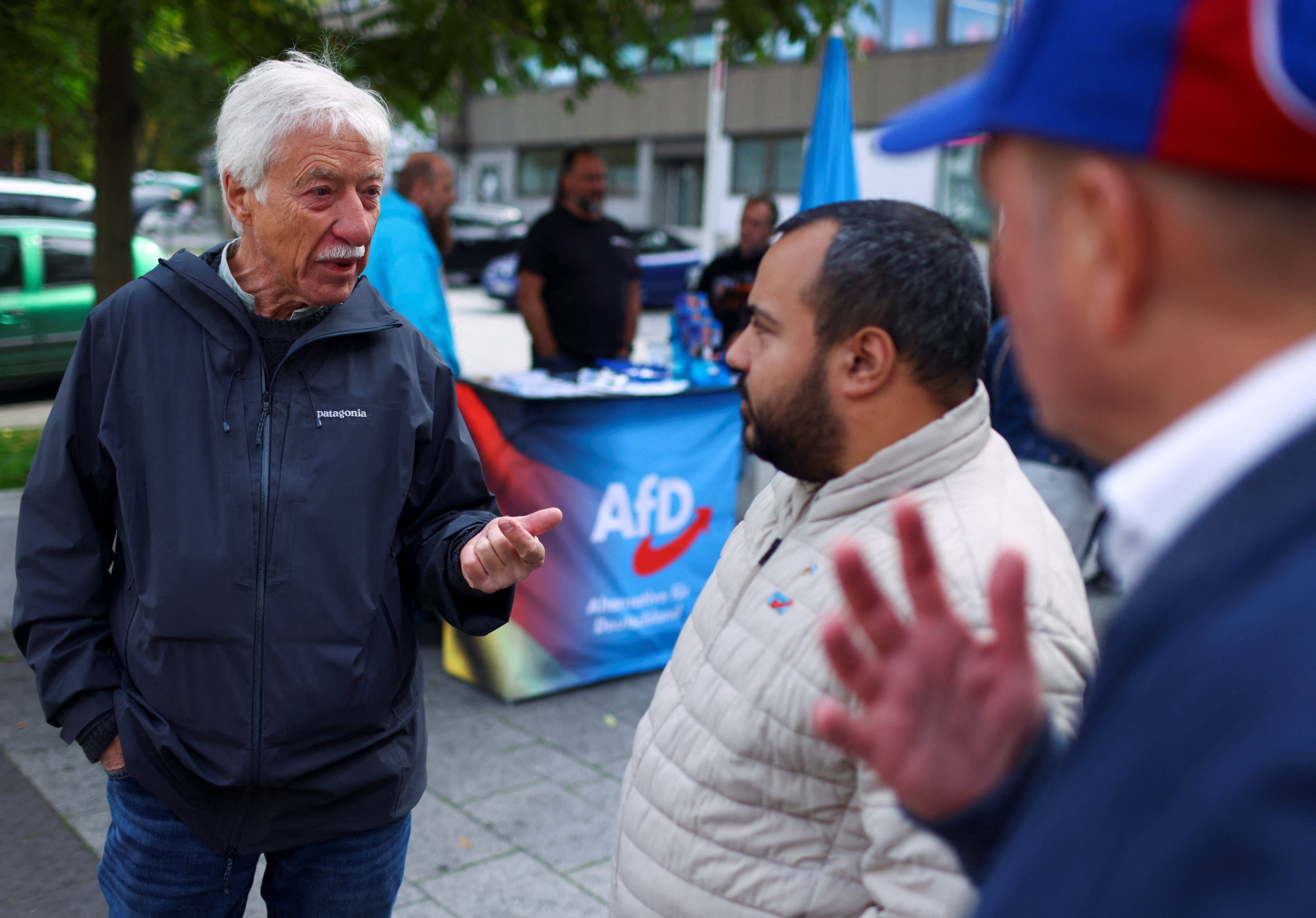
The Alternative for Germany (AfD) is gaining popularity. After the 2025 federal election, it achieved over 35% in several eastern German states, winning all direct mandates in Thuringia and Saxony. For the first time, it even overtook the Christian Democratic Union (CDU)/Christian Social Union (CSU) at the national level: according to an Ipsos poll in April 2025, the AfD stood at 25%, while the Union slipped to 24% – the lowest result for the Christian Democrats in years. Since 1945, no party on the far-right fringe has been as strong in Germany as it is now. The reasons are manifold – and they go far beyond a classic protest vote.
There are several reasons behind the AfD’s rise, which can broadly be categorized into three major subgroups. Economic factors include regional inequality, unemployment, low wages, widespread fears about pension security and the long-term stability of the welfare state. Social factors encompass everyday frustrations, including neglected neighborhoods, cultural tensions, and anxieties over migration and integration. Lastly, political factors cover disillusionment with mainstream parties, the absence of convincing policy responses to demographic challenges and the amplifying role of media dynamics and social media mobilization. Taken together, these dimensions provide fertile ground for the AfD’s growth, both at the national level and in local contexts, such as Gelsenkirchen.
For a long time, migration was seen as the AfD’s core issue. Chancellor Friedrich Merz tried to win back voters with a tougher stance, but failed. Research shows that for many citizens, the real concerns lie elsewhere. Economic stability, pension security and social justice rank far higher. Focusing on just one issue turned out to be a strategic dead end.
Meanwhile, central questions remain unresolved: the baby boomer generation is retiring, the birth rate is falling, and the pension system is heading toward collapse. The governing parties have offered no convincing solutions. The AfD, by contrast, does not provide sustainable answers either, but it does offer simple scapegoats: migration, welfare abuse and elites. With this, it dominates the narrative around widespread anxieties.
Another factor is the media. Too often, critical depth and distance have been lacking, replaced by scandalization and click-driven coverage. This dynamic plays directly into the hands of populists. At the same time, the AfD has built a strong presence on social media – using clear, emotional language on TikTok, YouTube and Telegram. This way, it reaches young and politically distant audiences far more effectively than its rivals.
Especially striking: according to Infratest dimap, 1.8 million AfD votes in 2025 came from former non-voters – a group that other parties struggle to mobilize. The AfD’s communication is direct, often angry, but easy to understand. This resonates with politically disillusioned citizens who feel ignored by the establishment.
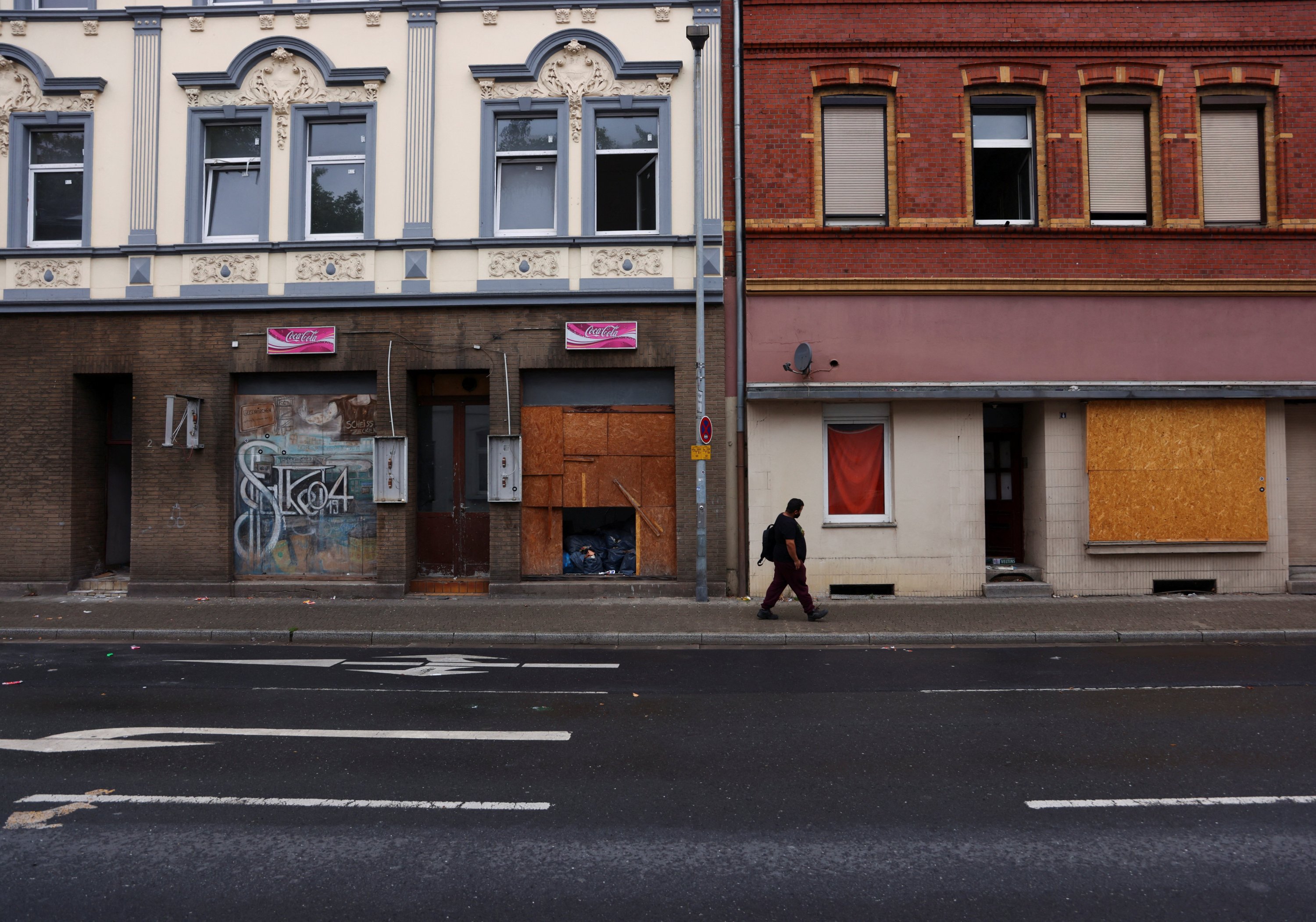
In eastern Germany, the AfD has long established itself as a people’s party. What is new is that similar dynamics are now spreading westward. A striking example can be found in Gelsenkirchen.
In the 2025 municipal election, the AfD achieved nearly 30% in Gelsenkirchen – almost on par with the Social Democratic Party (SPD), which had long dominated the city. The result sent shockwaves far beyond the Ruhr area.
Gelsenkirchen is one of Germany’s poorest major cities. The decline of the mining and steel industries has left deep scars. Many residents live on low wages or social benefits, with little prospect for improvement.
The frustrations are visible in daily life: overflowing garbage containers, bulky waste left on the streets, broken bottles on playgrounds. Residents complain that calls to the city often go unanswered or lead to little action. For many, this neglect is emblematic of a politics that has lost control.
The sense of injustice also plays a central role. People who work full time but end up with barely more than those on welfare feel abandoned by the state. “Then you start asking yourself: What’s the point?” said a factory worker from the Bulmke district.
The AfD taps directly into these sentiments. With simple slogans, digital campaigning, and its image as an anti-establishment party, it capitalizes on the distrust that has eroded support for traditional parties.
Although the SPD managed to hold on to the mayor’s office in a runoff, the near-equal result in the city council carries strong symbolic weight. If a traditional SPD stronghold like Gelsenkirchen can tip, it feels like a dam breaking.
The city thus becomes a symbol of a broader national trend: wherever economic hardship, everyday frustrations and feelings of unfairness converge, the AfD grows stronger.
The AfD’s rise is no longer a regional anomaly. It stems from a mix of economic discontent, social frustrations and political failures. Together, these factors have created fertile ground for the development of populist narratives.
Gelsenkirchen illustrates these dynamics in sharp relief: from trash on the streets to the loss of trust in politics. If the AfD is to be stopped, solutions must begin here – with tangible improvements in everyday life, credible answers to social inequality and communication that no longer ignores the concerns of citizens.
This matters not only for Gelsenkirchen but for Germany as a whole: a party that has already overtaken the CDU/CSU nationally and achieved historic highs unseen since 1945 will not be contained by local boundaries alone. The frustrations visible in one Ruhr-area city are symptomatic of the broader national trend that has propelled the AfD to the center of German politics.