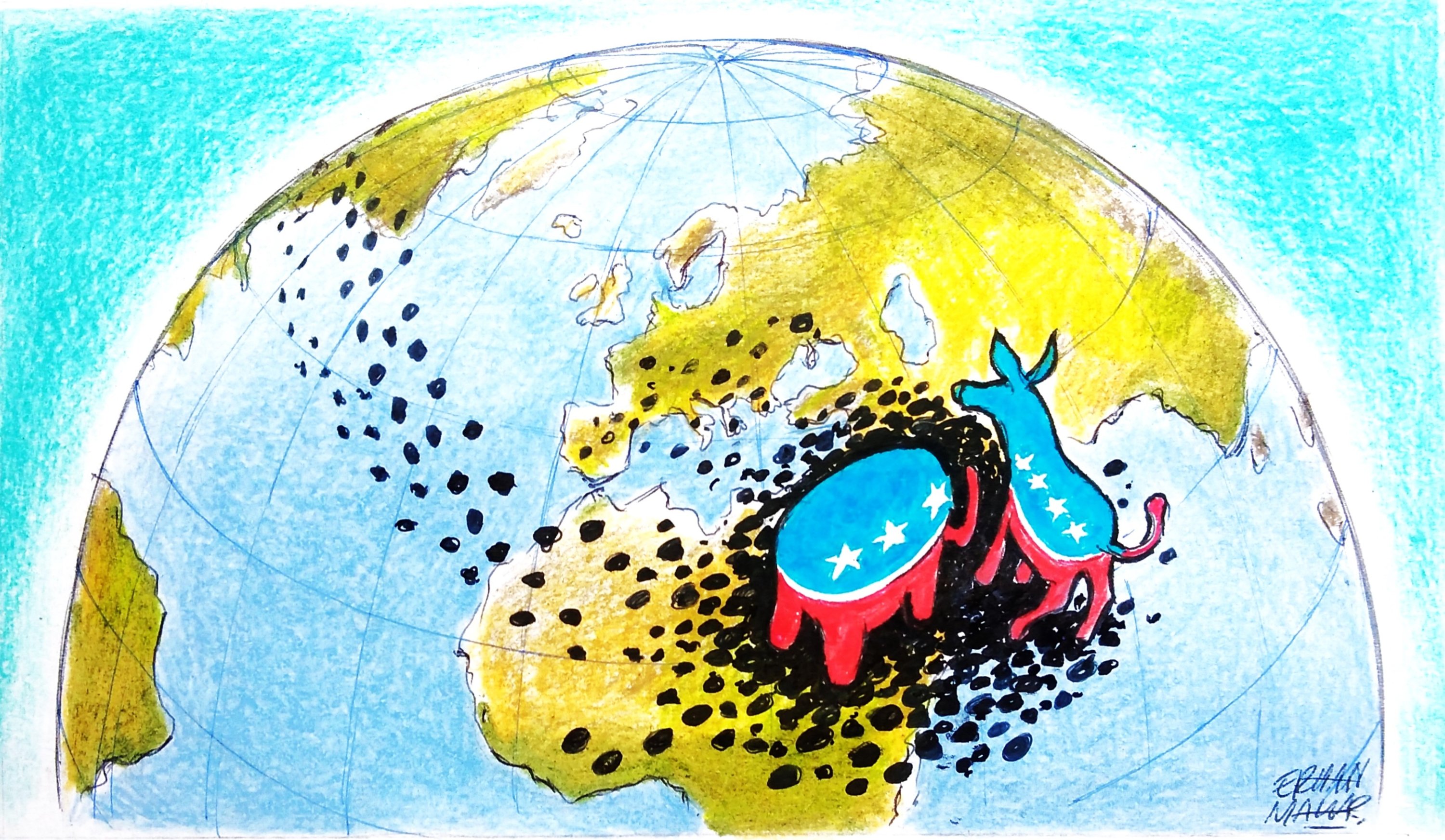
The world’s interest in the spectacle of winning arguments is palpable and understandable, especially in the context of the Middle East. The sharp contrasts between U.S. President Joe Biden and former President Donald Trump on critical issues – such as the conflicts in Gaza, U.S. support for Israel and strategies for regional stability – underline the profound impact of U.S. foreign policy on the Middle East’s future and geopolitics.
The debate on June 27, 2024, between Biden and Trump highlighted sharp contrasts in their approaches to wars in the Middle East and Ukraine, climate and energy policies, and the future of NATO. During the debate, Trump asserted that if reelected, he would end the war in Ukraine. However, he did not present any solutions for the war between Israel and Gaza. Instead, Trump criticized Biden by calling him “Palestinian” for not providing enough support to Israel.
Trump claimed that the Palestinian political and military movement Hamas and Iran would not have attacked Israel if he had been the president. He also added that he would not impose constraints on Israel’s efforts to “finish the job” in Gaza although Israel did not wreak less havoc on Palestinians through continued bombing and brutal attacks during Biden’s administration.
A shift came in the political landscape when Biden ended his campaign and nominated Vice President Kamala Harris as the candidate for the U.S. presidency on July 21, 2024. In her first address as a nominated presidential candidate, Harris appeared to advocate for peace and cease-fires in the Middle East, like U.S. intentions in Ukraine.
Following a meeting held on July 25, with Israeli Prime Minister Benjamin Netanyahu in Washington, Harris said, “It is time for this war to end and end in a way where Israel is secure, all the hostages are released, the suffering of Palestinians in Gaza ends and the Palestinian people can exercise their right to freedom, dignity and self-determination.”
Harris mentioned that she insisted Netanyahu make progress on a multi-stage plan to scale back the warfare in densely populated Gaza, release hostages and allow Palestinians in Gaza to resume their daily lives. She also emphasized to Netanyahu the pressing requirement to finalize the U.S.-backed peace plan promptly to provide much-needed relief to the Palestinian people.
At the same time, while advocating peace, Harris condemned Hamas as a "brutal terrorist organization." She made a statement regarding the pro-Palestinian protests outside the U.S. Capitol, saying, “Pro-Hamas graffiti and rhetoric are abhorrent, and we must not tolerate them in our nation.” Harris’ campaign gives the impression of a policy shift regarding Palestinians, with a hybrid stance aiming to bring peace and a cease-fire while still targeting Hamas.
A transition has occurred in the U.S. presidential race, which may perhaps lead to a shift in policy within the corridors of power in the U.S. Whether the focus is on pushing for peace or maintaining a stance of rigid power will have a huge impact on the Middle Eastern politics, which is already on the edge of continuous war.
For almost a century, the U.S. has maintained a presence in the Middle East in one way or the other, asserting itself as a significant player in the region. The Middle East is a resource-rich area spanning Western Asia and Northern Africa, particularly oil holds substantial importance, influencing the global economy, and giving the region huge strategic importance.
Additionally, the Middle East is home to vital global shipping ways including the Persian Gulf, Red Sea and Suez Canal. Its strategic geographical position means it frequently plays a significant role in the foreign policies of other countries, including the U.S.
While many believe that the U.S. is primarily interested in the Middle East because of oil, the reality is more complex. The U.S. has achieved self-sufficiency in oil production, having produced more crude oil than any other nation for the past six years, according to the International Energy Statistics. The U.S. interest lies in controlling other countries’ access to oil, which affects Western countries and strategic competitors like China which also relies on Middle Eastern oil.
Beyond oil, the Middle East is an important market for American arms manufacturers. According to the Department of State, in 2023, the U.S. set a record by selling $238 billion worth of military equipment to foreign governments. Through arms sales, the U.S. also buys influence in the region.
Israel has been the largest recipient of U.S. aid since World War II. As a strong ally of the U.S., Israel helps to bolster the American strategic power in the Middle East. Moreover, the U.S. has remained a major player in overthrowing governments elected democratically in the Middle East, whether through direct intervention or support for military coups.
For instance, U.S. relations with Türkiye hit rock bottom as well due to the bloody coup attempt that took place in July 2016. The major reason behind this development was Washington providing shelter to Fetullah Gülen, the mastermind behind the notorious incident, and his aides. It is known that Gülen’s men fled to U.S. soil following the coup incident. Gülen leads a terrorist organization, called the Gülenist Terror Group (FETÖ), which has caused security threats to the Turkish state and democracy. Although the U.S., a NATO ally of Türkiye, rejected the Turkish accusations several times, the bilateral relations between the two never got back on track again. The very situation reflects the broader pattern of U.S. influence and interest in the region’s political dynamics, often leading to accusations and tensions.
In light of these developments, growing speculation and acceptance of Trump as the Republican candidate for the presidency – especially following the attack on him while speaking to his supporters in Butler County, Pennsylvania – raises serious concerns. His potential presidency may have deep implications for the U.S. foreign policy and its impact on the Middle East.
On the other hand, Sughnen Yongo, a journalist in Forbes, wrote that amid a politically raging landscape with shifting loyalties, a new poll reveals an unexpected trend: Harris is rapidly gaining power with voters across the U.S.
Given the Middle East region’s current state of conflict, economic crisis and political instability, Trump’s foreign policy proposals can lead to further complications and challenges for an already volatile region. The U.S. government, whether led by Republicans or Democrats, must provide a strong resolution to end the destruction and violent conflict aggravated by Israel that has taken many lives since Oct. 7, 2023. Gaza is already engulfed in conflict, if a peace plan is not signed, the region, already beleaguered by proxy and large-scale wars, can face even greater instability. This might lead to challenges that the U.S. would find difficult to manage, and the repercussions would be felt globally.