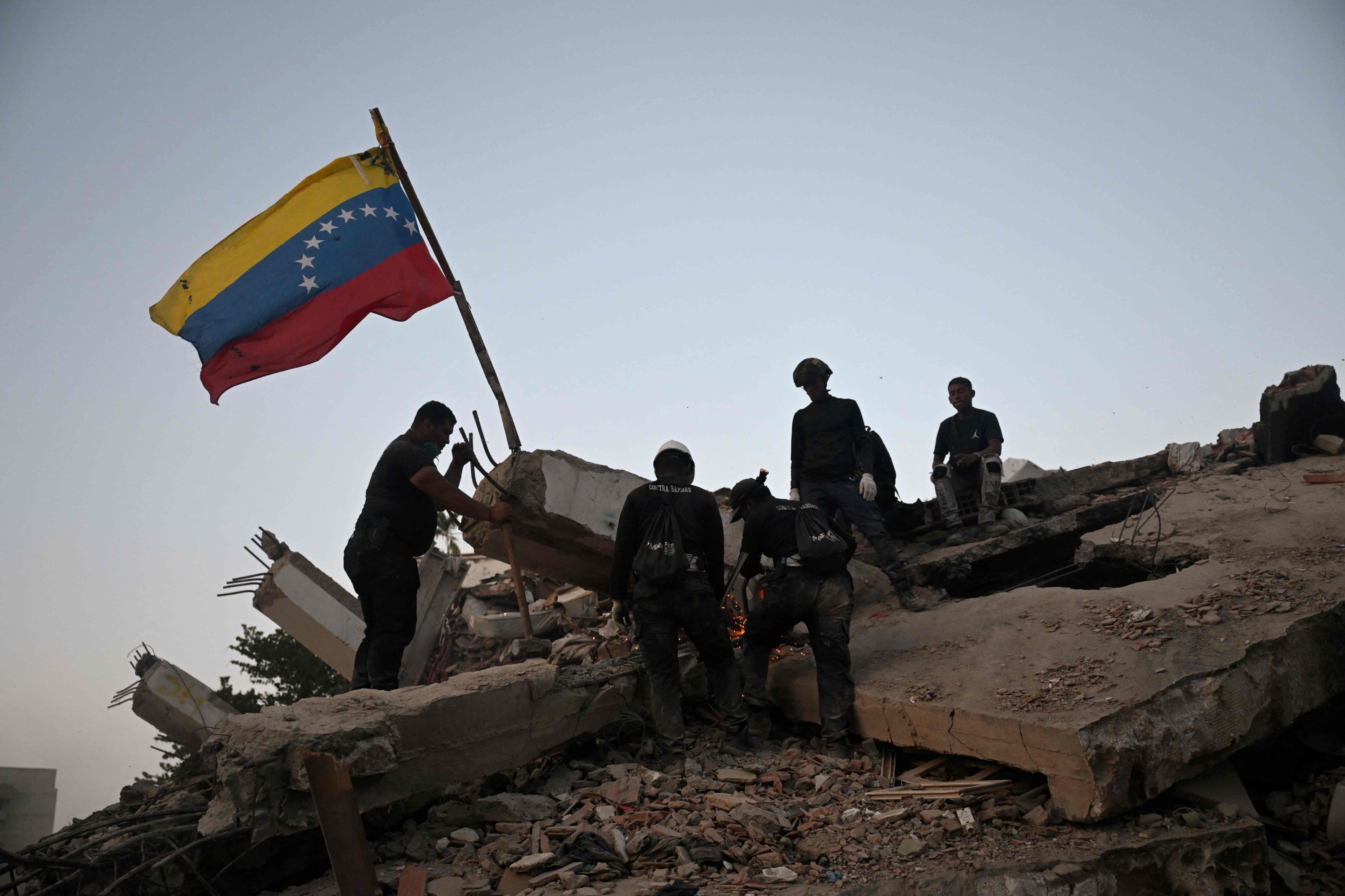
One month after twin earthquakes tore through north-central Venezuela, the numbers are staggering: More than 5,300 confirmed dead, nearly 16,700 injured and almost 18,000 people still without a permanent home. These figures will keep rising as search teams continue to dig.
Numbers cannot capture what this feels like for the people living through it. In one coastal town, grieving relatives still comb through mountains of rubble every day with nothing more than shovels and their bare hands, searching not for survivors anymore but for bodies, so they can finally hold a funeral. Some families have lost seven or more relatives in a single building collapse. That is a tragedy beyond numbers: thousands trapped in limbo, unable to grieve because they do not yet know what happened to those they love. Without a body, there is no funeral, no grave and no real chance to begin mourning.
Aid organizations on the ground point to three urgent needs a month on: primary health care, mental health support and clean drinking water. Families still rely on bottled water to drink, wash and cook, while limited sanitation raises the risk of disease in crowded camps. Thousands with chronic illnesses have lost continuity of treatment, a quiet emergency inside the larger one. Survivors also carry a psychological weight of anxiety, grief, sleeplessness and the strain of losing not just homes but jobs and income. This is what a disaster looks like once the initial shock fades: a slow unraveling of ordinary life, not just collapsed buildings.
The Venezuelan Red Cross and the International Federation of Red Cross and Red Crescent Societies have been present since the first hours, setting up a field hospital, helping rescue survivors, and reconnecting separated families. Over the month, their work changed course, rather than ended. An emergency clinic in one affected coastal town, run with international partners, is now delivering health and psychosocial care that will benefit close to 30,000 people over four months, alongside the original field hospital. It sits within a broader response the organizations plan to sustain for 24 months, since needs will keep changing well beyond the emergency phase. Priorities now include preventing disease outbreaks, sustaining mental health support, keeping chronic disease treatment uninterrupted, and helping families rebuild their livelihoods, with particular attention to children, older people, pregnant women and people with disabilities.
This is a serious, sustained effort, but it depends heavily on outside funding, and that is where the gap shows. The Red Cross movement launched an appeal to raise 50 million Swiss francs for 300,000 people over two years. One month in, it is only about a quarter funded.
Earthquakes of this scale demand an immediate, heavy mobilization of equipment, not just medical teams. Excavation machinery should have been prioritized from the earliest days to speed up rescues and spare families weeks of searching by hand. Families on the ground say plainly that the biggest obstacle is not willpower but the shortage of machinery able to safely lift enormous concrete slabs, a resourcing failure that should have been treated as urgent from day one.
Three things matter most going forward: closing the funding gap quickly and flexibly, treating mental health and chronic disease care as core priorities rather than afterthoughts, and putting more resources into identifying the missing, because for grieving families there can be no peace until they know.
Türkiye's involvement has taken two distinct forms. On an individual level, a Turkish national who has lived in Venezuela for over two decades personally pulled 38 people from the rubble. Venezuela's acting president later honored him with the Hero of Venezuela Medal, a rare gesture of recognition for a single foreign resident's actions during the crisis.
On a state level, Türkiye deployed official disaster response teams, including its national disaster agency Disaster and Emergency Management Authority (AFAD), emergency medical teams, and a Humanitarian Aid Brigade under the Turkish Armed Forces, to support search, rescue and coordination efforts. Türkiye has delivered 30 tons of additional aid, including tents and medical supplies. At the handover ceremony, Venezuela's foreign minister thanked Türkiye's disaster response brigade and specialists, saying the moment marked a shift from emergency response into the reconstruction phase.
Disasters like this test more than a country's emergency services. They test the world's attention span. Venezuela's earthquake has already faded from many headlines, even as the suffering is nowhere near finished. Sustained, generous and well-coordinated support now is not charity. It is the very least that grieving families are owed.