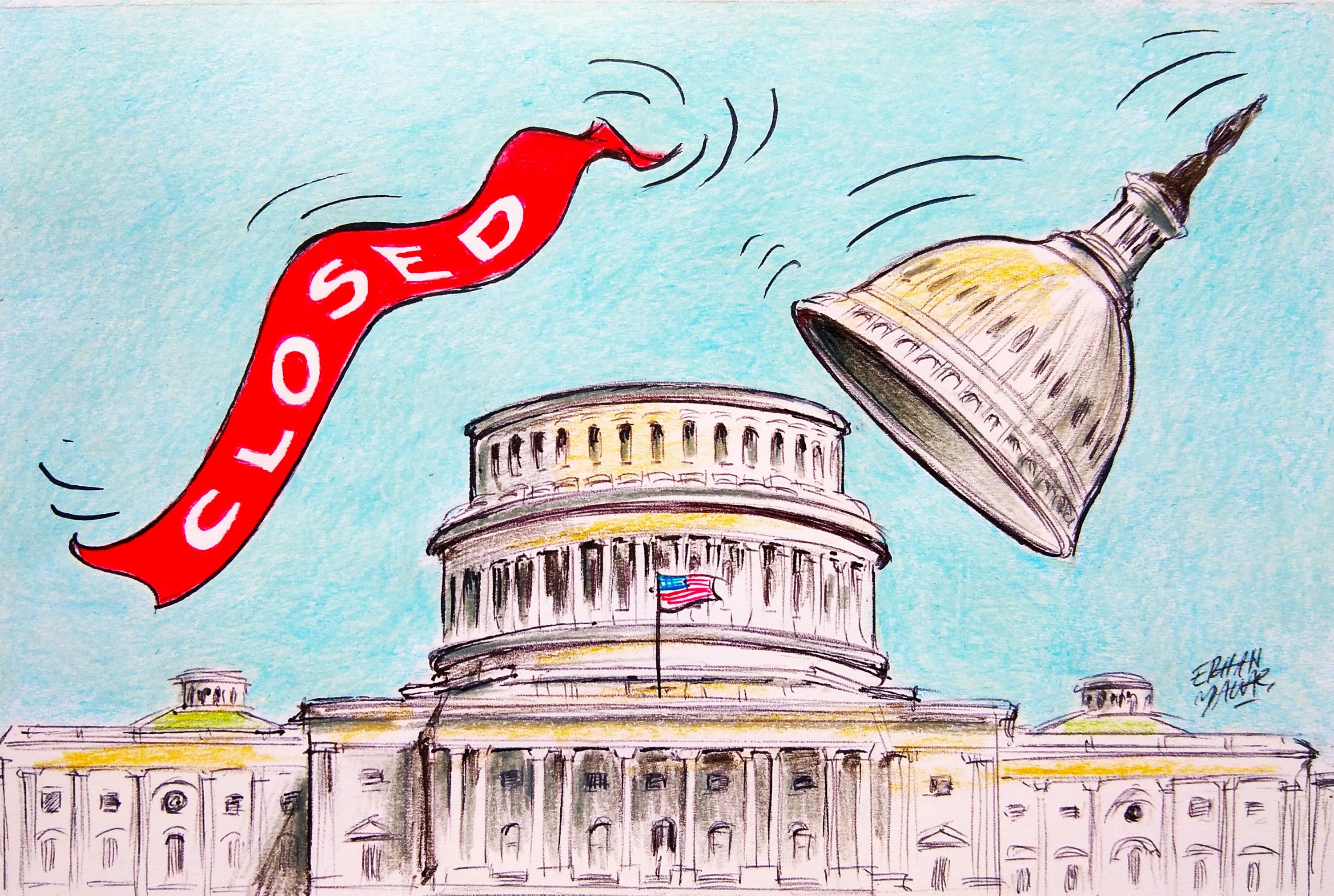
The U.S. federal government has now been shut down for 45 days, raising serious questions not about a budget dispute, but about the capacity of the political system to govern. The temporary measure passed by Congress may appear to reopen the government, but it is far from a solution; it merely postpones the crisis. Washington has not solved the underlying problems; it has only rescheduled the next tension.
The government is expected to reopen, yet this does not rule out renewed disputes or even another shutdown in the near future. The crisis has been deferred, but markets and investors remain wary. The system offers little assurance of stability; governance is functioning on paper, while the real economy continues to face risk.
In this scenario, the biggest winners are not production or employment, but speculative capital. Gains through dollar positions, bond yields and derivatives trading have become the most profitable way to price the system’s vulnerabilities. The crisis may have been postponed, yet the risks and uncertainty persist in the market.
The U.S. economic agenda is no longer just about budgets; it is about confidence and governance deficits. The government may reopen and the bill may pass, but the unresolved structural problems leave a lasting mark on markets and public trust. While the vote ends the formal shutdown, the real shutdown continues: the closure of confidence.
The U.S. federal government officially shut down on the night of Sept. 30, 2025, after Congress failed to approve a budget for fiscal year 2025. The fiscal year begins on Oct. 1, and without budget approval, federal agencies lose their spending authority; salaries go unpaid and many government offices are forced to halt or scale back operations. This 45-day shutdown marks one of the longest pauses since 2019.
Temporary budget proposals failed to gain sufficient support in the Senate. Democrats’ plan, which included roughly $1 trillion in health care provisions, was rejected, while the Republicans’ proposal to maintain current spending levels fell short of the 60-vote threshold. As a result, temporary funding could not be secured, and numerous agencies were forced to suspend operations.
At the heart of the crisis lies the stark divergence in priorities between the two major parties. Republicans want to cut non-defense spending, tighten immigration policies and limit increases in the debt ceiling. Democrats insist on protecting health, education and social security programs, seeking extensions of health insurance subsidies and reversals of Medicaid cuts. This makes temporary measures nothing more than a postponed crisis.
As the budget crisis that led to the federal government shutdown nears its end, public and political satisfaction remains low. The historic 45-day shutdown is expected to conclude with an agreement, yet the compromise leaves both Democrats and Republicans dissatisfied.
The Senate approved a temporary budget measure to reopen the federal government, which had been closed since Oct.1, by a 60-to-40 vote. The measure provides funding through the end of January and allows over 4,000 federal employees, who had faced layoffs during the shutdown, to continue working. Health care subsidies were not included in the bill; a separate vote on this issue is scheduled for December.
Both parties have faced rising public backlash during this process. Democrats were unable to secure their demands on health insurance within the budget deal, while Republicans, who hold the reins of power in Washington, have also become the target of increasing public dissatisfaction. Polls and state election results indicate that both parties have lost significant public trust.
While lawmakers wrangled over budgets and votes, everyday Americans bore the brunt of the shutdown. Federal employees faced unpaid wages, government services slowed or halted, and delays in permits, benefits and administrative processes added to personal and business frustrations. Small businesses reliant on federal contracts were forced to adjust operations, while uncertainty weighed on consumer confidence and spending. The shutdown was not just a political headline; it translated into real, tangible losses for citizens across the country.
In the short term, the economic pain is measurable: missed paychecks, delayed benefits and disruptions to federal services created immediate hardships.
The U.S. government shutdown has sparked concerns that demand in the markets will sharply decline. Yet there is a crucial nuance: ordinary citizens continue to meet their essential needs, even if it means borrowing. Consumption does not come to a complete halt; rather, it adapts and takes different forms.
This detail is often overlooked in economic analyses. While short-term consumption may face some pressure during the shutdown, borrowing, deferred savings and financial flexibility prevent demand from disappearing entirely. This dynamic influences market movements and speculative gains, while demonstrating that the economy’s fundamental footing is not as severely shaken in the short term as many fear.
Yet the long-term effects are harder to quantify. With key economic data delayed or incomplete due to agency closures, policymakers and investors face increased uncertainty. Upcoming Federal Reserve decisions on interest rates, combined with the postponed budgetary pressures, could exacerbate inflationary risks or volatility in financial markets. The economy’s true toll may only become clear over months, as the interplay of policy delays, market reactions, and structural fiscal challenges unfolds.
Today, the commodity that global economies struggle with the most is “trust.” Regardless of the country, uncertainty makes decision-making difficult for producers, investors and consumers alike. Political gridlocks, such as the budget crisis in the U.S., fuel speculation in the markets; short-term profit opportunities often take precedence over real production and employment.
Expectations shape economic behavior. When investors question the government’s stability and the predictability of fiscal policy, risk premiums rise and volatility increases across the dollar, bond and derivatives markets. In such an environment, the absence of trust is priced just like any other economic factor, and citizens, businesses and financial actors bear the cost of this invisible deficit.
Speculation fills this gap, but in a particular way. Hedge funds or dollar positions may generate short-term gains by exploiting systemic fragility; yet in the long run, this provides no benefit to the real economy. The depletion of trust directly impacts production, employment and financial stability.