The latest victory of the extreme-right Alternative for Germany (AfD) in the Sept. 6 state election in Saxony-Anhalt has once again brought the party into the spotlight. According to the provisional results, the AfD finished a clear first with 44.3% of the vote. The center-right Christian Democratic Union (CDU) came second with 17.0%, followed by the Social Democratic Party with 9.2%, the Greens with 8.9%, the Left Party with 8.5% and the Sahra Wagenknecht Alliance (BSW) with 5.2%. Voter turnout rose from 60% in 2021 to 78%. The AfD therefore more than doubled its vote share in an election in which turnout approached 80%. This shows that the party’s rise cannot simply be explained as an arithmetic advantage produced by low turnout.
Under these circumstances, the AfD increased its share of the vote from 20.8% in the 2021 Saxony-Anhalt state election by 23 percentage points over five years, winning 39 seats in the 83-seat state parliament. Despite finishing first, the extreme-right party fell three seats short of the 42 needed to govern alone.
Saxony-Anhalt is a small state, home to roughly 2.5% of Germany’s population. Yet the result cannot be treated merely as a regional election outcome. The AfD’s more than twofold increase in support since 2021, combined with the CDU’s decline from 37.1% to 17.0%, offers a striking example of the transformation German politics has undergone in recent years. Who will ultimately form the state government and what combination of parties might make that possible is a separate question. The results tell us much about Germany’s political and social transformation.
The first message from the Saxony-Anhalt results is that the extreme-right is not a temporary political phenomenon in Germany and has consolidated its strength. The AfD failed even to cross the 5% electoral threshold in the 2013 federal election. In last year’s federal election, however, it finished second behind the Christian Union parties (CDU/CSU) and became the largest opposition party in the Bundestag.
Meanwhile, the AfD won a state election for the first time in Thuringia in 2024, taking 32.8% of the vote. In the Sept. 6 election in Saxony-Anhalt, it reached 44.3%, its highest vote share ever in a German state election. The AfD had finished second behind the CDU in the same state in 2021. More than doubling its support in just five years clearly demonstrates the scale of its rise.
This picture requires a distinction between the extreme-right’s presence in German politics and the level of electoral strength it has now attained. The AfD’s vote share may rise or fall depending on cyclical developments such as economic problems, irregular migration, the cost of living, security concerns and dissatisfaction with the mainstream parties. Yet the party’s performance across different elections in recent years shows that the extreme-right’s presence in German politics is no longer merely cyclical. In other words, the extreme-right is now not a temporary but a structural reality of German politics. The central question is therefore no longer whether the AfD will remain part of German politics, but how much further it can advance and even when it might come to power.
Behind this striking reality, it is also necessary to recognize the social demand for the views represented by the AfD. At this point, it is no longer convincing to interpret all votes for the AfD simply as a reaction against the current government, economic dissatisfaction, or a desire to punish the mainstream parties. If a political party continues to increase its support across different elections and can win 44.3% of the vote in a state, this cannot be reduced to protest voting alone. Moreover, this result came in an election in which turnout rose to nearly 80%. Although some interpret the phenomenon simply as populist politics, it should not be forgotten that there is a broad social constituency demanding the political agenda the AfD is offering. From another perspective, one could say that the AfD has responded “successfully” to the growing demand for the extreme-right within German society.
The level this social support has reached also makes the effectiveness of the long-standing policy of political isolation, or cordon sanitaire, against the AfD increasingly debatable. In German politics, this approach is known as the “Brandmauer,” or firewall against the extreme-right, and is based on mainstream parties refusing to enter coalitions or cooperate politically with the AfD. This largely continued after the Saxony-Anhalt election, with many parties announcing that they would not cooperate with the AfD. Yet the AfD’s 39 seats in the 83-seat parliament have made the political dilemma created by the firewall more visible. The five parties other than the AfD hold a combined 44 seats. Excluding the AfD therefore requires parties that are ideologically far apart to act together.
Consequently, the political isolation of a party supported by 44.3% of voters is generating growing costs. The political firewall may still prevent the AfD from entering government, but its capacity to limit the party’s influence over the political system is steadily weakening. If the AfD continues to achieve similar electoral successes, the other parties will need broader and politically less compatible coalitions to keep it out. This will make political isolation more difficult to sustain while naturally making it harder to establish stable governments at both the federal and state levels.
Developments after the election have made the pressure on this policy of political isolation even more visible. The BSW accepted the AfD’s invitation to hold talks aimed at forming a government, showing that the extreme-right party is no longer merely a strong opposition force but is directly seeking to govern a state. With the AfD holding 39 seats and the BSW holding five, the two parties would arithmetically surpass the 42-seat majority threshold if they acted together. It is not yet certain that these talks will lead to a coalition. Nevertheless, the fact that the AfD is moving from being an election winner excluded by other parties to an actor engaged in government-formation talks is itself significant in showing how far the firewall in German politics has been tested.
The limits of political isolation become even clearer when the AfD’s broader influence on German politics is considered. A political party’s power is not limited to the votes it receives or the seats it wins. The ability to influence which issues its rivals debate and which policies they pursue is also an important indicator of political power. In this respect, it is noteworthy that negative issues central to the extreme-right’s rhetoric, such as anti-Islam sentiment, anti-immigration politics, xenophobia and anti-Turkish sentiment, have moved toward the center of the political agenda in recent years. In response to the AfD’s rise, mainstream parties have adopted harsher and more explicit rhetoric on these issues and translated some of it into policy, demonstrating that the AfD can influence the political agenda even without being in government. In short, the firewall against the extreme-right may still appear to be standing, but at the level of political discourse it has largely collapsed.
The AfD’s influence over the political agenda becomes even more significant when considered alongside the changing balance of power between the center-right and the extreme-right. The CDU, representing the center-right, finished first in the 2021 Saxony-Anhalt state election with 37.1%, while the AfD came second with 20.8%. Today, the CDU has fallen to 17.0%, while the AfD has risen to 44.3%. What is striking here is that the center-right, long one of the main pillars of German politics, is steadily losing ground to the extreme-right. Saxony-Anhalt is one of the clearest examples of this shift.
Five years ago, the CDU was well ahead of the AfD. Today, it trails the AfD by 26.6 percentage points. Of course, this entire shift cannot be explained simply by assuming that CDU voters moved directly to the AfD. Still, the new balance of power shows that the AfD has become an increasingly formidable competitor within the center-right’s political space. Germany therefore faces two important questions: How much further the AfD can grow and whether the center-right, particularly the CDU, can recover the political ground it has lost.
This competition is also directly affecting the CDU’s political approach. On the one hand, the party is trying to preserve the firewall separating it from the AfD; on the other, it is adopting a tougher line, particularly on migration and security. The AfD’s rise has therefore moved beyond election results and is shaping the center-right’s political priorities and rhetoric. The picture suggests that, in seeking to protect its own voter base, the center-right is moving toward tougher rhetoric on migration and security, issues prominently emphasized by the AfD. If this trend continues, it will further erode Germany’s traditional political structure, in which the main competition for decades was largely between the center-right and the center-left.
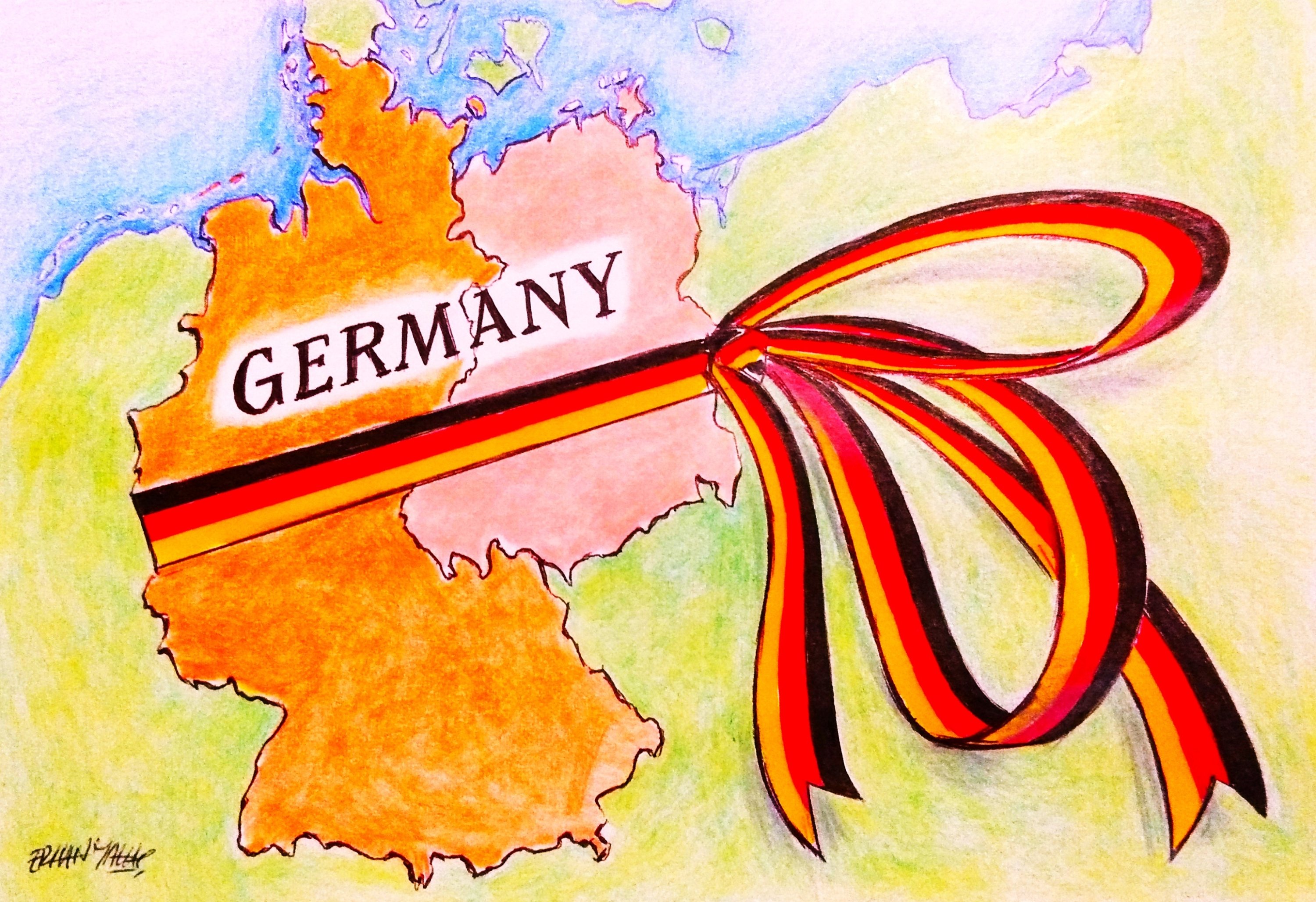
Finally, the Saxony-Anhalt election once again demonstrated that the AfD is much stronger in the former East Germany than is often assumed. The result continues the political geography seen in last year’s federal election, when the AfD virtually dominated the states of the former East Germany and left its rivals with little room. A year and a half later, the AfD’s 44.3% result in Saxony-Anhalt, a state in the former East Germany, shows that the same pattern persists. In short, the picture extending from the 2025 federal election to the 2026 Saxony-Anhalt state election indicates that a significant share of voters in the former East Germany continues to coalesce around the AfD.
From this perspective, the divide between East and West clearly persists at the social level in terms of voting behavior. Yet this should not be viewed as a temporary development produced by the AfD’s recent electoral successes. Thirty-six years after reunification, the fact that East and West Germany have not become as socially integrated as expected, together with the strong support for the extreme-right in the former East Germany, points to a serious political and social problem that German politics needs to confront.
In sum, both last year’s federal election and this year’s Saxony-Anhalt state election show that an invisible wall still exists between East and West in Germany. A wall that has not disappeared in 36 years will obviously not vanish overnight. At the same time, it is no longer possible to ignore the common reality revealed by multiple elections. German politics therefore needs to examine not only the AfD’s rise, but also why voters in the eastern part of the country continue to coalesce around the AfD and why the political divide between East and West remains so strong.