When diplomatic negotiations cycle through chronic fragility and Washington periodically resurrects the language of "military options," what once seemed like abstract speculation begins to take on the contours of a calculable strategic risk. Predicting the fate of any diplomatic process is hard enough when multiple actors are involved. But predicting the character, concept and consequences of a potential military conflict is harder still, and demands a probability-based analytical framework rather than wishful thinking.
A careful look at the military assets the United States has deployed to the region provides a reasonable basis for inference. The combination of air superiority platforms, long-range precision strike systems, electronic warfare capabilities and naval assets strongly suggests that any intervention would take the form of an air campaign. The relatively limited presence of ground forces effectively rules out deep-penetration operations and airborne assaults as structurally disadvantaged options. The reasons are not difficult to identify: Iran's geographic depth of roughly 1.65 million square kilometers (637,070 square miles), its deep institutional experience in asymmetric warfare, the Islamic Revolutionary Guard Corps' (IRGC) decentralized and networked operational structure, and its capacity for mass social mobilization. Considered together, these variables suggest that a comprehensive ground intervention could prove even more strategically costly than Vietnam, Afghanistan and Iraq combined. Naval assets, meanwhile, would almost certainly serve in a supporting role, providing logistics, fire support and maritime control, rather than as an independent combat force.
Once the form of intervention comes into focus, a second and far more decisive question emerges: What strategic concept would govern the air campaign?
Two frameworks dominate the theoretical menu. The first is effects-based operations, targeting not physical capacity directly but the enemy's decision-making mechanisms, leadership psychology and strategic will. The second is destruction-based operations, the direct elimination of Iran's nuclear enrichment facilities, ballistic missile production infrastructure and key military assets.
Both have their own internal logic, structural constraints and unpredictable second-order consequences.
The intellectual appeal of effects-based operations runs against a fatal vulnerability: the incalculable breadth of the effects universe. Direct, indirect, cascading, cumulative and unintended effects interact in ways that make both target selection and outcome prediction extraordinarily difficult before the first bomb falls.
Consider the so-called "decapitation strategy," striking the Iranian religious leadership or senior command directly. On paper, it promises a rapid psychological impact. In practice, the evidence is devastating to this expectation. The June 2025 conflict is instructive here: Israel's effects-based strikes did produce a short period of chaos in Iranian command and decision-making, but it was resolved far more quickly than Western analysts anticipated. Iran's institutional resilience, its backup command mechanisms, and its capacity for hierarchical reconstitution cast serious doubt on the premise that effects-based operations can produce sustained institutional collapse against an actor with Iran's depth of state capacity.
Destruction-based operations, in contrast, offer more concrete, measurable and physically verifiable targets: Natanz, Fordow, Arak, ballistic missile production lines and launch infrastructure. The empirical data from the June 2025 U.S. operation illuminates both the promise and the limits of this approach. Certain facilities were physically damaged. A measurable delay was introduced into the nuclear program. But the same operation confirmed that Iran's system was not driven to permanent collapse, and, more troublingly, that by making security vulnerabilities visible, it handed Tehran a powerful political mandate to rebuild its defense architecture faster and better than before.
Both concepts share a common strategic dilemma: the tension between pre-planned targeting and dynamic targeting. The carefully assembled pre-strike target list, built on intelligence assessments, will face relentless pressure during operations as Iran deploys unforeseen defensive maneuvers and asymmetric counterstrike capabilities. Once dynamic targeting, redirecting operational energy toward emergent threats not on the original list, becomes necessary, planned targets receive less attention, operational tempo breaks down and effectiveness degrades. Iran's ballistic missile capacity is particularly well-suited to forcing exactly this kind of improvised reallocation. Mass ballistic missile strikes against U.S. bases, Israel or allied infrastructure in the region would simultaneously shatter operational rhythm, raise casualty counts, and erode the political threshold for continued action.
The classical power-theory framework, the assumption that systematically applied superior military force will compel submission or behavioral change, demonstrates serious analytical inadequacy in the Iranian case. The Clausewitzian premise collides directly with what Iran has demonstrated over repeated engagements: a remarkable capacity for institutional learning under pressure.
Look at the sequence: Israel's October 2024 airstrikes, the 12-day conflict in June 2025, the U.S. strikes on nuclear facilities. Each successive episode, rather than degrading Iran's security architecture, has paradoxically hardened and made it more resilient. This is not mysticism; it is a well-documented mechanism in organizational development literature, often called "crisis-driven learning." External military pressure reveals institutional capacity gaps, and if the system survives, that knowledge becomes a strategic input for institutional strengthening.
The concrete outputs of this process in Iran are striking. New protocols for critical infrastructure security have been implemented. Counterintelligence practices have been deepened. Gaps in air defense systems have been identified and patched. Ballistic missile production capacity has been expanded in both quality and quantity.
The transformation did not stop at technical repair. A new Defense Council, established under Iran's Supreme National Security Council, has shifted decision-making from slow, siloed institutional processes to a more centralized, coordinated and crisis-agile platform. This represents a structural rupture in security governance, one that operationally elevates Iran's readiness for future conflicts. The pattern is entirely consistent with what the literature on post-conflict state formation has repeatedly documented.
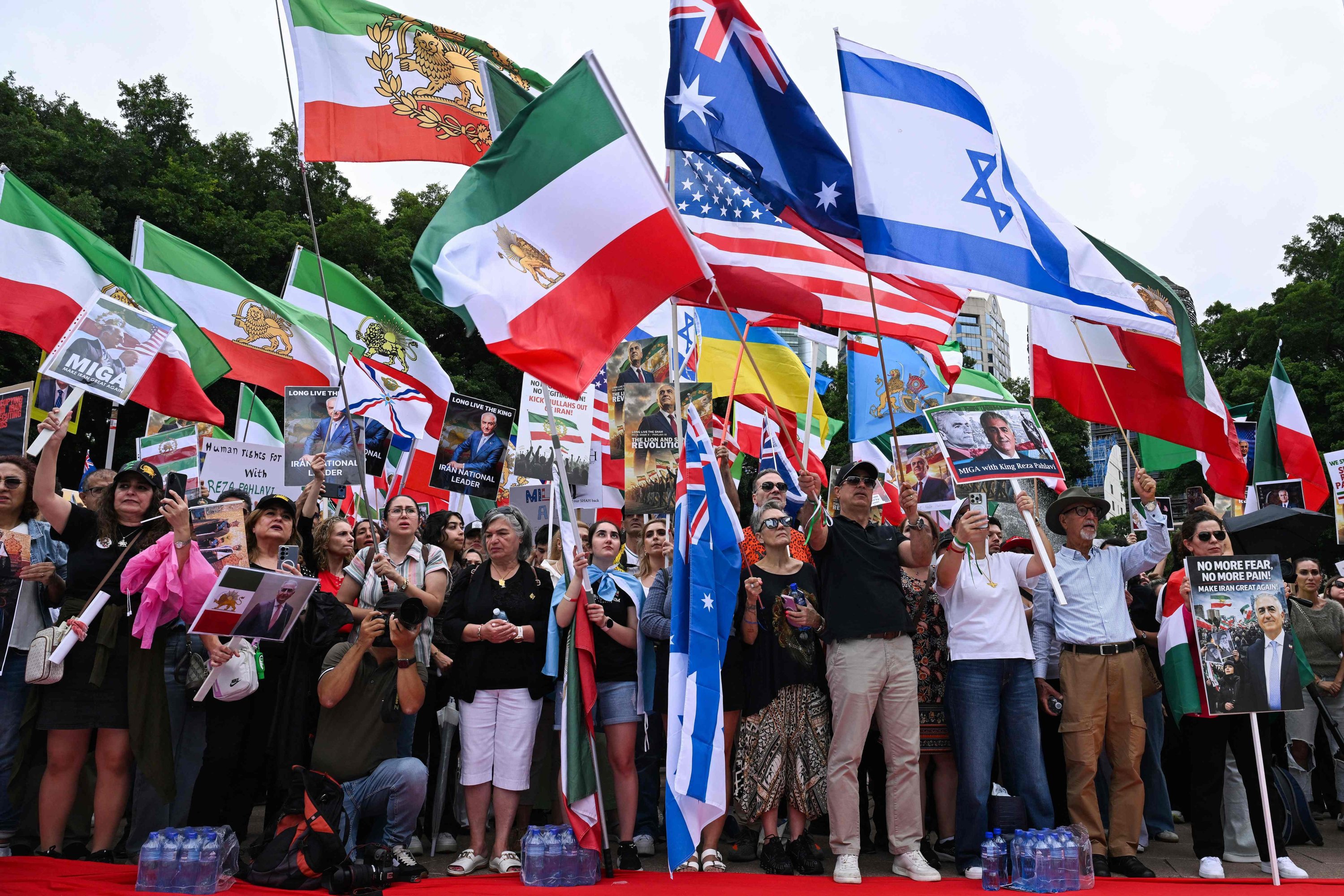
The societal dimension cannot be dismissed either. The partial penetration of Israeli missile defense systems, including the Iron Dome and Arrow, by Iranian ballistic missiles reaching Tel Aviv and Haifa generated a powerful sense of security, confidence and prestige within Iranian society. The rally-around-the-flag dynamic, in which external military threat suppresses domestic discontent and intensifies patriotic cohesion around the regime, is a defense reflex that authoritarian systems have demonstrated with striking historical consistency. A new U.S. operation would almost certainly produce a structurally identical dynamic, and scenarios predicated on regime change or popular uprising serving as a triggering mechanism would more likely generate the opposite: a consolidation effect.

A synthesis of this analysis points to a clear conclusion: Even if a U.S. military strike on Iran achieved tactical success, its capacity to produce strategically intended outcomes is structurally constrained in ways that cannot be engineered away.
Three scenarios can be ranked by probability. The lowest-probability option is a comprehensive joint campaign integrating air, land and naval forces. It carries the theoretical capacity to produce durable strategic outcomes but is operationally and politically untenable given the burden of cost, casualty risk, political sustainability limits and the danger of regional escalation.
The moderate-probability option is a limited destruction-focused air campaign targeting nuclear facilities and ballistic missile infrastructure. It can produce short-term physical damage and some program delay. But given Iran's institutional learning capacity and defense reconstitution dynamics, it would almost certainly provide Tehran with a new strengthening opportunity rather than lasting strategic degradation.
The highest-probability option is a pressure management approach that strategically deploys the threat of force and limited symbolic strikes as negotiating instruments. This produces no durable strategic gains but offers a more controllable risk profile than direct military intervention and keeps the negotiating process nominally alive.
The fundamental strategic paradox running through this entire analysis can be simply stated. A comprehensive operation capable of producing durable outcomes is not operationally or politically viable. Likewise, the limited air campaigns that are viable are structurally incapable of producing durable outcomes and, beyond that, accelerate Iran's learning and strengthening cycle, paradoxically shifting the long-term strategic balance in Tehran's favor.
The classical strategic assumption that superior force prevails loses its validity in the Iranian case with striking clarity. This structural constraint suggests that the negotiating table remains for rational actors both less costly and more sustainable than its military alternatives. The hard question for Washington is whether its policymakers are willing to take that seriously before the next round of "military option" rhetoric becomes something more.