The South Caucasus, owing to its geostrategic location and abundant energy resources, has historically attracted the attention of global powers. Following Azerbaijan’s victory in the 2020 Second Karabakh War and the subsequent cease-fire agreement signed on Nov. 10, 2020, a new chapter has begun to unfold in the region. Article 9 of this agreement introduced the Zangezur Corridor, a strategic transportation route aimed at connecting Azerbaijan’s mainland with the Nakhchivan Autonomous Republic through Armenia’s Syunik region. Supported by Türkiye and within the framework of a strategic alliance with Azerbaijan, this project holds the potential to transform not only regional but also global economic and energy dynamics.
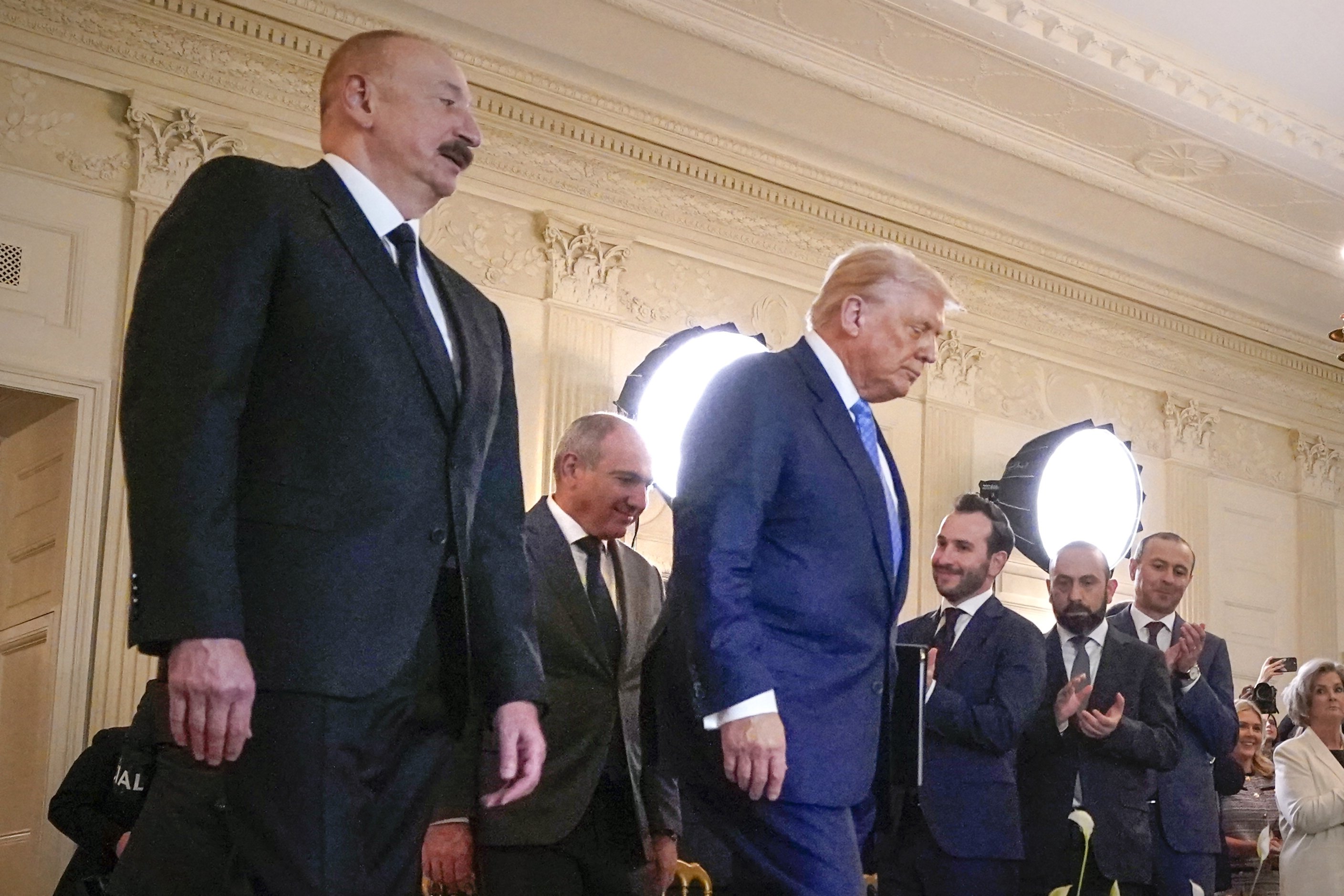
And the year 2025 marked a pivotal moment for the Zangezur Corridor. On Aug. 8, 2025, a peace framework was signed under the auspices of U.S. President Donald Trump, involving Azerbaijani President Ilham Aliyev and Armenian Prime Minister Nikol Pashinyan, envisioning the corridor’s development as the “Trump Route for International Peace and Prosperity.” This agreement grants the U.S. development rights while committing to respect Armenia’s sovereignty.
The corridor comprises approximately a 43-kilometer (26.7-mile) road and railway link connecting Azerbaijan to the Nakhchivan Autonomous Republic via Armenia’s Syunik region. Article 9 of the cease-fire agreement stipulates the opening of this corridor, with its security to be ensured by the Russian Federal Security Service Border Guard Service. While Azerbaijan and Türkiye view the project as a bridge connecting the Turkic world, it has become a contentious issue due to Armenia’s concerns over sovereignty. In 2025, under U.S. mediation, an agreement was signed to develop the corridor under the name “Trump Route for International Peace and Prosperity (TRIPP),” thereby enhancing its international dimension.
From Türkiye’s perspective, the Zangezur Corridor embodies the “one nation, two states” philosophy, serving as a tangible manifestation of its strategic partnership with Azerbaijan. Furthermore, as a key component of the Middle Corridor, aligned with China’s Belt and Road Initiative (BRI), it supports Türkiye’s vision of establishing itself as a logistics and energy hub in Eurasia. The Zangezur Corridor holds the potential to position the South Caucasus as a trade nexus between Asia and Europe. The project’s economic impacts can be summarized under several key headings.
The Zangezur Corridor, as a critical segment of the Middle Corridor (Trans-Caspian International Transport Route), offers significant potential for increasing trade volumes. According to the World Bank report, freight volumes along the Middle Corridor are projected to triple by 2030, reaching 11 million tons compared to current levels. This growth is particularly supported by a 37% increase in trade among Kazakhstan, Azerbaijan and Georgia. Trade between Europe and Kazakhstan, as well as between Europe and China, is expected to exhibit the highest growth potential by 2030, underscoring the corridor’s role as an alternative transcontinental trade route. Additionally, trade among Azerbaijan, Georgia and Kazakhstan is anticipated to rise by 28%, highlighting the Zangezur Corridor’s capacity to strengthen regional economic integration. According to statements by Transport and Infrastructure Minister Abdulkadir Uraloğlu, the completion of the corridor is projected to yield TL 147.6 billion ($3.57 billion) for Türkiye over 30 years, with an annual cargo capacity of 15 million tons. This development is poised to accelerate economic growth in Türkiye’s eastern provinces, such as Kars and Iğdır, and enhance its global competitiveness in the logistics sector.
The Zangezur Corridor has the potential to halve travel times by 2030 compared to 2022 levels, contingent upon the implementation of infrastructure development plans. This reduction is particularly feasible through the mitigation of delays at border crossings. The report notes that border crossing times are currently lengthy and unpredictable, yet proposed infrastructure investments and logistical improvements are expected to address these challenges. This efficiency gain will support the corridor’s integration with the Baku-Tbilisi-Kars (BTK) railway, facilitating a shorter and more cost-effective transportation route to Europe via Türkiye.
The corridor will contribute to revitalizing the Nakhchivan Autonomous Republic, which has been economically isolated under Armenia’s blockade since 1989. Azerbaijan has strengthened the corridor’s infrastructure through the Horadiz-Ağbend highway and railway projects, while Türkiye initiated construction of the Kars-Iğdır-Aralık-Dilucu railway line on Aug. 22, 2025. The World Bank report indicates that Kazakhstan and Georgia have opportunities to enhance their export potential in chemicals, metals and other complex products, thereby supporting the corridor’s potential to elevate economic complexity. The establishment of transit-oriented hubs, such as in the Almaty region, is projected to handle significant traffic volumes, measured in thousand TEUs, by 2030, further contributing to the regional economic diversification facilitated by the Zangezur Corridor.
The corridor holds transformative potential for energy security. Azerbaijan, with its substantial natural gas and oil reserves in the Caspian Sea, plays a pivotal role in Europe’s energy security. The Trans-Anatolian Natural Gas Pipeline (TANAP) and the Trans-Adriatic Pipeline (TAP) already transport Azerbaijani gas to Europe via Türkiye. It could enable the development of new energy pipelines through Nakhchivan, consolidating Türkiye’s position as an energy hub. The World Bank reports that the diversification of Kazakhstan’s energy exports – predominantly westward at 62% – via the Middle Corridor offers a strategic advantage for energy security. Moreover, the corridor’s infrastructure will enhance the security of energy pipelines, ensuring the continuity of regional energy supplies. Amid the Russia-Ukraine crisis, which has prompted Europe to reassess its reliance on Russian energy, the Zangezur Corridor provides an alternative route, reducing dependence on the Northern Corridor and bolstering logistical resilience.
The development of strategic hubs along the corridor, such as Almaty, will foster regional growth and create employment opportunities. Increased trade volumes and infrastructure investments are expected to revitalize local economies, contributing to gross domestic product (GDP) growth in Kazakhstan, Azerbaijan, Armenia and Georgia. Türkiye’s eastern provinces will benefit from enhanced trade and tourism, helping to reduce regional disparities. The corridor will also facilitate economic linkages within the Turkic world by improving access to European markets for Central Asian countries, particularly Uzbekistan and Kazakhstan.
Armenia, historically excluded from regional trade networks due to closed borders with Türkiye and Azerbaijan, could integrate with international trade routes through the Zangezur Corridor. This would enable Armenia to access Central Asian and European markets, ending its economic isolation. However, Armenia’s politically postured sovereignty concerns pose challenges to the project’s implementation. The U.S. intervention in 2025, with a commitment to operate the corridor in compliance with Armenian laws, aims to alleviate these concerns. Iran opposes the corridor, citing potential impacts on the Armenia-Iran border, though some Iranian officials argue that its economic benefits could extend to Iran. Türkiye could promote regional cooperation through dialogue with Iran, fostering an inclusive framework for the project’s progress.
Although the security of the Zangezur Corridor was initially to be managed by Russian border guards, the U.S. involvement through the TRIPP project in 2025 has altered regional security dynamics. As a NATO member, Türkiye supports Azerbaijan’s interests while continuing normalization efforts with Armenia. The corridor could reinforce the Azerbaijan-Armenia peace process, enhancing stability in the South Caucasus. Infrastructure investments in Azerbaijan’s liberated territories, like Zangilan and Jabrayil, and Armenia’s Syunik region will support local development.
Moreover, increased people-to-people contact facilitated by the corridor aims to replace historical enmities with cooperation. The Zangezur Corridor presents Türkiye with economic, energy and geopolitical opportunities. It positions Türkiye as a logistics and energy hub in Eurasia, strengthens its strategic alliance with Azerbaijan, and contributes to the integration of the Turkic world. Armenia’s participation bolsters regional peace and prosperity. As a NATO member and the Shanghai Cooperation Organization (SCO) dialogue partner, Türkiye can play a balancing role, positioning the South Caucasus at the center of global trade and energy networks.
The Middle Corridor, particularly through its integration with the Zangezur Corridor, offers multidimensional benefits, including increased trade volumes, reduced travel times, economic diversification and enhanced energy security. Realizing this potential fully requires infrastructure investments, digitalization and regional cooperation. However, the limited share of transcontinental trade within the total volume suggests that the corridor will primarily function as a regional economic corridor. The Zangezur Corridor is not merely a transportation route but also holds the potential to symbolize peace, prosperity and collaboration in the South Caucasus. Türkiye stands ready to assume the leadership responsibility to realize this vision.