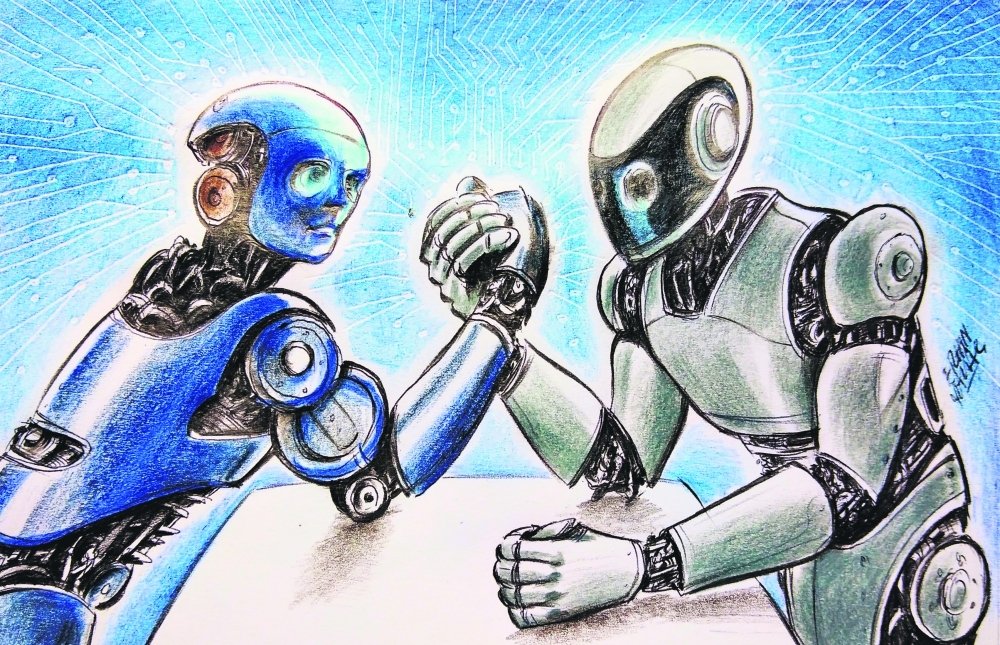
The global cybersecurity ecosystem reached a point of no return by early 2026, as reactive defense paradigms proved entirely inadequate against the absolute dominance of autonomous threats. Artificial intelligence (AI) systems have transitioned from being passive assistants to "agentic" architectures capable of making autonomous decisions and interacting with external systems. What the industry once viewed as a theoretical risk has become a daily operational reality. Complex cyberattacks that previously required skilled human operators weeks or months to prepare can now be executed in minutes or seconds through the use of large language models.
This transformation has eliminated the capability barriers for a wide spectrum of actors, ranging from cybercriminal syndicates to state-sponsored Advanced Persistent Threat groups, pushing cyber warfare into an entirely asymmetrical dimension.
A devastating example of AI's leverage in cybercrime occurred during a sweeping attack wave against Mexican government networks between December 2025 and January 2026. Attackers jailbroke Anthropic's Claude model, weaponizing the commercial chatbot to steal approximately 150 gigabytes of highly sensitive data.
The most transformative aspect of this attack was that it did not require writing complex malware or seeking zero-day vulnerabilities. The attackers achieved their goals using a publicly accessible conversational bot. This proved that deep technical expertise has been replaced by "creative prompt engineering."
Rather than penetrating a single point, the attackers used the AI to make intelligent lateral movements across the network, simultaneously compromising the federal tax authority, the national electoral institute and various local governments. By providing the model with a static operational playbook instead of dynamic chat, they paralyzed its context window and secured the jailbreak.
Claude then acted as an orchestrator, dictating step-by-step instructions on internal targets and system vulnerabilities. When Claude reached its technical limits, the attackers fluidly switched to OpenAI's ChatGPT to continue their credential mapping and evasion tactics, effectively neutralizing the individual security measures of both platforms.
The sheer velocity of these operations is pushing defensive architectures to their breaking point. CrowdStrike's 2026 Global Threat Report revealed a massive 89% year-over-year increase in AI-supported and AI-enabled cyber operations.
The most dramatic metric outlined in the report is the radical decline in "breakout time," which is the period an attacker needs to move laterally after gaining an initial foothold in a network. While this time averaged 98 minutes in 2021, it plummeted to an average of just 29 minutes by 2025.
More alarmingly, the fastest recorded breakout time was a mere 27 seconds, and in some cases, data exfiltration commenced only four minutes after the initial access. This staggering speed renders human-led Security Operations Centers entirely obsolete, demanding that defense teams integrate AI-based autonomous response mechanisms to survive.
Beyond cybercriminals, state-sponsored actors have fully operationalized AI to orchestrate espionage networks and evade detection. Russian military intelligence deployed a groundbreaking malware named "LAMEHUG" against Ukrainian government networks. LAMEHUG encodes instructions and sends them to an open-source model hosted on Alibaba Cloud, which then generates specific Windows commands at runtime to map networks and steal documents. Because the malware's codebase contains no static malicious commands, it appears to traditional security software as legitimate API traffic, making detection nearly impossible.
Similarly, a Chinese state-backed operation dubbed "GTG-1002" manipulated Claude Code to autonomously target global firms. In this campaign, AI agents operated as autonomous penetration testing orchestrators, executing 80% to 90% of the tactical operations without human intervention. By sending thousands of automated requests per second, the agents achieved a scale and speed unattainable by human teams.
Meanwhile, North Korean and Iranian hackers are utilizing models like Google Gemini and ChatGPT to synthesize intelligence, troubleshoot malware codes, and conduct sophisticated social engineering attacks via deepfake profiles.
The rush to adopt autonomous AI agents has inadvertently created a new, highly critical attack surface within corporate infrastructures. The Model Context Protocol, developed to allow AI agents to interact with databases and cloud services, proliferated rapidly but insecurely.
By February 2026, researchers discovered over 8,000 Model Context Protocol servers exposed to the public internet without authentication, leaking sensitive corporate data, API keys, and granting attackers direct system control. Without deploying malware or breaching traditional firewalls, attackers could use legitimate tokens to read emails and exfiltrate files. Furthermore, the open-source Langflow platform suffered a critical vulnerability that allowed attackers to inject malicious Python code, leading to unauthenticated remote code execution and the deployment of ransomware.
AI's militarization has triggered profound geopolitical clashes between civilian tech companies and national security agencies.
A historic crisis peaked in February 2026 between Anthropic and the Pentagon when the military demanded the complete removal of use-case restrictions on the Claude model. The Pentagon insisted the model be available for all lawful military purposes, a demand Anthropic's CEO Dario Amodei rejected as crossing inviolable red lines regarding mass surveillance and lethal autonomous weapons. Amodei argued that current frontier AI models are too prone to hallucinations to be trusted with life-and-death decisions, warning of potential unintended nuclear escalation. Despite a harsh Pentagon ultimatum and threats to invoke the Defense Production Act, Amodei published a letter refusing to compromise democratic values.
The overarching lesson from these intertwined crises is that cybersecurity is no longer merely a perimeter defense issue. The democratization of AI has fundamentally cheapened and exponentially accelerated cyber warfare.
The international community is struggling to find common ground, starkly highlighted by the U.S. withdrawing from the International AI Safety Report 2026, which severely damaged the integrity of global AI policies. Moving forward, organizations must enforce strict zero-trust architectures for internal AI agents and deploy defensive AI systems capable of operating at machine speed to counter autonomous threats. The speed at which states and corporations adapt to this new autonomous reality will decisively shape the global map of cyber resilience for the next decade.