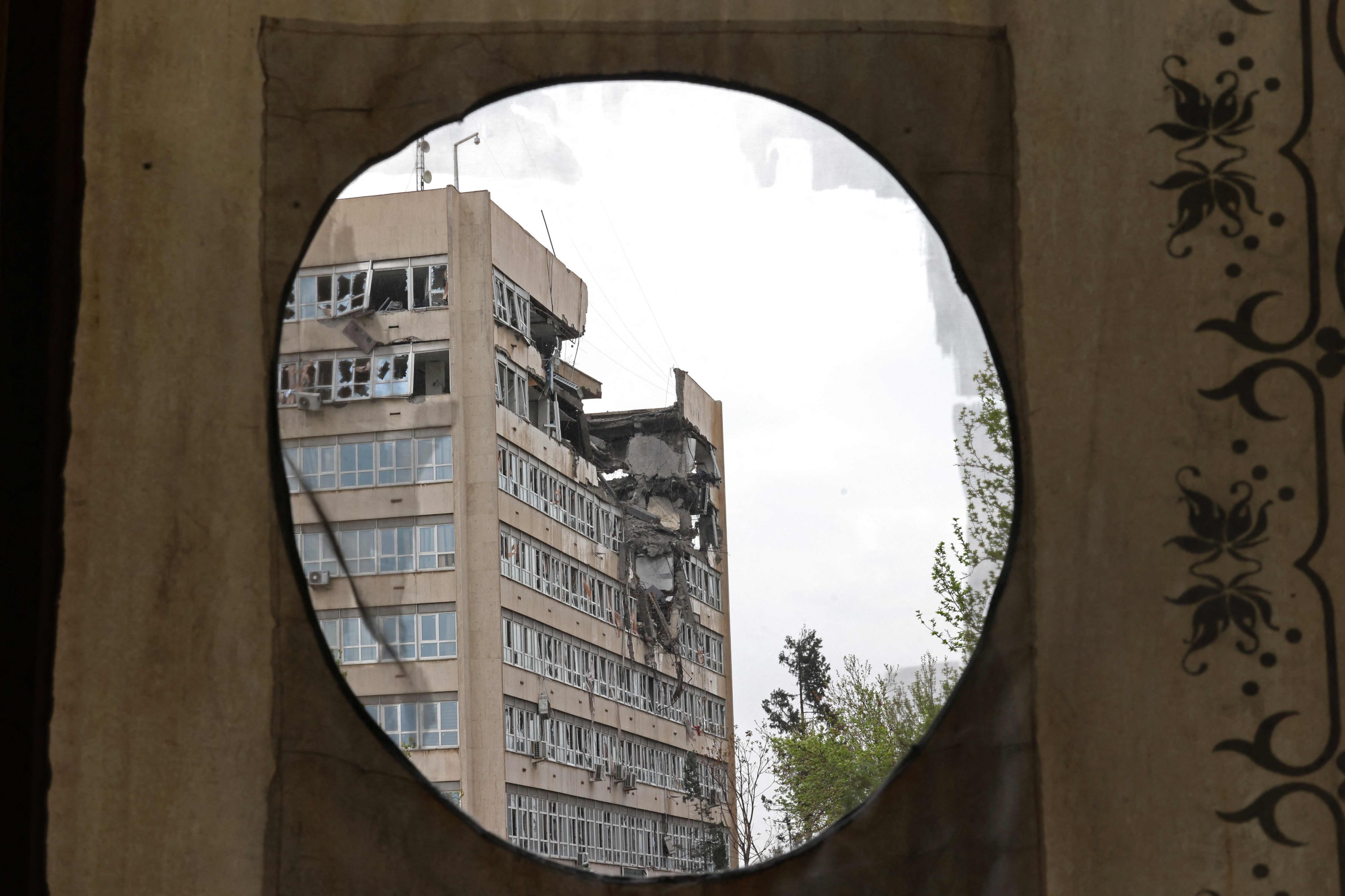
Iran is fighting two wars at once, and they are not separate conflicts but two faces of the same one. The first is the military war now playing out in the air and across the country’s industrial heartland. The second is already being set in motion by these same strikes, yet it will become fully visible and will truly be lived, only after the guns fall silent. It is the war of the aftermath, the economic collapse, the social strain and the political reckoning that the destruction leaves behind. Iran may well survive the first. The second will be longer and harder, and it is the one that may decide the fate of the system.
Iran is currently fighting a defensive war. Judging by the statements of the United States and Israel and what has surfaced in open sources, the campaign was waged from the very first day with the aim of regime change. As far as can be discerned, the working assumption was that if the entire leadership tier, Khamenei included, were decapitated, the system would unravel on its own.
This was not an improvised idea, and its traces can be followed back well before the current conflict. Eyal Zamir, before becoming Israel’s chief of the general staff, set out much of the underlying logic in “Countering Iran’s Regional Strategy,” the paper he wrote for the Washington Institute in 2022. There, he defined the Islamic Revolutionary Guard Corps (IRGC) as Iran’s center of gravity, argued that the regime would disintegrate from within if that center were struck, and called for an escalation that included targeted operations against the IRGC’s command structure. Both during the 12-day war and in its aftermath, the strikes appear to have followed this template closely, hitting the IRGC directly, severing its chain of command and thinning its senior ranks.
The calculation, however, appears to have rested on a fundamental flaw. The problem was not simply a failure to understand Shia political culture, but a failure to understand how the Islamic Republic has institutionalized that culture as a mechanism of regime resilience. The role played by Karbala and martyrdom as a bond holding the system together seems to have gone unaccounted for. In Shia political culture, death in confrontation with a stronger adversary is read not as defeat but as a source of legitimacy, and over four decades the Islamic Republic has woven this register into its institutions, its commemorations and its schooling.
The mass mobilization that followed the killing of Qassem Soleimani in 2020 should have served as a warning. On the ground, the strikes appear to have done something similar, turning the fallen commanders and the targeted leadership into new heroes. The symbolism woven around Khamenei and the narrative of martyrdom reinforced the very system that was expected to collapse, rather than hastening its fall.
The failure to place cultural intelligence at the center of planning thus became one of the main reasons that military superiority did not translate into a political outcome. The concept being applied here is one of systemic paralysis, a logic that reaches beyond the classical doctrine associated with John Warden and folds in hybrid elements such as the attempt to use public anger as a force multiplier. Yet the fact that the U.S. entered the war without a clearly defined strategic objective made the picture heavier still. The doctrine was applied on the ground, but at no stage did it become clear what the ultimate objective actually was, or what political settlement was meant to follow the bombing.
Read in its simplest terms, the U.S. and Israel have laid siege to a fortress. If the fortress does not fall, the defending side may be considered to have won the war. Since it has become clear that regime change will not be achieved through airstrikes, the moment the U.S. withdraws its vessels from the region, Iran will, in all likelihood, declare victory. Beyond that, even the smallest concession Iran might secure on matters such as the status of the Strait of Hormuz, frozen assets or the easing of sanctions would amount to a gain, for it would be obtaining something it did not possess before the war. In an equation where the strategic objective is regime change but the outcome is a negotiating table, what emerges is the trap of tactical victory. Superiority on the battlefield does not convert into strategic success at the table. In short, Iran stands a strong chance of winning the first war.
The truly difficult war, the second one, begins at precisely this point, and it is the one Iran is far less prepared to win. The severe economic and social crisis expected to follow the destruction of infrastructure carries with it the prospect of a serious political crisis and renewed street mobilization. It is worth recalling that the sense of unity generated by the 12-day war did not prevent the war’s bill from turning into the protests of late December, which began when merchants in Tehran’s bazaar shut their shops over the collapse of the rial and spread quickly across the country. As today’s destruction is far greater in scale, the attendant risk grows in equal measure.
Iran’s leadership appears to be aware of this. It seems to be trying to convert every concession it can extract, the Strait of Hormuz foremost among them, into the resources needed to rebuild the country. Tehran has already signaled that it expects compensation for the damage and has floated the idea of financing reconstruction through a levy on traffic passing through the strait. Needing substantial funds, it is unlikely to relinquish control of Hormuz easily. Even if the money is found, however, repairing the destruction in the shadow of sanctions will be exceedingly difficult. Critical components, industrial inputs and spare parts cannot be procured quickly, and many of them cannot be sourced at all without access to Western suppliers.
As far as open sources reflect, the damage is extensive. Iran’s petrochemical plants, iron and steel mills, aluminum production, oil and gas processing facilities, fuel storage depots and even its railways, bridges and ports have sustained heavy damage. Official estimates put the cost of the war in the hundreds of billions of dollars, and the Central Bank of Iran is reported to have warned that rebuilding could take more than a decade, with inflation liable to climb well beyond current levels if shortages of industrial inputs persist. Replacing this capacity will be neither quick nor cheap.
Should U.S. President Donald Trump carry out his repeatedly postponed threat and strike Iran’s electricity infrastructure as well, the picture would grow far worse. Targeting the power plants and grid that sustain civilian life would carry grave practical consequences and would sit uneasily with international humanitarian law, which prohibits attacks on objects indispensable to the survival of the civilian population.
The practical chain is easy to trace. Hospitals would be left without power and unable to find fuel for their generators. Agricultural production would seize up as there would be no diesel for tractors and no fertilizer for the fields. Even if crops were harvested, there would be no fuel for the trucks to carry them and no sound roads to travel. Even if the products reached the cities, the cold chain would break due to a lack of electricity, and they would spoil. The smallest tradesman would be unable to work; a barber without power or a restaurant without gas cannot operate. The problem would engulf not only heavy industry but every link of daily life. Bringing the entire grid down, it should be noted, is not a matter of a handful of strikes. Iran’s electricity system is spread across a large number of thermal plants and thousands of substations, so plunging the whole country into darkness would require a sustained campaign of hundreds of sorties rather than a single decisive blow.
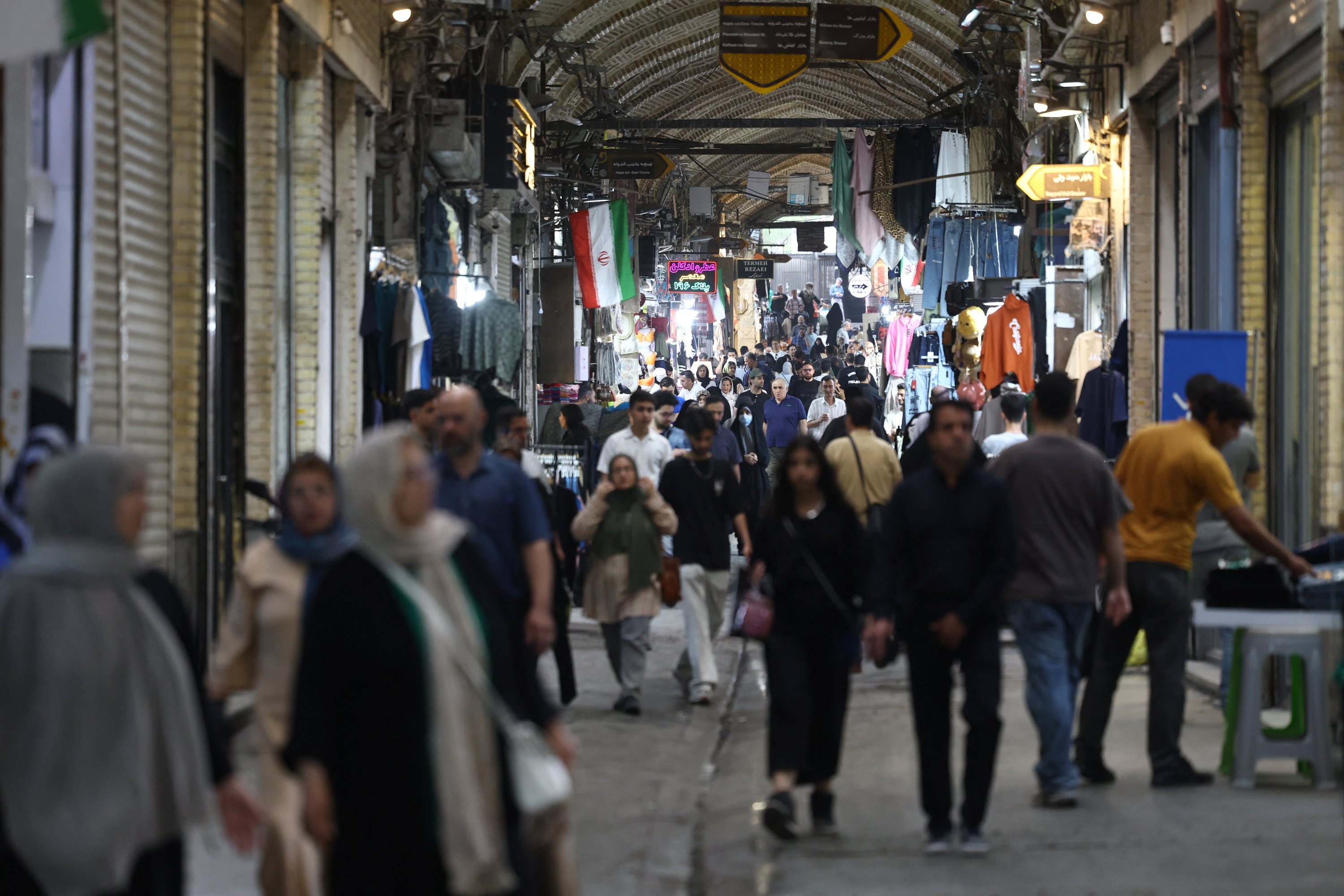
Iranian President Masoud Pezeshkian’s recent appeals to tradesmen and merchants can be read as a reflection of this concern. Speaking at the Tehran Chamber of Commerce on May 27, he stated that the main front was now the economy and urged the private sector not to lay off the people working for it. The picture reflected in open sources, however, is already grim. Many businesses, from technology firms to steel mills, are reported to have shed workers, and by some accounts, millions of employees in the industrial sector are at risk.
What is more, all of this is being layered on top of problems that predate the war. Last winter, Iran was forced to close its schools because of shortfalls in natural gas supply. Throughout the summer, public institutions could not operate at full capacity owing to electricity rationing, and some factories halted production and dismissed workers for lack of power. The war arrived on top of this chronic weakness and deepened it. Although Iran is trying to take precautions, its room for maneuver appears to be narrowing by the day.
The Israeli security establishment, too, appears to accept that there will be no regime change in the short term, even as it reads the structural difficulties facing Iran as a window of opportunity. This suggests that even if the war formally comes to an end, attempts at assassination and sabotage aimed at manipulating the country’s political balance may well continue. For all these reasons, the real test for Iran will begin not with the failure of the fortress to fall, but after the siege is lifted. The second war will be longer and far more decisive than the first.