When evaluating the initial wave of optimism surrounding the easing of sanctions and the flurry of diplomatic agreements in Damascus last year, I placed a modest yet fundamental caveat on the nature of postwar economic recovery in my previous articles: A change in political leadership or the opening of an international legitimacy window cannot erase decades of accumulated structural damage overnight. Back then, while welcoming the reopening of the Damascus Securities Exchange and the signing of memorandums of understanding (MoUs), I emphasized that the most daunting hurdles were yet to be cleared, summarizing the reality ahead: The political transition may be complete, but in terms of constructing a sustainable economic order, the real struggle is just beginning.
As Syria approaches the two-year mark of the post-Assad era, field data clearly illustrates exactly which fronts this "economic struggle" is concentrated upon.
To be sure, there is undeniable economic dynamism on the ground. Türkiye's bilateral export volume to Syria surged 26.4% year-over-year to $1.28 billion in the first half of 2026, driven by a record 116.8% increase in cement shipments. Meanwhile, the return of over 1.2 million Syrians has revitalized domestic demand, putting earlier pessimistic growth scenarios to rest.
Yet alongside this encouraging momentum, a contradictory picture emerges: on one side stand massive infrastructure contracts worth up to $25.9 billion signed at international summits and state receptions; on the other lies a shallow financial system, a persistent liquidity crunch, and streets still struggling for daily survival.
To fully grasp the distance Syria’s economy has traveled and the structural barriers that lie ahead, one must look beyond the initial "showcase" projects and focus on the three core areas where this economic struggle is now fought: The gap between financial depth and the real sector, the risk of capital concentration, and the boundaries of regulatory capacity.
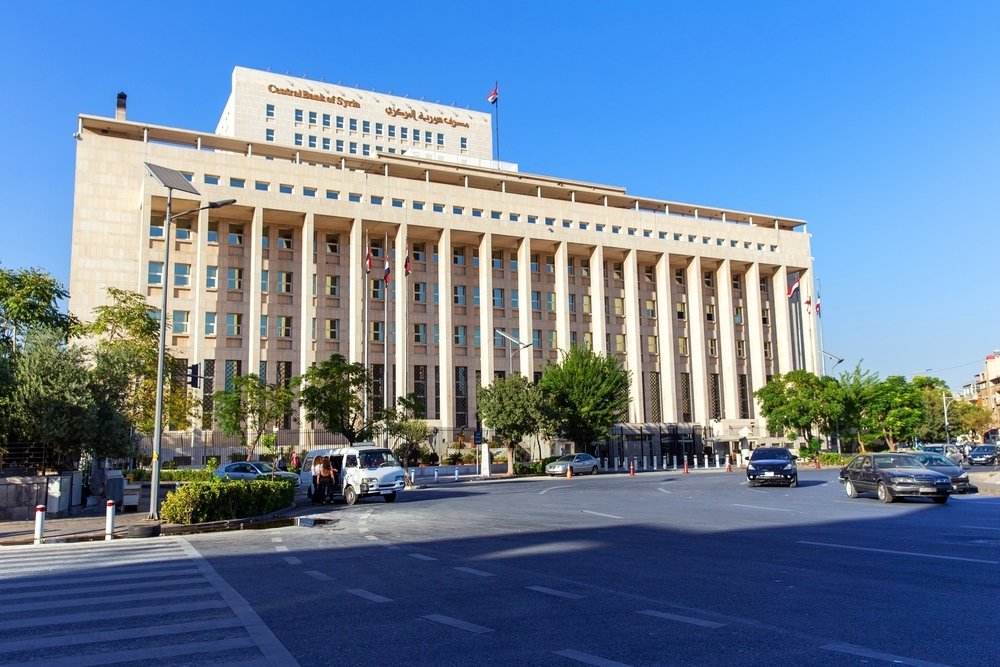
In postwar reconstruction processes, the most common economic pitfall is confusing recovery in theoretical financial indicators with actual progress in the real sector. The reactivation of the Damascus Securities Exchange (DSE), gradual integration into the SWIFT system, and regulatory reform initiatives by the Central Bank are undoubtedly crucial signals sent to international investors. However, this surface-level activity in the financial architecture is insufficient to mask the shallow nature of Syria’s banking sector.
Today, the Syrian banking system faces a highly specific "liquidity paradox." On the one hand, a noticeable expansion in the deposit base of commercial banks is observed, driven by repatriated capital and the influx of returning refugees. On the other hand, a severe bottleneck persists in channeling these deposits into credit for the real economy. The fact that the total equity of all private banks combined – standing at SYP 8.7 trillion (roughly $795 million) – remains below that of a single regional bank, alongside net credit facilities accounting for a mere 12.3% of total assets, clearly demonstrates the sector's balance-sheet fragility. Furthermore, the ratio of foreign account balances to domestic credit standing at 7.2 – meaning that for every 1 lira extended in domestic lending, more than 7 liras are held in foreign accounts – confirms that due to inadequate risk assessment capabilities and legal ambiguities in property rights, banks remain condemned to passive balance sheets rather than funding the real sector.
On the surface, Capital Adequacy Ratios (CARs) far exceeding the Central Bank's 8% regulatory minimum and Basel III's 10.5% threshold, even surpassing 100% for certain banks, represent nothing more than a misleading illusion. This dynamic stems not from capital depth, but from the extreme contraction of lending volume (the denominator). Indeed, the landmark agreement reached with Türkiye in June 2026 allowing Turkish banks to open branches in Syria stands as the most concrete structural move aimed at injecting direct capital and correspondent banking networks into the sector, circumventing the 49%-60% foreign ownership caps set by Banking Law No. 28 of 2001.
The resulting picture is clear: while banks appear liquidity-rich on paper, small and medium-sized enterprises (SMEs) and the agricultural sector suffer from an acute financing drought. Deprived of access to credit, producers are forced into informal financial channels and high-cost traditional networks. Consequently, the steps taken within the financial sector serve less as an engine fueling real production capacity and more as a static illusion of recovery that fails to reach everyday businesses and households on the street.
Another structural risk drawing attention during the post-conflict recovery phase is the concentration of foreign direct investment and state resources on a limited number of "glamorous" megaprojects. Field data shows that out of 21 tracked agreements between public entities and foreign firms valued at $21.5 billion, 56% ($12.1 billion) is concentrated in just eight projects. In fact, merely two flagship investments – a $7 billion power generation project and a $4 billion Damascus International Airport project led in partnership with UCC Holding – account for nearly half (51%) of all publicly disclosed investment value.
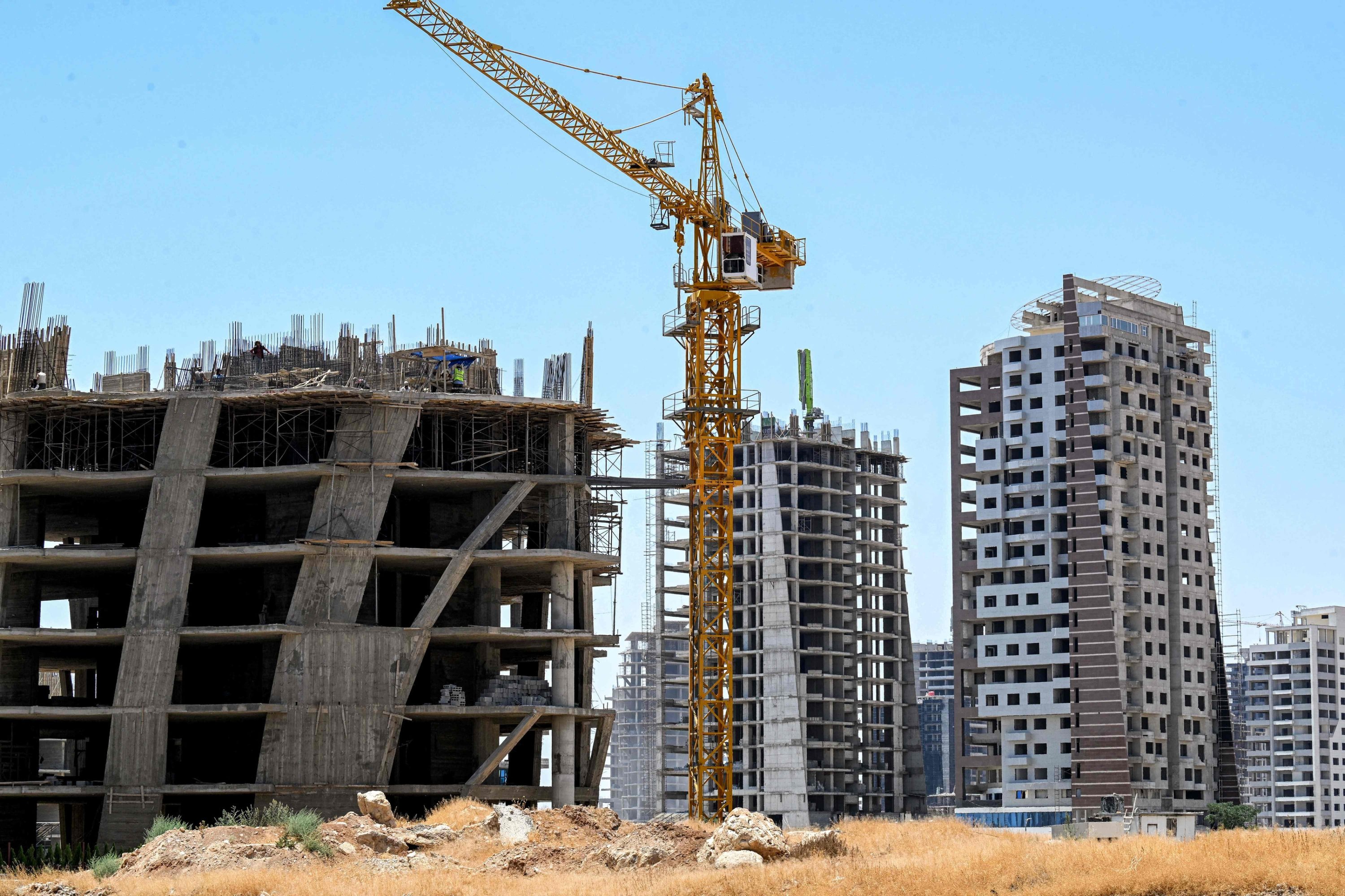
This extreme capital concentration leads to two primary distortions: First, because billion-dollar infrastructure investments require high levels of imported capital goods and technology, a significant portion of the injected capital leaks out of the country without ever reaching local supply chains. Second, and even more critical, is the severely limited job-creation capacity of these initiatives. While capital-intensive megaprojects push headline growth figures upward, labor-intensive sectors that bolster broader purchasing power and absorb unemployment are left virtually neglected.
Indeed, the reality on the ground is one of industrial parks struggling to resume production right next to massive construction sites, and agricultural land lying idle for lack of capital. Even if growth surpasses the World Bank’s modest 1% forecast, and assuming a mere 20% of the announced $25.9 billion in MoUs, totaling roughly $5.2 billion, materializes as investment over the next five years, this figure alone corresponds to approximately 20% of Syria’s estimated gross domestic product (GDP). However, if these resources remain trapped within strategic infrastructure islands without a broader, inclusive growth strategy, the gap between macroeconomic statistics and microeconomic realities will continue to widen by the day.
The structural constraints observed in financial depth and investment allocation ultimately converge on a fundamental pillar: state and regulatory capacity. In post-conflict transition economies, the primary role of macroeconomic policy is not merely to attract capital, but to construct a coherent and predictable legal framework capable of directing and managing it. Although U.N. Secretary-General Antonio Guterres’s call for the "immediate removal of all sanctions" during his Damascus visit and the U.S. issuance of General License 25 alongside Caesar Act exemptions have opened international doors, domestic regulatory capacity within Syria remains severely constrained.
This institutional deficit manifests most visibly in contradictory policy signals and market uncertainty. For instance, measures such as the implementation of revised customs tariffs in June covering over 1,000 products, when combined with local bureaucracy and fragmented enforcement, can inflate shipping costs by up to $1,000 per metric ton, adding roughly $25,000 in extra costs for a standard 20-ton truck shipment. While ambitious economic liberalization reforms are announced at high-level summits, these elevated transaction costs at the local level undermine predictability for both domestic producers and foreign investors, diverting resources away from long-term fixed capital investments and toward short-term speculative trade.
Building a resilient post-war economy requires far more than signing project contracts or relying on headline capital inflows. In a reconstruction effort that the World Bank estimates could exceed $216 billion, robust regulatory institutions – capable of ensuring fair competition, safeguarding property rights, and channeling financial flows into real production – are essential. Otherwise, Syria risks cementing a two-tiered economic structure: on one side, a prosperous modern elite insulated from the cash-strapped, fragile realities of daily commerce; on the other, broad masses lacking access to basic finance.
Moving forward, the defining factor for the Syrian economy will be the extent to which initial signs of macroeconomic recovery can translate into structural, high-quality institutional reforms. If current momentum remains confined to strategic infrastructure corridors and a handful of headline-grabbing real estate projects, the initial wave of post-transition optimism could swiftly give way to deepening income inequality and chronic demand shortages. Conversely, enacting legal reforms to unlock commercial credit, enhancing transparency in tax and customs regimes, and introducing inclusive incentives to integrate local capital into real production could place the country on a path of sustainable growth. Ultimately, Syria's upcoming period will be tested not merely by its ability to balance balance sheets, but by its capacity to mend the rift between macro-level capital flows and the cash-strapped reality of the street.