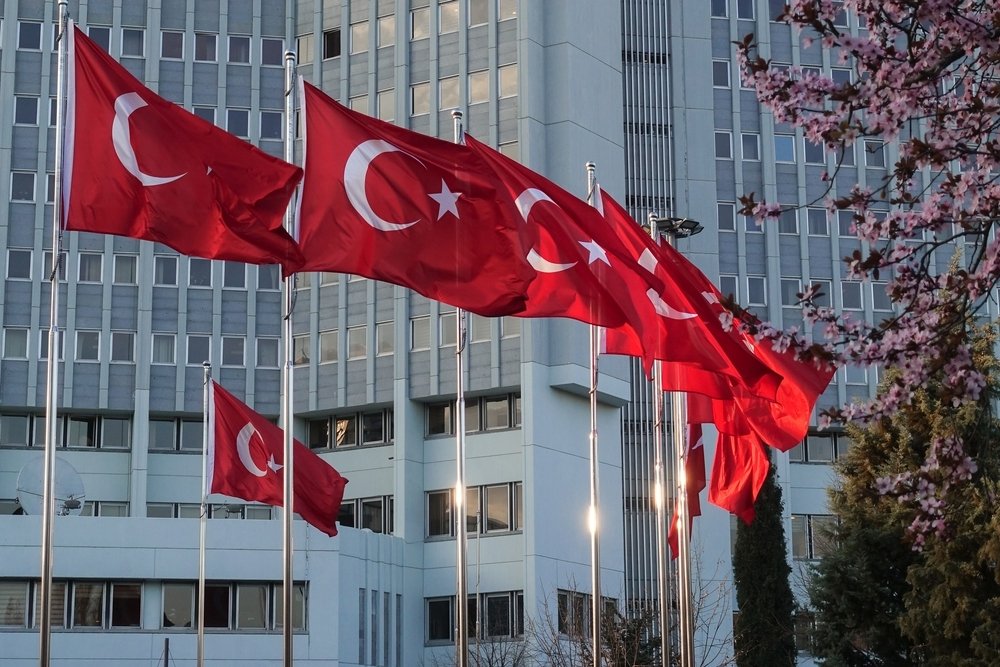
The world is entering a period of geopolitical fragility unseen in recent decades. Crises erupting simultaneously, many unfolding in Türkiye’s immediate neighborhood, are no longer temporary disruptions. They have become permanent shocks, exposing deep structural flaws in the international system.
The humanitarian catastrophe in Gaza, the war in Ukraine, the unresolved conflict in Syria, recent developments in Iran, and growing cracks in Europe’s security architecture all point to the same reality: The global order is weakening. In this environment, foreign policy is no longer confined to diplomatic exchanges between states. It now directly shapes security, economic resilience, energy flows, migration, trade and social stability.
Situated at the center of this fragile geopolitical landscape, Türkiye is compelled to pursue a carefully balanced and multidimensional foreign policy.
Türkiye’s core approach rests on preserving peace and stability, managing crises through diplomacy and advocating a more just and inclusive international order. This is not idealism, but the rational use of power. In regions where conflicts deepen and the rule of law collapses, neither security nor economic prosperity can be sustained without diplomacy.
The events in Gaza have underscored this reality most painfully. Months of bombardment, the deaths of tens of thousands of civilians and the failure of international law have laid bare the moral bankruptcy of the global system. From the outset, Türkiye has called for an immediate cease-fire, conducted intensive diplomatic efforts and worked to deliver humanitarian aid, prevent regional escalation and ensure accountability. The assistance sent to Gaza and Türkiye’s firm support for the Palestinian cause reflect this principled stance.
Yet, Gaza is not only a humanitarian tragedy; it is also a mirror of the global governance crisis. The inability of the United Nations Security Council to act effectively, both in Gaza and in Ukraine, demonstrates that the current international system is increasingly incapable of responding to today’s challenges. Türkiye’s long-standing call for a fairer and more inclusive world order is now resonating far beyond its borders.
Syria remains another critical file, combining security imperatives with humanitarian responsibilities. While firmly defending Syria’s territorial integrity and political unity, Türkiye continues to combat terrorist organizations that threaten its border security. Groups such as Daesh and the PKK pose serious risks not only to Türkiye but also to regional and European stability. Without lasting peace in Syria, challenges ranging from irregular migration to regional security will remain unresolved.
The Russia-Ukraine war has further shaken a European security architecture long neglected. Energy supply routes, defense priorities and global supply chains are being reshaped. Since the beginning of the war, Türkiye has been among the few actors able to maintain dialogue with both sides. The Istanbul talks and subsequent prisoner exchanges stand as rare examples of diplomacy producing tangible results. This role has reinforced Türkiye’s position as a balancing power, not only regionally but also within Europe’s security framework.
These dynamics underscore the strategic importance of Türkiye-European Union relations. Mutual dependence in energy security, migration management, supply chain diversification and green and digital transformation is now undeniable. Updating the customs union, advancing visa facilitation and reviving institutional dialogue are no longer technical matters; they are geopolitical necessities.
Türkiye is therefore undergoing a demanding but considerable test in today’s fractured world order. A balanced, principled and solution-oriented foreign policy is essential not only for safeguarding national security, but also for contributing to regional stability. Strong diplomacy must be supported by economic resilience and the active engagement of the business community. In an age of uncertainty, success depends not on emotional reactions but on strategic patience and common sense.
Looking ahead, 2026 is likely to be a year focused on crisis management rather than systemic resolution. Given the depth of the international order’s structural problems, temporary cease-fires should not be expected to deliver lasting stability. While this fragile environment increases risks for Türkiye, it also enhances the importance of its strategic position.
Ultimately, the period ahead may reward not quick gains, but strategic patience and multidimensional risk management.