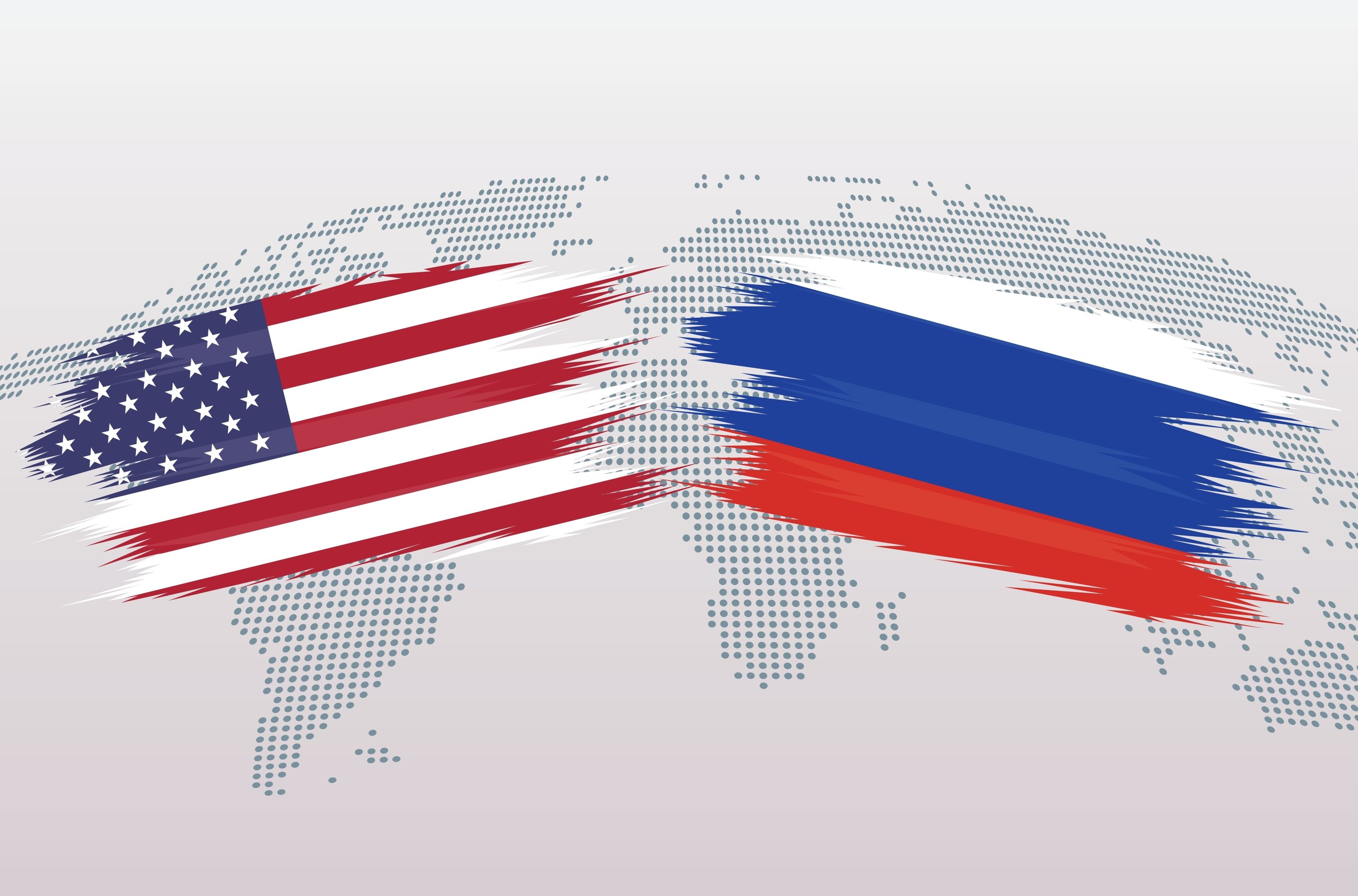
The Ukrainian crisis has changed international regional equations and balances, and Washington now looks to the Central Asian countries as being able to help Russia circumvent Western sanctions. With the recent visits by American officials to the capitals of Central Asia and the offers of security and military cooperation and economic temptations, the U.S. is attempting to strike a double blow to Moscow and Beijing together. However, in any case, it is too early to determine the direction of the new interactions, a large part of which is linked to the outcome of the Ukraine crisis.
The U.S.' stated goal toward Central Asia will be to "combat terrorism" and the danger that may come from Afghanistan. However, among its lines is an attempt to distance Russia from what was known as its back gardens and create a new focus for Moscow on Russia's southern borders after breaking decades of neutrality of the Baltic states and Finland and Sweden applied to join NATO.
Central Asia is increasingly becoming an arena for competition between China, its giant neighbor, and the U.S., which wanted to strengthen its hegemony after the victory in the Cold War and weaken Russia with the collapse of the Soviet Union.
The elites of the Central Asian countries interpreted their independence with the collapse of the Soviet Union as independence from Moscow, which made them rely on other centers of power; Beijing, Washington and Ankara, in part. However, they turn to Russia during extreme situations, as happened with Kazakhstan at the beginning of this year and Tajikistan during the civil war in the early 90s.
Some believe that the frivolity in the Russian foreign policy to manage the file of the former Soviet Union countries, with the strategic short-sightedness of the leadership of the independent republics, led to making these countries an arena for competition between international players and a significant loss of the Russian influence in the post-Soviet space.
The former Soviet states were accustomed and considered it natural for Russia to offer them political advantages and economic preferences in exchange for official friendship and participation in the integration structures established under the auspices of Russia, the Eurasian Economic Union (EAEU), and the Collective Security Treaty Organization (CSTO). Member states use any integration platform in post-Soviet space to promote and advance their national interests, which change depending on regional-international equations, both publicly and behind the scenes.
Kazakh President Kassym-Jomart Tokayev's frank behavior during his visit to Russia a few days ago demonstrates the above considerations. It was seen through his statement about his country's commitment to the policy of the anti-Moscow sanctions, which officially puts Kazakhstan in the position of an unfriendly country to Russia. According to the statements, the Russian official said that any country that supports the hybrid war waged by the West against Russia becomes unfriendly. Tokayev's position comes a few months after he requested security assistance from the Russian-led CSTO and readily committed to sending troops as the protests spread to Almaty, Kazakhstan's largest city.
And it has only been several months since calm was restored in Kazakhstan after the entry of peacekeepers from the CSTO, which is seen as the Russian-style NATO. What followed was the quick announcement of the success of those forces' mission and the peacekeeping unit's withdrawal from the country days after its arrival.
One should note that the statements of Russian officials from time to time, calling for the annexation of parts of the territory of former Soviet countries, raise the concerns of Kazakhstan and other countries, as there are Russian minorities, some of whom account for 22% of the demographic composition, and these countries fear the recurrence of semi-scenarios – Crimea, eastern Ukraine and South Ossetia in Georgia.