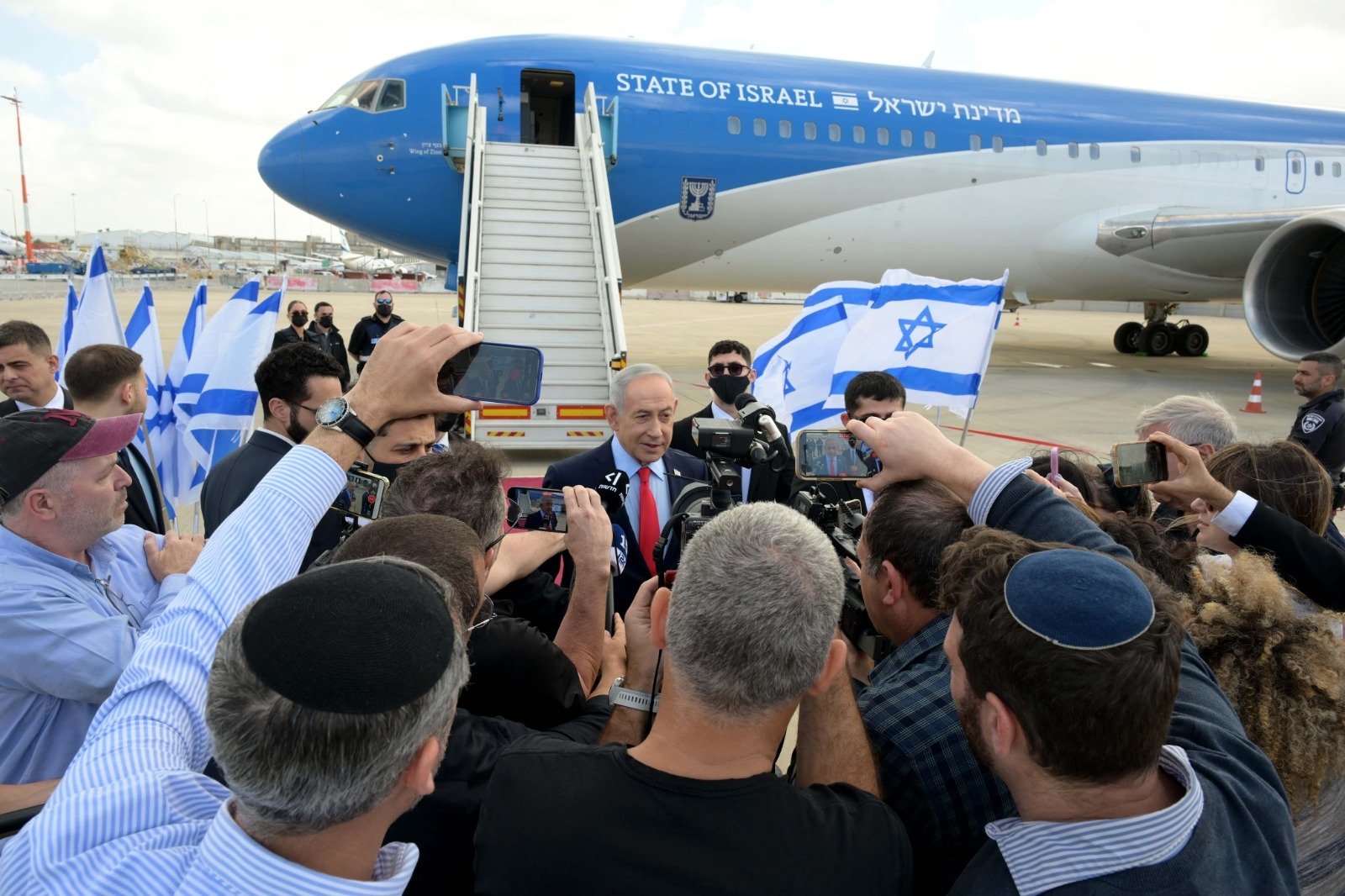
Every visit by Israeli Prime Minister Benjamin Netanyahu to the U.S. causes turmoil in the region. Either an influential figure is assassinated, or Israel, pursuing its occupation policy, ignites the fuse for a new attack. Netanyahu's meeting with U.S. President Donald Trump once again drew attention to the Middle East.
Our region is once again in turmoil. Following protests in Iran that began for economic reasons and evolved into anti-regime demonstrations, the U.S. has amassed its armada off the Iranian coast. War drums have sounded once again. The U.S. threatened to strike Iran, and Iran threatened to target U.S. bases in the region. At a time when even the smallest spark could ignite the Middle East, diplomacy was opened under Türkiye's leadership.
While the parties met indirectly in Muscat, the capital of Oman, no concrete results were achieved. However, both Tehran and Washington assessed the negotiations positively.
At Iran's request, only Tehran's nuclear program was discussed during the negotiations. The U.S. does not want Iran to enrich uranium to obtain an atomic bomb. Previously, Washington, which intervened in the 12-day Israel-Iran war last June, targeted Iran's nuclear facilities.
While an agreement was reached to continue talks between the U.S. and Iran, Netanyahu traveled to the U.S. with an "urgent" code. He was originally scheduled to be at the White House between Feb. 18 and 22. However, at his request, this visit was brought forward by a week. This is because Netanyahu aims to influence the course of the ongoing negotiations between the U.S. and Iran.
Israel wants the negotiations with Iran not to be limited solely to the nuclear program. It wants the missile program and the support given to Tehran's proxy forces to also be included in the negotiation agenda.
The only point of common ground between the U.S. and Israel regarding Iran is preventing Iran from possessing nuclear weapons. While the Tehran regime is an existential threat to Israel, it is a secondary issue among the U.S.' global priorities. This is because policies toward China and Russia are higher priorities for the U.S.
However, Israel is constantly warning the U.S. that Iran's nuclear capabilities are approaching a point of no return, forcing it to keep the military option on the table. Israel's ultimate goal regarding Iran is to force regime change and the installation of a government compliant with the West and Israel. However, achieving this goal solely through airstrikes is not certain. Therefore, Israel is focused on indefinitely preventing Iran from acquiring nuclear weapons, neutralizing its proxy forces, and limiting its ballistic missile program.
Following Netanyahu's visits to the U.S. in recent years, the Middle East has virtually become a ring of fire. The assassinations of Hamas leader Ismail Haniyeh and Hezbollah leader Hassan Nasrallah, the attacks on Lebanon and Yemen, and the 12-day Israel-Iran war in which the U.S. was involved are examples of this.
Netanyahu's messages during these visits, such as "We are changing the face of the Middle East," have once again drawn attention to the White House. At this point, he wants to pressure the U.S., the ultimate decision-maker, into a military intervention against Iran.