Daily Sabah logo

Politics
Diplomacy Legislation War On Terror EU Affairs Elections News Analysis
TÜRKİYE
Istanbul Education Investigations Minorities Expat Corner Diaspora
World
Mid-East Europe Americas Asia Pacific Africa Syrian Crisis Islamophobia
Business
Automotive Economy Energy Finance Tourism Tech Defense Transportation News Analysis
Lifestyle
Health Environment Travel Food Fashion Science Religion History Feature Expat Corner
Arts
Cinema Music Events Portrait Reviews Performing Arts
Sports
Football Basketball Motorsports Tennis
Opinion
Columns Op-Ed Reader's Corner Editorial
PHOTO GALLERY
JOBS ABOUT US RSS PRIVACY CONTACT US
© Turkuvaz Haberleşme ve Yayıncılık 2025

Daily Sabah - Latest & Breaking News from Turkey | Istanbul

  • Politics
    • Diplomacy
    • Legislation
    • War On Terror
    • EU Affairs
    • Elections
    • News Analysis
  • TÜRKİYE
    • Istanbul
    • Education
    • Investigations
    • Minorities
    • Expat Corner
    • Diaspora
  • World
    • Mid-East
    • Europe
    • Americas
    • Asia Pacific
    • Africa
    • Syrian Crisis
    • Islamophobia
  • Business
    • Automotive
    • Economy
    • Energy
    • Finance
    • Tourism
    • Tech
    • Defense
    • Transportation
    • News Analysis
  • Lifestyle
    • Health
    • Environment
    • Travel
    • Food
    • Fashion
    • Science
    • Religion
    • History
    • Feature
    • Expat Corner
  • Arts
    • Cinema
    • Music
    • Events
    • Portrait
    • Reviews
    • Performing Arts
  • Sports
    • Football
    • Basketball
    • Motorsports
    • Tennis
  • Gallery
  • Opinion
    • Columns
    • Op-Ed
    • Reader's Corner
    • Editorial
  • TV

SPD calls for new elections if talks fail amid differing views on Turkey

by Daily Sabah

ANKARA Oct 29, 2017 - 12:00 am GMT+3
 EPA Photo
| EPA Photo
by Daily Sabah Oct 29, 2017 12:00 am

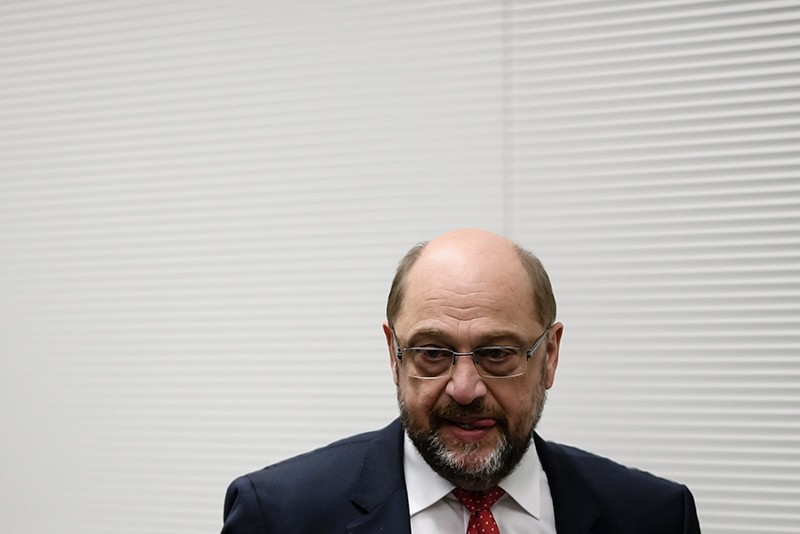
The formation of a new government in Germany hit another roadblock over the weekend after Chairman of the Social Democratic Party (SPD) Martin Schulz suggested that new elections should be held "if the negotiations [between future coalition members] failed."

The crisis deepened as Germany's relationship with Turkey continued to remain a focal point of the discussion between the Christian Democratic Union (CDU/CSU), the Green Party, and the Free Democratic Party (FDP).

A number of other key questions, including environmental issues, social equality, education, internal affairs, security, economy, taxes and foreign policy have so far dogged the negotiations that will likely continue until a compromise was reached.

Meanwhile, Turkey's accession to the European Union has also been one of the major talking points.

The CSU has signaled that it will insist on suspending Turkey's full accession talks. The party Secretary General Andreas Scheuer said, "We do not want Turkey to join the EU, we want the negotiations to be stopped."

The Green Party, on the other hand, was somewhat opposed to the idea, as evident in its General Secretary Michael Kellner's recent comments when he said, "As the greens, we think that cutting the EU negotiations with Turkey will definitely be a wrong signal. But it is true that the negotiations are now frozen."

Co-Chair of the Greens, Cem Özdemir, also rejected the CSU's suggestion, saying, "There is a consensus on the strengthening of Europe, but there are still big differences between the partners in detail."

Migration was another diving issue as the CSU has set forth a condition of capping the number of migrants entering Germany each year to 200,000. Bavaria has so far borne the brunt of refugee arrivals through its southern border with Austria.

German Chancellor Merkel has long rejected the CSU's signature demand of a cast-iron limit of 200,000 refugees a year.

The FDP and the Greens, on the other hand, are against such a cap, arguing that it was against the constitutional rules on asylum.

Now, Merkel is left with no choice but to find common ground with the FDP and the Greens, if she is to run the country for another four years, after SPD leader Schulz ruled out joining negotiation talks with the CDU/CSU to form another "big coalition" that was in power between 2013 and 2017.

In the Sept. 24 elections, the CDU and CSU received over 33 percent of the votes, maintaining their status as the biggest party in the parliament.

It was followed by the SDP with 20 percent, which marked the party's worst election results in the postwar era.

The FDP recorded a remarkable increase in votes, racking up almost 10 percent of the votes while some 9 voters went with the Greens.


  • shortlink copied
  • Last Update: Oct 29, 2017 5:05 pm
    KEYWORDS
    politics
    The Daily Sabah Newsletter
    Keep up to date with what’s happening in Turkey, it’s region and the world.
    You can unsubscribe at any time. By signing up you are agreeing to our Terms of Use and Privacy Policy. This site is protected by reCAPTCHA and the Google Privacy Policy and Terms of Service apply.
    No Image
    Eternal journey: 750th death anniversary of Rumi
    PHOTOGALLERY
    • POLITICS
    • Diplomacy
    • Legislation
    • War On Terror
    • EU Affairs
    • News Analysis
    • TÜRKİYE
    • Istanbul
    • Education
    • Investigations
    • Minorities
    • Diaspora
    • World
    • Mid-East
    • Europe
    • Americas
    • Asia Pacific
    • Africa
    • Syrian Crisis
    • İslamophobia
    • Business
    • Automotive
    • Economy
    • Energy
    • Finance
    • Tourism
    • Tech
    • Defense
    • Transportation
    • News Analysis
    • Lifestyle
    • Health
    • Environment
    • Travel
    • Food
    • Fashion
    • Science
    • Religion
    • History
    • Feature
    • Expat Corner
    • Arts
    • Cinema
    • Music
    • Events
    • Portrait
    • Performing Arts
    • Reviews
    • Sports
    • Football
    • Basketball
    • Motorsports
    • Tennis
    • Opinion
    • Columns
    • Op-Ed
    • Reader's Corner
    • Editorial
    • Photo gallery
    • DS TV
    • Jobs
    • privacy
    • about us
    • contact us
    • RSS
    © Turkuvaz Haberleşme ve Yayıncılık 2021