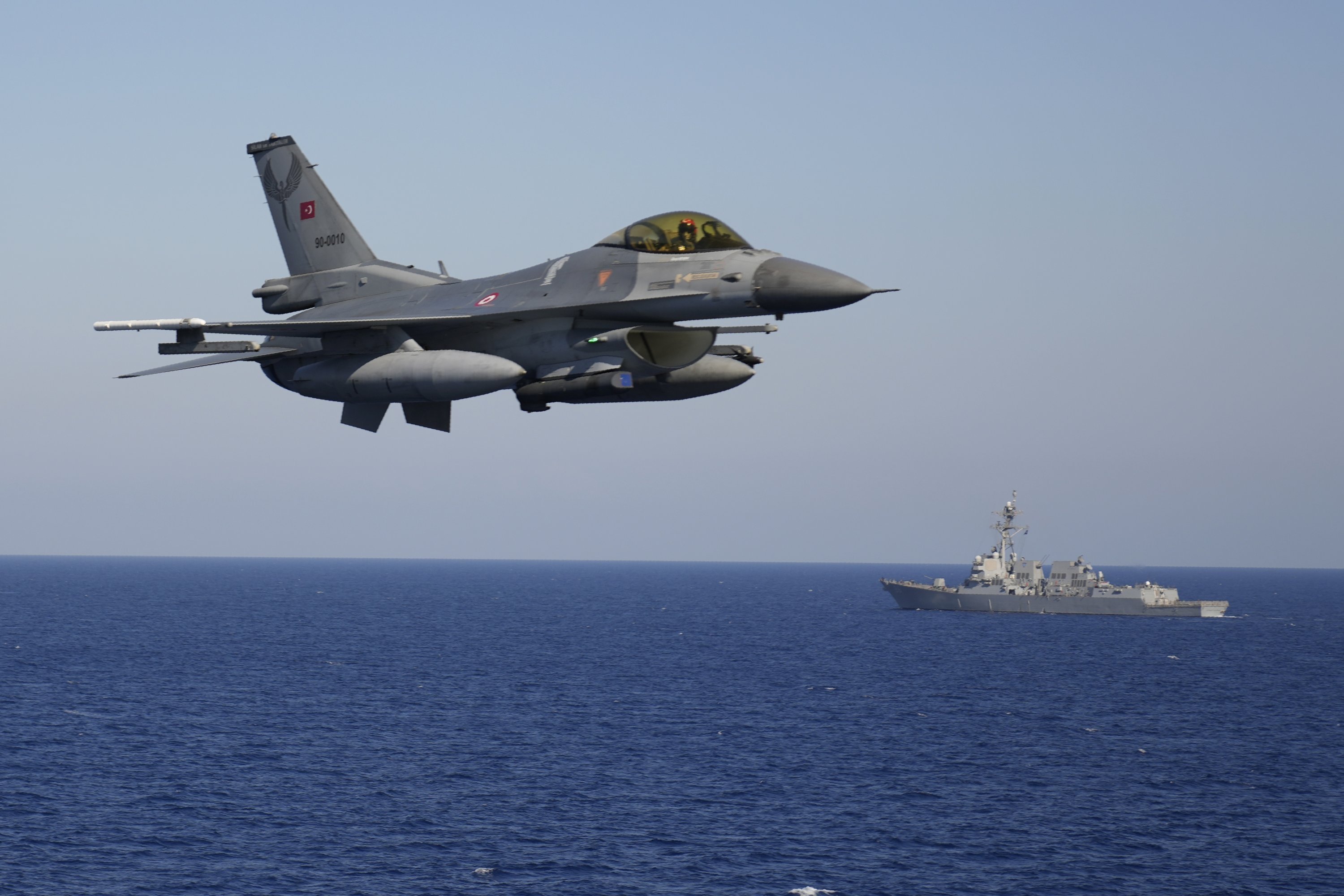
Türkiye's Disinformation Combat Center (DMM) on Monday has denied reports alleging that Turkish fighter jets harassed aircraft carrying Greek Defense Minister Nikos Dendias and other European officials or violated Greek airspace.
In a statement posted on social media, the DMM described the claims as false and said Turkish aircraft did not engage in any harassment activities.
According to the statement, six aircraft were operating on routes between Greece and the Greek Cypriot administration on June 7. The DMM said four of those aircraft violated the airspace of the Turkish Republic of Northern Cyprus (TRNC), prompting the deployment of two Turkish F-16 fighter jets stationed in the TRNC for air policing duties.
The agency said the Turkish jets operated exclusively within TRNC airspace and did not enter the airspace of the Greek Cypriot administration.
The DMM also rejected allegations that Turkish aircraft violated Greek airspace during flights conducted on June 6 as part of celebrations marking the 115th anniversary of the Turkish Air Force and the "Youth and Aviation Festival."
According to the statement, all flights were carried out within the designated operational area of the 2nd Main Jet Base Command and did not enter Greek airspace.
The center urged the public not to give credence to what it described as claims aimed at creating provocation and misleading international audiences.
The allegations emerged amid longstanding tensions between Türkiye and Greece over airspace, maritime boundaries and Eastern Mediterranean disputes.
Tensions have flared intermittently in recent years between the historic rivals, who remain divided over where their continental shelves begin and end in the Aegean, an area believed to hold significant energy potential and linked to disputes over airspace and overflights.
Türkiye and Greece are at odds over a range of issues, including disputes in the Aegean Sea and Eastern Mediterranean, airspace and maritime jurisdiction claims, the status of demilitarized islands and the Cyprus question.
Despite periodic tensions, the two NATO allies have in recent years pursued a cautious normalization process through high-level diplomatic contacts, confidence-building measures and cooperation on trade, migration and tourism, while continuing to maintain sharply differing positions on sovereignty and regional security matters.
On the other hand, Ankara deployed six F-16 fighter jets and air defense systems to the TRNC on March 9, describing the move as a legitimate measure to strengthen deterrence and protect airspace against rising missile and drone threats.