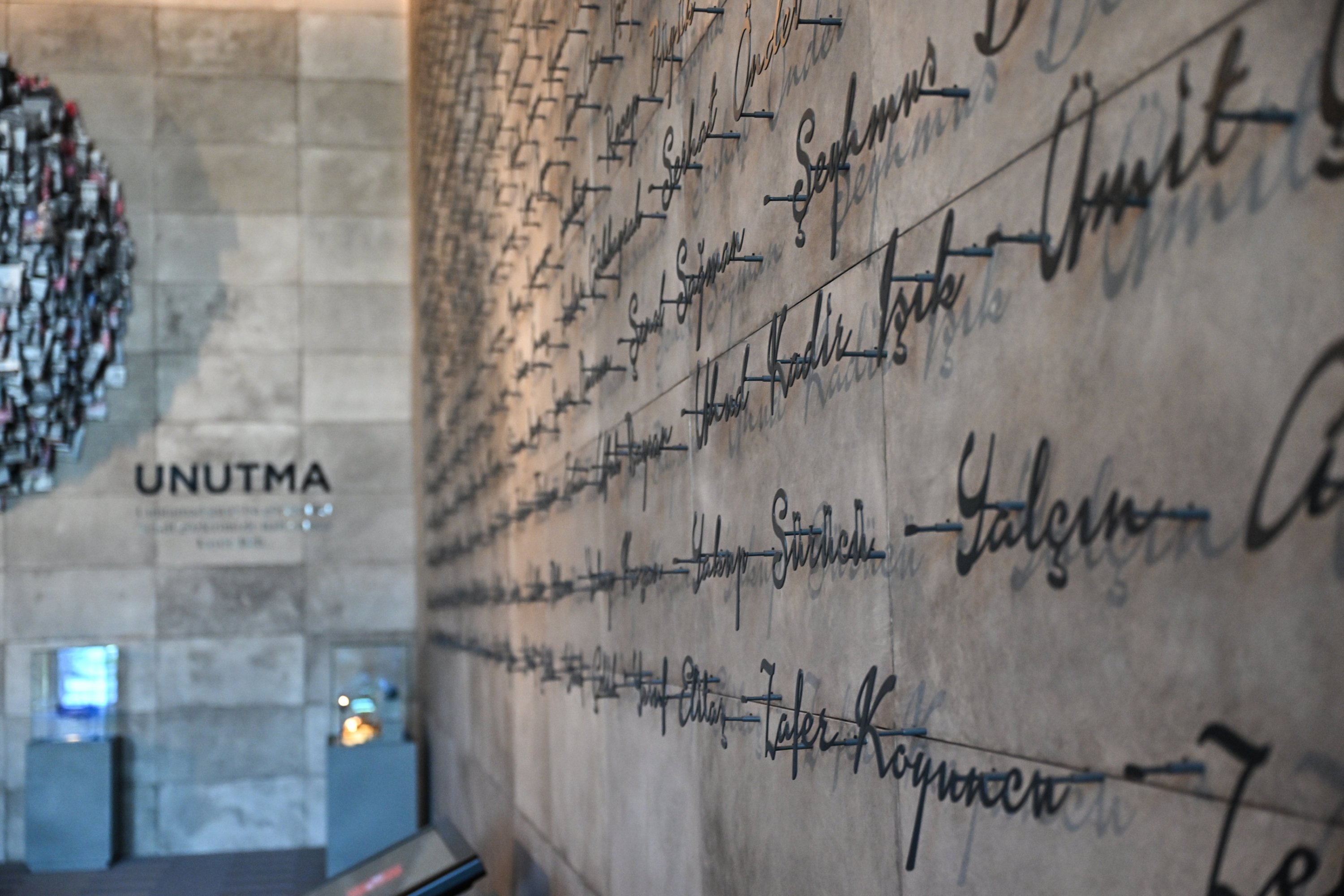
As Türkiye marks the ninth anniversary of the July 15, 2016, coup attempt, perpetrated by the Gülenist Terror Group (FETÖ), a new chapter is unfolding for the clandestine organization. With its founder and self-proclaimed spiritual leader Fethullah Gülen reportedly deceased in his Pennsylvania compound earlier this year, questions loom large over the fate of the group and its future influence, or lack thereof, both in Türkiye and abroad.
The organization, long accused of infiltrating the Turkish state over decades, orchestrated a brutal coup attempt that killed 252 people and injured thousands more. Since then, Türkiye has treated FETÖ as a national security threat, dismantling its networks and purging its operatives across institutions. Yet, while the domestic fight has yielded measurable success, the group’s overseas remnants continue to draw scrutiny.
According to Nur Özkan Erbay, head of the Brand Office of the Presidency's Directorate of Communications and author of the book “Threat of Messianic Movements to State and Regime Security: A Case Study of the Fethullah Gülen Terrorist Organization,” FETÖ is now “in a vegetative state” following Gülen’s demise.
“FETÖ’s indoctrination was entirely tied to its so-called spiritual leader. With his elimination, the organization is effectively brain-dead,” Erbay told Daily Sabah in an exclusive interview. “Its vital functions within Türkiye have been irreversibly terminated. However, its presence in foreign countries, especially Western Europe and the United States, has merely gone underground.”
While FETÖ’s influence has diminished dramatically, Erbay emphasized that the group has not entirely vanished. Instead, its members have adopted more covert tactics. Their financial network has eroded amid internal power struggles and the loss of institutional privileges, particularly in the U.S. charter school system, where several affiliated schools are now facing mounting tax penalties.
“Due to increasing regulatory pressure from the U.S. tax and customs system, FETÖ is gradually losing its operational flexibility and immunity. Meanwhile, Western governments’ more restrictive policies toward immigration are making it harder for the group to recruit new members from Türkiye or third countries,” she added.
Indeed, Turkish officials have long argued that the group’s educational and media institutions abroad serve as both funding channels and fronts for espionage and influence operations. Reports over the years have highlighted the group’s tactics, including disguising identities, abandoning Turkish affiliations and using new aliases to infiltrate host country institutions.
Erbay also warned that despite its weakened state, FETÖ retains a troubling capacity for “asymmetric threats” – including blackmail, espionage and infiltration.
“The group still has human capital that can be repurposed for covert operations against foreign states,” she said. “That makes FETÖ not just a relic of Türkiye's internal strife but an ongoing international threat.”
This assessment aligns with the view in Ankara, where officials stress that while FETÖ may be limping, it remains a strategic concern abroad. Turkish diplomacy in recent years has leaned on bilateral ties to encourage host nations to curtail the group’s operations – often with mixed results, especially in countries where FETÖ-linked institutions maintain legal protections.
Murat Aslan, a faculty member at Hasan Kalyoncu University and a researcher at SETA, pointed out that despite nine years, many questions remain unanswered.
“The anatomy of FETÖ is still not drawn, which is vital. Who created this group, Fethullah Gülen or was it created by other forces? What was the vision of Fethullah Gülen? What is the vision of the organization now? We have to decipher this. A comprehensive analysis must be made, extending beyond the military aspect, to examine how the group infiltrated all aspects of life."
He similarly underlined that “the threat is not over yet” as the terrorist group continues operations, especially in countries in Africa or Central Asia.
Aslan further highlighted that FETÖ members in the West have taken critical positions, such as those of lecturers in universities, think tanks or technology companies. “We have to be prepared for this new kind of threat.”
Yet domestically, the picture is far more decisive.
The terrorist group faces operations almost daily as investigators still try to unravel its massive network of infiltrators everywhere. In 2024 alone, police apprehended hundreds of FETÖ suspects across the country, including fugitives on western borders trying to flee to Europe. Just last month, President Recep Tayyip Erdoğan underlined the determination in fighting the terrorist group, assuring authorities would root out the remaining FETÖ infiltrators in Turkish institutions, citing the “meticulous work of police and intelligence units.”
Ankara has also worked to secure extraditions and asset seizures globally, while pressuring allies to monitor and curtail the group’s educational and financial arms. The collapse of central leadership has added to the organization’s disintegration, with internal factions vying for control amid dwindling resources.
“The infighting, especially over succession and control of finances, has further debilitated the group,” said Erbay. “It’s no longer a monolith but a fragmented network with no coherent strategy.”
Türkiye's long-term counter-FETÖ strategy has also evolved. No longer confined to security operations, Ankara has built enduring institutional resilience by reforming recruitment and oversight processes within the military, judiciary and bureaucracy. Furthermore, the state has expanded its geopolitical influence, bolstering international cooperation on counterterrorism.
“The era in which FETÖ could be instrumentalized against Türkiye has ended,” Erbay asserted. “Türkiye has established irreversible strategic leverage, both in national capabilities and in its regional and international standing. No actor can now afford to jeopardize its alliance with a stronger-than-ever Türkiye.”