Greece and France have discussed a possible adjustment to the route of a planned undersea electricity cable linking Greece, the Greek Cypriot administration and Israel, as Athens seeks to manage tensions with Türkiye in the Eastern Mediterranean, according to Greek media reports.
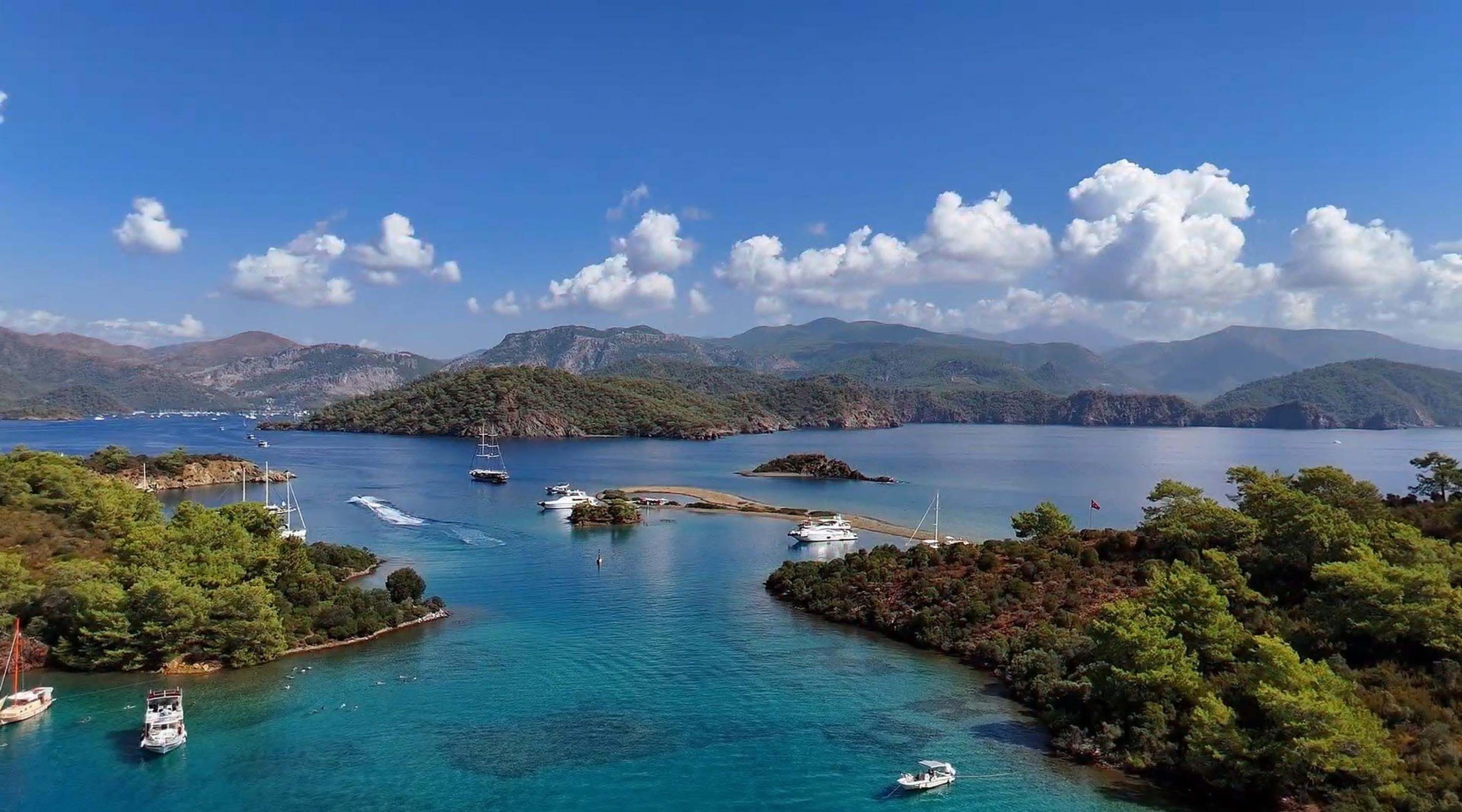
Kathimerini reported that Athens and Paris had considered a “light redesign” of the Great Sea Interconnector (GSI) that would keep the cable outside an area covered by Türkiye’s Fethiye-Kaş marine park, declared south of the Greek island of Meis in August. The newspaper said the proposed adjustment was intended to reduce the risk of a new dispute rather than signal Greek recognition of Turkish jurisdiction in the area.
On Aug. 16, two presidential decrees published in the Official Gazette have reaffirmed Türkiye’s maritime rights in the Aegean Sea.
One decree designated an area between the Fethiye district of Muğla and the Kaş district of Antalya in the south of the Aegean as a national marine park, while another applied the same designation to an area in the North Aegean Sea, near the coasts of Tekirdağ and Çanakkale.
The project, intended to connect the island of Cyprus with Europe’s electricity grid and eventually extend to Israel, has faced geopolitical and financial challenges. French infrastructure investor Meridiam acquired a 66% stake in GSI in August, increasing Paris’ involvement in the project.
Athens and its partners decided to alter the route of the planned undersea cable following objections from Ankara, according to reports.
The reported decision to adjust the route came after a warning issued by Türkiye’s Defense Ministry on Sept. 24.
In the statement, the ministry said any cable- or pipeline-laying activities within Türkiye’s continental shelf must be coordinated with Ankara, also underlining that Türkiye would continue to protect its rights and interests stemming from its maritime jurisdiction and continental shelf in the Eastern Mediterranean.
“No unauthorized activity that disregards our country’s rights will be permitted,” the ministry said.
Kathimerini also reported that Athens was considering extending its territorial waters to 12 nautical miles south and west of Crete before new seabed surveys begin.
Greek Prime Minister Kyriakos Mitsotakis and French President Emmanuel Macron met in Paris on Sept. 9, with talks focusing on energy infrastructure, regional developments and bilateral cooperation.
According to Greek media, Mitsotakis and Macron discussed steps toward implementing the GSI. The meeting came after French investment group Meridiam reached an agreement to become the majority shareholder in the company responsible for developing the GSI project.
The Paris talks took place at a critical stage for the project, particularly as stakeholders consider the resumption of seabed surveys needed for the planned cable.
Separately, Greek newspaper Ta Nea recently published a hypothetical four-stage military scenario involving a “preemptive strike” in the event intelligence indicated an imminent Turkish attack.
The scenario was based on assessments by military analysts and remarks by Greek Chief of the National Defense General Staff Gen. Dimitrios Houpis about Greece’s capacity to conduct strikes at strategic depth.
Ankara and Athens seek to improve relations after years of hostilities, but maritime jurisdictions remain a thorny issue. The countries, which came close to an all-out war in the 1990s over the Aegean Sea, remain vigilant, with Türkiye concentrating on developing its domestic defense industry. Greece, on the other hand, relies on foreign partners to bolster its defenses.