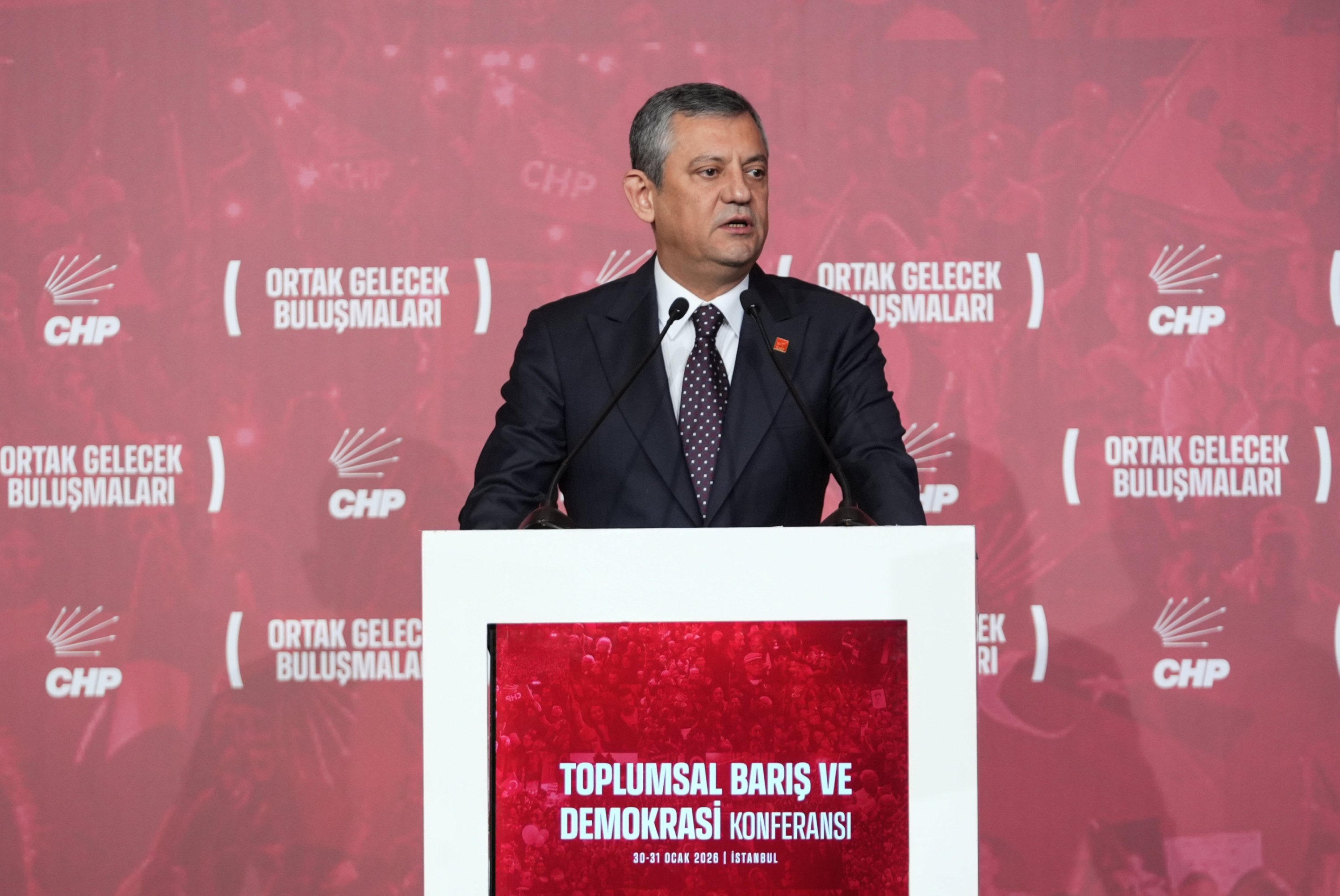
A weekend conference in Istanbul hosted by the main opposition Republican People’s Party (CHP) revealed cracks within the party on its stand on the terror-free Türkiye initiative launched by the People’s Alliance in 2024.
The CHP has been warm to the idea involving the disarmament of the terrorist group PKK, but was not without reservations. Although it enjoyed close ties with PKK-linked Peoples’ Equality and Democracy Party (DEM Party), the CHP toed a cautious line initially, before agreeing to contribute to a parliamentary committee formed to tackle the issue.
On Saturday, the party’s chair, Özgür Özel, hosted the Social Peace and Democracy Conference in Istanbul to highlight their stand on the initiative. DEM Party officials and people from left-wing movements participated in the event. Yet, statements of the CHP’s future presidential candidate, Ekrem Imamoğlu, at the conference angered the party’s “nationalist” members, namely two mayors who are known for their strong opposition to the DEM Party. Through an AI video, Imamoğlu (who is jailed on charges of corruption), urged recognition of “Kurdish identity, language,” a subject that has long been taboo in the country due to the PKK’s so-called campaign for a separate state for Kurds.
Bolu Mayor Tanju Özcan, who reconciled with the party he was about to resign from under the tenure of Özel’s predecessor Kemal Kılıçdaroğlu, had nothing but scathing remarks for Imamoğlu. “Turkish nationalism and a unitary state are indispensable values of the CHP; nobody can take away these values from the party of Atatürk. Period!” Özcan wrote on Twitter, referring to the CHP’s founder and Türkiye’s first President Mustafa Kemal Atatürk. Burcu Köksal, the CHP mayor for Afyonkarahisar, said the country’s unity was their red line and cannot be “disputed.”
The CHP portrays itself as a social democratic party, despite having its fair share of self-styled nationalists. The Terror-free Türkiye initiative was launched by Türkiye’s first openly nationalist party, the Nationalist Movement Party (MHP), an ally of the ruling Justice and Development Party (AK Party). Although he has been hostile to parties linked to the PKK, the MHP chair, Devlet Bahçeli, has surprised many by reaching out to the group’s jailed ringleader, Abdullah Öcalan, for the dissolution of the PKK. Bahçeli repeatedly underlined that he was ready to sacrifice his political career and even “life” to end the PKK’s decadeslong campaign of violence, which claimed tens of thousands of lives.
Early signs of internal party backlash surfaced after Özgür Özel’s recent remarks on the situation in Syria. Özel, who drew attention for comments seen as encouraging the YPG, the Syrian wing of the PKK, has recently said he was “following developments in Syria with concern.” He also equated the new Syrian administration with the terrorist group Daesh and claimed they were “incompatible with democracy.”